Snap8
Snap 8 is a modern cosmetic peptide designed for people who want visible anti-wrinkle support without stepping into invasive territory. Often described as a “milder alternative to Botox,” it’s formulated for topical use in serums and creams to help soften expression lines, refine texture, and support a smoother, firmer-looking complexion over time. This page introduces what Snap 8 is, how it’s typically prepared and used in skincare routines, and the best-practice habits—like patch testing and consistent application—that tend to determine whether results show up clearly.
PEPTIDES LIST
- Adipotide (FTPP)
- AICAR
- AOD9604
- ARA-290
- B7-33
- BPC-157
- Bronchogen
- Cagrisema
- Cagrilintides
- Cardiogen
- Cartalax
- Cerebrolysin (215mg/ml, 10ml)
- Chonluten
- CJC-1295 DAC
- Cortagen
- DSIP
- Epithalon (Epitalon)
- Follistatin-315
- Follistatin-344
- FOXO4-DRI
- GHK-Cu (Copper Peptide)
- GHK Basic
- GHRP-2
- GHRP-6
- GHRH (GH-Releasing Hormone)
- Glutathione
- Gonadorelin (GnRH)
- GLP2 & GLP3
- hGH Fragment 176-191
- Hexarelin
- Humanin
- Ipamorelin
- Kisspeptin-10
- KPV (ACTH (11-13) alpha-MSH)
- Liraglutide (GLP-1 Analogue)
- Livagen
- LL-37 (CAP-18)
- Melanotan 2 (Melanotan II)
- Mezdutide
- MGF (C-terminal)
- ModGRF 1-29 (CJC-1295 No DAC)
- MK-677 (Ibutamoren)
- MOTS-c
- N-Acetyl Epithalon Amidate
- N-Acetyl Selank Amidate
- N-Acetyl Semax Amidate
- NAD+
- Ovagen
- Oxytocin+
- Pancragen
- PE-22-28
- PEG-MGF (Pegylated MGF)
- Pinealon
- PNC-27
- Prostamax
- PT-141 (Bremelanotide)
- P21 (P021)
- Retatrutide
- Snap8
- Tesa_Ipa_Blend
- Triblend
- Selank
- Semaglutide (GLP-1 Analogue)
- Semax
- Sermorelin
- SS-31
- Survodutide
- TB-500
- Tesamorelin
- Testagen
- Thymagen
- Thyrotropin-TRH
- Tirzepatide
- Triptorelin
- Vesugenas
- Vesilute
- Vilon
- VIP (Vasoactive Intestinal Peptide)
- GLP2
- GLP3
- Klow
- Klow8
- SLU-PP-332
- BAM-15
- Orforglipron
- Noopept
- 9-Me-BC
- Methylene Blue
- Lemon Bottle

Snap 8 (often styled as SNAP-8) is a lab-engineered peptide made of eight amino acids that targets one of the biggest drivers of visible facial aging: repetitive muscle movement from daily expressions. At the cellular signaling level, it’s described as interfering with neurotransmitter activity involved in muscle contractions, which can help reduce the appearance of dynamic wrinkles—like crow’s feet, forehead lines, and smile creases—when used consistently in topical formulations. Because it’s applied on the surface rather than injected, it’s positioned as a gentler, non-invasive approach to smoothing the look of expression-related lines.
In real-world skincare, Snap 8 is usually used as an “active” added into a serum or cream base rather than applied alone. It’s commonly paired with supportive ingredients like hyaluronic acid for hydration and improved skin smoothness, and sometimes stabilizers like caprylyl glycol to improve formula stability. Applied twice daily to targeted zones and layered before moisturizers, it functions like a firming serum booster—helping enhance how a routine performs without dramatically changing the routine itself.
Results tend to build with time and consistency. Some people notice early tightening within days, but more meaningful improvements in wrinkle depth, fine lines, and skin texture are commonly discussed around the 4–6 week mark, with longer-term gains in elasticity and overall “youthful” look after ongoing use. As with any active ingredient, best practice includes patch testing first and avoiding combinations that can destabilize peptides—like harsh exfoliating acids or overly strong retinoid/acid layering—so the peptide can do its job without unnecessary irritation or reduced performance.
SNAP-8 (Acetyl Octapeptide-3) is best known as a topical cosmetic peptide, but some vendors describe injectable research protocols for subcutaneous administration. Injectable SNAP-8 is not approved for human use; the guidance below reflects third-party, research-oriented protocol summaries only.
Typical Dose & Frequency (Research Protocol Summary): Commonly reported dosing ranges are 0.33–1.0 mg, administered once daily, often escalated over an 8–12 week cycle (some protocols extend to 16 weeks).
| Phase | Weeks | Dose (Daily) | Frequency | Route |
|---|---|---|---|---|
| Initial Phase | 1–4 | 0.33 mg (330 mcg) | 1× daily | Subcutaneous |
| Mid-Phase | 5–8 | 0.5 mg (500 mcg) | 1× daily | Subcutaneous |
| Target Phase | 9–12 | 1.0 mg (1000 mcg) | 1× daily | Subcutaneous |
| Optional Extension | 13–16 | 1.0 mg (1000 mcg) | 1× daily | Subcutaneous |
Timing & Site Rotation (High-Level): Protocol summaries commonly suggest dosing at a consistent time each day and rotating subcutaneous sites (often listed as abdomen, thighs, and upper arms), spacing sites apart to reduce local irritation.
Reconstitution (Research Handling):
Important: Protocol summaries typically specify bacteriostatic water (BAC) and emphasize sterile technique.
• Allow vial to reach room temperature before reconstitution.
• Clean vial stopper with an alcohol swab and allow to fully dry.
• Draw 3.0 mL of BAC water into a sterile syringe.
• Add diluent slowly down the inside wall of the vial to minimize foaming.
• Gently swirl/roll until fully dissolved (avoid vigorous shaking); solution should be clear.
• Reported final concentration: ~3.33 mg/mL (so 0.1 mL ≈ 0.33 mg).
Storage:
• Lyophilized powder: commonly listed as -20°C.
• Reconstituted solution: 2–8°C (refrigerated), with many summaries suggesting use within 30 days.
Cycle Length & Breaks (Protocol Summary): Typical cycle length is described as 8–12 weeks (up to 16 weeks in some extensions), with a commonly cited 4–8 week break between cycles.
What to Expect (Reported Timeline):
• Weeks 1–4: adjustment/tolerance assessment; minimal visible change reported.
• Weeks 5–8: gradual softening of expression lines may begin in anecdotal reports.
• Weeks 9–12: potential peak/plateau period described; outcomes vary widely.
Note: Injectable SNAP-8 has less clinical data than topical use.
Safety Notes:
• Not approved for human use; no comprehensive human clinical trials establish safety for injectable SNAP-8.
• Reported issues include occasional mild injection-site reactions.
• Sterile handling and site rotation are commonly emphasized to reduce infection/irritation risk.
• Consult a licensed medical professional before any injectable protocol.
SNAP-8 is typically used as a topical cosmetic active (not an injectable in most skincare use-cases). It’s commonly sold as a concentrate/active that should be blended into a serum or cream base at a target percentage concentration.
Route & Frequency: Topical application is most common. Apply to clean skin twice daily (AM/PM), focusing on expression-prone zones like crow’s feet, forehead lines, and smile creases. Layer the SNAP-8 serum/cream before moisturizers for better penetration.
Suggested Concentration Ranges (Topical Serum/Cream %): These are general cosmetic-formulation guidelines discussed for daily skincare routines. When in doubt, start on the lower end and assess tolerance.
| Weight Range (lbs) | Women (Topical Serum %) | Men (Topical Serum %) |
|---|---|---|
| Under 130 | 5–8% | 6–9% |
| 130–170 | 8–10% | 9–11% |
| 170–210 | 10–12% | 11–13% |
| Over 210 | 12–15% | 13–15% |
Mixing / “Reconstitution” (Topical Formulation):
• Start with a clean workspace; use clean tools and a clean container.
• Choose your base: a lightweight serum or gentle cream works well.
• Add SNAP-8 concentrate to your base at the target % (follow manufacturer usage rate if provided), then mix thoroughly until evenly distributed.
• Optional support ingredients: hyaluronic acid for hydration; caprylyl glycol is sometimes used to support stability/shelf-life.
• Store the finished product cool, dry, and away from direct light; keep the lid tightly closed.
Patch Test & Compatibility:
• Patch test first: apply a small amount to the forearm and wait 24 hours. Discontinue if irritation occurs.
• Avoid mixing/layering peptides with harsh exfoliating acids, very high-strength retinoids, or strongly acidic formulations that can reduce peptide performance. Pairing with hydrating, gentle products is typically preferred.
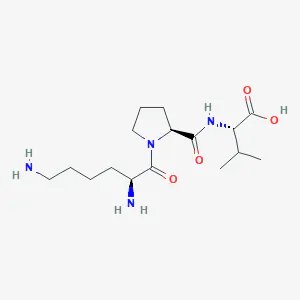
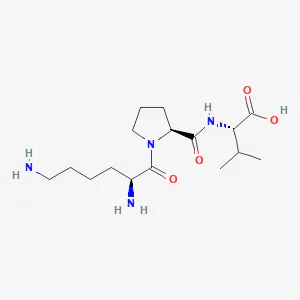
Sequence: Lys-Pro-Val
Molecular Formula: C16H30N4O4
Molecular Weight: 342.43 g mol^-1
PubChem CID: 125672
CAS Number: 67727-97-3
Research stemming from KPV investigations has uncovered its ability to mitigate intestinal inflammation significantly. In studies involving mouse models with inflammatory bowel disease (IBD), KPV demonstrated robust outcomes by reducing inflammatory infiltrates, MPO activity, and overall histological signs of inflammation. Compared to a placebo, mice treated with KPV exhibited accelerated recovery and more substantial weight gain. Additional exploration into KPV's delivery methods has unveiled that loading KPV onto nanoparticles functionalized with hyaluronic acid can effectively target the peptide's anti-inflammatory effects within the intestine. This approach leads to accelerated mucosal healing and the alleviation of inflammation, primarily through the strong down-regulation of TNF-alpha in mouse models. KPV, in this regard, offers a more effective and precise means of curbing IBD-related inflammation without affecting TNF-alpha levels elsewhere in the body. Modifying KPV aims to enhance its oral bioavailability, which doesn't increase the peptide's effectiveness but influences its potency, thus reducing the required total dosage for an effect.
Research indicates that KPV's impact extends beyond TNF-alpha inhibition; it also reduces NF-kappaB and mitogen-activated protein kinase activity. These effects complement TNF-alpha inhibition, collectively diminishing inflammatory changes in the intestine. Mice treated with KPV display significantly less colonic infiltration and normal colon lengths compared to control groups. Notably, the graph above reveals that KPV primarily exerts its effects in cases of heightened inflammation and has minimal impact on normal tissue. This phenomenon is attributed, in part, to KPV's ability to enter colonic cells through a transporter that becomes upregulated during inflammation. Consequently, KPV may serve as an effective preventive or maintenance medication for IBD, even during quiescent periods, as it remains inactive unless needed and is excreted otherwise. Recent findings by Professor Didier Merlin suggest that KPV enters colonic cells via PepT1, a protein channel predominantly expressed in the intestine during inflammatory states. This explains KPV's enhanced effectiveness in inflamed settings and hints at a novel drug delivery approach applicable to various conditions. By targeting proteins altered during disease conditions, it might be possible to concentrate drug activity in specific areas, potentially reducing dosages of drugs with severe side effects and developing therapeutics tailored to specific disease states.
Research as far back as 1984, involving rabbits, uncovered KPV's potent anti-inflammatory and fever-reducing (anti-pyretic) properties. However, KPV demonstrated lower potency in this regard compared to the full alpha-MSH molecule. This observation prompted decades of research into modified forms of alpha-MSH. Collectively, these tests have highlighted that alpha-MSH and its analogues possess anti-inflammatory properties effective across a wide range of diseases. These molecules have undergone testing in fever, irritant and allergic contact dermatitis, vasculitis, fibrosis, arthritis, and inflammation in various organs, including the eyes, brain, lungs, and gastrointestinal tract. In all instances, alpha-MSH emerges as the most effective anti-inflammatory agent. Unfortunately, it also induces skin pigmentation as a major side effect. KPV, on the other hand, lacks this side effect. While not as potent as intact alpha-MSH, KPV's absence of side effects makes it theoretically possible to increase dosage levels in most cases to achieve the desired therapeutic effects. The disparity in potency between KPV and alpha-MSH is minimal, at best, as the majority of alpha-MSH's anti-inflammatory effects are attributed to the KPV segment. Interestingly, the parent molecule seems to excel in suppressing late-stage inflammatory responses. For example, in contact dermatitis, alpha-MSH is more effective at preventing allergic inflammatory responses two weeks after initial exposure, suggesting a potential influence on immune modulation separate from the immediate inflammatory response. Ongoing research aims to elucidate this process further.
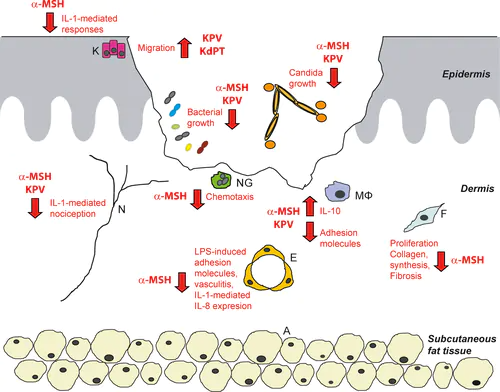
Wound healing is a multifaceted process encompassing inflammatory, proliferative, and remodeling phases. Each phase entails distinct cell populations and cytokine concentrations, providing unique opportunities for intervention. Research reveals that despite variations in skin cell subtypes during each wound healing phase, the majority of these cells express a melanocortin 1 receptor (MC1R), which binds to alpha-melanocyte-stimulating hormone. Consequently, these cells also bind to alpha-MSH analogues like KPV and KdPT. Due to their retention of some alpha-MSH properties while lacking others, alpha-MSH derivatives like KPV offer potential benefits in wound healing. KPV, for instance, retains the anti-inflammatory properties of alpha-MSH but avoids the pigment-inducing activity associated with natural scar formation, particularly in individuals with darker skin. One of KPV's anti-inflammatory mechanisms involves participation in the innate immune response against two common skin pathogens: Staphylococcus aureus and Candida albicans. Research indicates that KPV inhibits the growth of these pathogens at physiological concentrations, suggesting its potential utility in preventing infections in severe wounds like burns. This sets KPV apart from other anti-inflammatory medications, which often inhibit the body's ability to combat infections, thus combining anti-inflammatory and antimicrobial activities. KPV serves as a structural model in recent research aiming to replicate its anti-fungal effects in novel therapeutics. The premise is that KPV's 3D structure underlies its effectiveness as an anti-fungal agent, and replicating this structure may lead to compounds with similar anti-fungal activity but different effects on other biological processes.
Building on KPV's benefits in the initial inflammatory phase of wound healing, research also investigates its role in the subsequent stages of wound healing. KPV appears capable of reducing chronic inflammation that contributes to hypertrophic scar formation, such as keloids. This type of scarring involves extensive macrophage infiltration, TNF immunoreactivity, and high neutrophil levels. Administration of alpha-MSH in this context results in smaller scars and a less pronounced inflammatory response. Similar effects have been observed in other tissues, such as the lung and heart. These findings raise hope that KPV could be useful in preventing scarring associated with certain chemotherapy agents. This could not only mitigate cancer treatment side effects but also enable the use of higher medication concentrations for improved cancer treatment outcomes. According to Dr. Didier Merlin, part of KPV’s effectiveness in reducing scar prominence stems from its ability to modulate collagen metabolism. Alpha-MSH and its analogues suppress IL-8 secretion, inhibiting collagen type 1 production. This is particularly significant during the final phase of wound healing, the remodeling phase, as individuals prone to keloid formation and hypertrophic scarring exhibit lower MC1R mRNA expression on dermal fibroblasts.
When comparing KPV to Alpha-MSH, it's evident that Alpha-MSH, although more potent, has a significant drawback – it induces skin pigmentation. This adverse effect has discouraged further exploration of intact Alpha-MSH as a potential anti-inflammatory agent. In contrast, KPV is preferred due to its retention of most of Alpha-MSH's anti-inflammatory properties without causing side effects. Additionally, KPV's ease of manufacturing makes it advantageous from both cost and logistical perspectives [15]. Dr. Thomas Luger, a renowned dermatologist and expert in inflammatory skin diseases, has extensively researched and published on KPV, demonstrating its potent anti-inflammatory properties with minimal adverse effects. It's worth noting that KPV's anti-inflammatory effects seem to operate through a different mechanism than Alpha-MSH. While Alpha-MSH binds to specific melanocortin receptors, KPV does not. This distinction is supported by mouse studies, wherein blocking MC3/4 receptors, responsible for Alpha-MSH's anti-inflammatory effects, does not affect the anti-inflammatory actions of KPV. Specifically, blocking these receptors has no impact on the leukocyte migration induced by KPV [16]. Another advantageous feature of KPV is its versatile modes of administration. Research conducted in animal models has demonstrated that KPV can be administered orally, subcutaneously, or via injection (peripheral or central) without causing significant side effects. Recent research has also shown successful transdermal administration of KPV [17]. The ability to administer the peptide through various routes is not just a matter of convenience; it allows scientists to target different areas within the body for treatment.
KPV is a potent anti-inflammatory peptide with promise for numerous medical conditions. Its most extensive research application lies in the treatment of inflammatory bowel disease, where it has shown substantial potential. Animal studies have confirmed the safety and efficacy of various administration methods, including oral, intravenous, subcutaneous, and transdermal delivery. Furthermore, research in wound healing suggests that KPV and other derivatives of Alpha-MSH may offer a range of benefits, such as accelerated wound healing, reduced infection rates, anti-inflammatory properties, and improved cosmetic outcomes. KPV and similar peptides could become essential in not only wound healing but also scar reduction following surgical procedures. KPV demonstrates minimal side effects, high subcutaneous bioavailability in mice, and oral efficacy. However, it's essential to note that mouse dosages do not directly translate to human use. KPV available at Peptide Sciences is strictly intended for educational and scientific research purposes and is not intended for human consumption. It should only be purchased by licensed researchers.
The above literature was researched, edited and organized by Dr. Logan, M.D. Dr. Logan holds a doctorate degree from https://case.edu/medicine/Case Western Reserve University School of Medicine and a B.S. in molecular biology.
Case Western Reserve University School of Medicine
ALL ARTICLES AND PRODUCT INFORMATION PROVIDED ON THIS WEBSITE ARE FOR INFORMATIONAL AND EDUCATIONAL PURPOSES ONLY.
The product information featured on this website pertains exclusively to in-vitro studies. In-vitro studies, also known as 'in glass' studies, are conducted outside of living organisms. It's important to emphasize that these products do not constitute medicines or drugs and have not received FDA approval for the prevention, treatment, or cure of any medical conditions, ailments, or diseases. It is crucial to note that the introduction of these products into the bodies of humans or animals is strictly prohibited by law.
THIS PRODUCT IS INTENDED AS A RESEARCH CHEMICAL ONLY. This designation allows the use of research chemicals strictly for in vitro testing and laboratory experimentation only. All product information available on this website is for educational purposes only. Bodily introduction of any kind into humans or animals is strictly forbidden by law. This product should only be handled by licensed, qualified professionals. This product is not a drug, food, or cosmetic and may not be misbranded, misused or mislabled as a drug, food or cosmetic.