Epithalon (Epitalon)
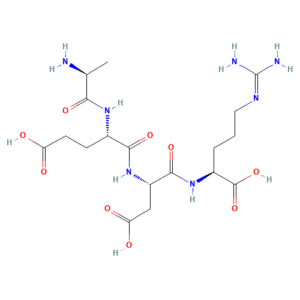
Epithalon is a synthetic tetrapeptide (AEDG) derived from the natural pineal peptide Epithalamin. It is explored for telomerase activation, melatonin regulation, and broad anti-aging applications ranging from immune modulation to connective tissue maintenance.
PEPTIDES LIST
- Adipotide (FTPP)
- AICAR
- AOD9604
- ARA-290
- B7-33
- BPC-157
- Bronchogen
- Cagrisema
- Cagrilintides
- Cardiogen
- Cartalax
- Cerebrolysin (215mg/ml, 10ml)
- Chonluten
- CJC-1295 DAC
- Cortagen
- DSIP
- Epithalon (Epitalon)
- Follistatin-315
- Follistatin-344
- FOXO4-DRI
- GHK-Cu (Copper Peptide)
- GHK Basic
- GHRP-2
- GHRP-6
- GHRH (GH-Releasing Hormone)
- Glutathione
- Gonadorelin (GnRH)
- GLP2 & GLP3
- hGH Fragment 176-191
- Hexarelin
- Humanin
- Ipamorelin
- Kisspeptin-10
- KPV (ACTH (11-13) alpha-MSH)
- Liraglutide (GLP-1 Analogue)
- Livagen
- LL-37 (CAP-18)
- Melanotan 2 (Melanotan II)
- Mezdutide
- MGF (C-terminal)
- ModGRF 1-29 (CJC-1295 No DAC)
- MK-677 (Ibutamoren)
- MOTS-c
- N-Acetyl Epithalon Amidate
- N-Acetyl Selank Amidate
- N-Acetyl Semax Amidate
- NAD+
- Ovagen
- Oxytocin+
- Pancragen
- PE-22-28
- PEG-MGF (Pegylated MGF)
- Pinealon
- PNC-27
- Prostamax
- PT-141 (Bremelanotide)
- P21 (P021)
- Retatrutide
- Snap8
- Tesa_Ipa_Blend
- Triblend
- Selank
- Semaglutide (GLP-1 Analogue)
- Semax
- Sermorelin
- SS-31
- Survodutide
- TB-500
- Tesamorelin
- Testagen
- Thymagen
- Thyrotropin-TRH
- Tirzepatide
- Triptorelin
- Vesugenas
- Vesilute
- Vilon
- VIP (Vasoactive Intestinal Peptide)
- GLP2
- GLP3
- Klow
- Klow8
- SLU-PP-332
- BAM-15
- Orforglipron
- Noopept
- 9-Me-BC
- Methylene Blue
- Lemon Bottle

Developed in the 1980s by Russian researchers, Epithalon (aka Epitalon, Epithalone, Epithalamin) activates telomerase while stimulating melatonin release. Preclinical studies report delayed age-related changes across reproductive and immune systems and lifespan extension in multiple animal models.
Epithalon is described as a peptide and bio-regulator that reproduces the effects of epithalamin, a peptide found naturally in the pineal gland. It’s commonly discussed for its potential role in supporting telomere length/activation(often linked to longevity research), and for influencing melatonin release and related circadian factors.
Modified Forms (As Listed):
• N-Acetyl Epithalon: An n-acetyl modification discussed for improved stability/half-life.
• N-Acetyl Epithalon Amidate: N-acetyl + amide modification discussed for further stability/half-life (listed as the most potent).
Deeper Research Notes (Summary):
• Described as working in the pineal gland by activating telomerase, which helps protect and maintain chromosome ends known as telomeres—supporting cell lifespan/function.
• Described as influencing genes involved in nerve cell growth and interacting with histoneproteins (DNA accessibility), supporting proteins associated with neuron repair and recovery.
• Described as influencing melatonin production and proteins that regulate circadian rhythms, potentially supporting sleep quality and overall well-being.
• Also described as enhancing genes involved in the immune system and tissue repair, supporting immune cell function and collagen production.
| Protocol Item | Guidance |
|---|---|
| Dose | 1–5 mg per dose |
| Cycling Style | Bio-regulators are typically cycled as periodic doses rather than continuous daily consumption. |
| Phase | Schedule |
|---|---|
| Loading Phase (Year 1) | Month 1: DailyMonths 2–3: Daily for 10–20 days at the start of each monthMonths 4–12: Off |
| Maintenance Phase (Year 2+) | 3× per year, spread out evenly |
Modification Note (Per Source):
• Limited research is noted on dosing/cycling schemes for modified Epithalon forms (e.g., N-acetyl and amidate).
• Current practice is often described as similar to the original compound’s cycling.
• A more conservative dosing/cycling approach is often recommended when researching a more potent modified compound.
Caution & Contraindications:
Caution: May cause headache, fatigue, and stomach discomfort.
Contraindications: Listed as generally well tolerated based on current research (no specific contraindications noted in the provided excerpt).
Reconstitution Options (Vial Formats):
• 10 mg
• 20 mg
• 50 mg
Reconstitution (General Handling):
• Use sterile technique and sanitize the vial stopper before access.
• Add bacteriostatic water slowly along the vial wall to minimize foaming.
• Gently swirl/roll until fully dissolved (avoid vigorous shaking).
• Store according to label/spec guidance and protect from light as applicable.
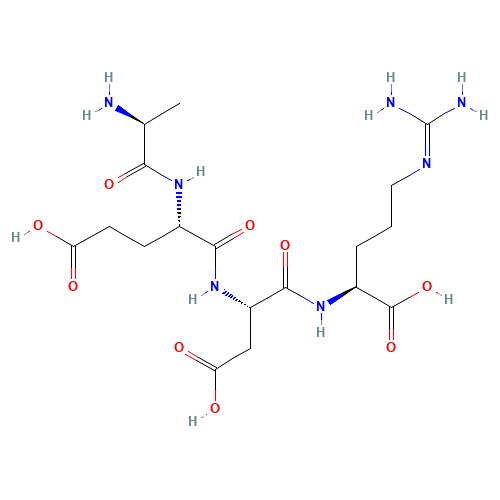
Sequence: Ala-Glu-Asp-Gly (AEDG)
Molecular Formula: C14H22N4O9
Molecular Weight: 390.35 g/mol
PubChem CID: 219042
CAS Number: 307297-39-8
Early insect and rodent models recorded mortality reductions up to 52% and lifespan extension up to 27% when Epithalon was administered. Beyond antioxidant effects, Epithalon activates telomerase in human somatic cells, sustaining telomere length and reducing DNA strand errors associated with senescence.
Epithalon binds promoter regions for genes including CD5, IL-2, MMP2, Tram1, and AANAT. This influences immune cell differentiation, white blood cell regulation, extracellular matrix maintenance, protein synthesis, and melatonin production.
Lymphocyte studies show increased interferon-gamma expression, underscoring Epithalon’s immune-supportive profile.
Rodent research reveals 30–45% increases in fibroblast activity following Epithalon exposure. Enhanced collagen, elastin, and MMP2 synthesis supports accelerated wound healing and preservation of skin structure during aging.
Epithalon modulates key regulators of melatonin synthesis (AANAT, pCREB), restoring pineal melatonin output in animal models. It also increases PER1 gene expression—associated with circadian rhythm control and potential anti-neoplastic activity—sensitizing cells to radiation in oncology studies.
In rat models of retinitis pigmentosa, Epithalon preserved retinal structure and bioelectric function in 90% of cases, suggesting a protective role in degenerative ocular conditions.
Epithalon is a versatile Khavinson peptide linked to telomerase activation, circadian entrainment, immune modulation, and connective tissue support. It exhibits low oral but excellent subcutaneous bioavailability in murine models, with minimal reported side effects. Dose data do not translate directly to humans; Epithalon remains restricted to licensed researchers and in-vitro investigations.
Article Author :
The above literature was researched, edited and organized by Dr. Logan, M.D. Dr. Logan holds a doctorate degree from https://case.edu/medicine/Case Western Reserve University School of Medicine and a B.S. in molecular biology.
Case Western Reserve University School of Medicine
ALL ARTICLES AND PRODUCT INFORMATION PROVIDED ON THIS WEBSITE ARE FOR INFORMATIONAL AND EDUCATIONAL PURPOSES ONLY.
The product information featured on this website pertains exclusively to in-vitro studies. In-vitro studies, also known as ‘in glass’ studies, are conducted outside of living organisms. It’s important to emphasize that these products do not constitute medicines or drugs and have not received FDA approval for the prevention, treatment, or cure of any medical conditions, ailments, or diseases. It is crucial to note that the introduction of these products into the bodies of humans or animals is strictly prohibited by law.
THIS PRODUCT IS INTENDED AS A RESEARCH CHEMICAL ONLY. This designation allows the use of research chemicals strictly for in vitro testing and laboratory experimentation only. All product information available on this website is for educational purposes only. Bodily introduction of any kind into humans or animals is strictly forbidden by law. This product should only be handled by licensed, qualified professionals. This product is not a drug, food, or cosmetic and may not be misbranded, misused or mislabled as a drug, food or cosmetic.