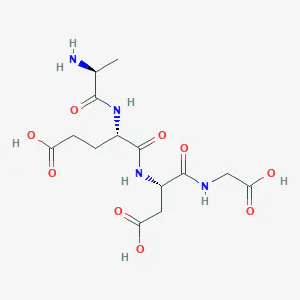
N-Acetyl Epithalon Amidate
Epithalon, a synthetic derivative of Epithalamin, shows promise as a telomerase modulator. Telomerase is the enzyme responsible for preserving and safeguarding the telomere caps, found at the extremities of DNA chromosomes. Emerging research indicates that Epithalon can stimulate telomere lengthening and potentially counteract aging-related effects.
PEPTIDES LIST
- Adipotide (FTPP)
- AICAR
- AOD9604
- ARA-290
- B7-33
- BPC-157
- Bronchogen
- Cagrisema
- Cagrilintides
- Cardiogen
- Cartalax
- Cerebrolysin (215mg/ml, 10ml)
- Chonluten
- CJC-1295 DAC
- Cortagen
- DSIP
- Epithalon (Epitalon)
- Follistatin-315
- Follistatin-344
- FOXO4-DRI
- GHK-Cu (Copper Peptide)
- GHK Basic
- GHRP-2
- GHRP-6
- GHRH (GH-Releasing Hormone)
- Glutathione
- Gonadorelin (GnRH)
- GLP2 & GLP3
- hGH Fragment 176-191
- Hexarelin
- Humanin
- Ipamorelin
- Kisspeptin-10
- KPV (ACTH (11-13) alpha-MSH)
- Liraglutide (GLP-1 Analogue)
- Livagen
- LL-37 (CAP-18)
- Melanotan 2 (Melanotan II)
- Mezdutide
- MGF (C-terminal)
- ModGRF 1-29 (CJC-1295 No DAC)
- MK-677 (Ibutamoren)
- MOTS-c
- N-Acetyl Epithalon Amidate
- N-Acetyl Selank Amidate
- N-Acetyl Semax Amidate
- NAD+
- Ovagen
- Oxytocin+
- Pancragen
- PE-22-28
- PEG-MGF (Pegylated MGF)
- Pinealon
- PNC-27
- Prostamax
- PT-141 (Bremelanotide)
- P21 (P021)
- Retatrutide
- Snap8
- Tesa_Ipa_Blend
- Triblend
- Selank
- Semaglutide (GLP-1 Analogue)
- Semax
- Sermorelin
- SS-31
- Survodutide
- TB-500
- Tesamorelin
- Testagen
- Thymagen
- Thyrotropin-TRH
- Tirzepatide
- Triptorelin
- Vesugenas
- Vesilute
- Vilon
- VIP (Vasoactive Intestinal Peptide)
- GLP2
- GLP3
- Klow
- Klow8
- SLU-PP-332
- BAM-15
- Orforglipron
- Noopept
- 9-Me-BC
- Methylene Blue
- Lemon Bottle

N-Acetyl Epithalon Amidate: This modified peptide is derived from Epithalon, a synthetic peptide originally found in cow pineal gland extract. It is renowned in research circles for its anti-aging properties, impact on cancer, infectious diseases, DNA regulation (particularly telomeres), and skin health.
Ongoing Research: Despite being discovered approximately four decades ago at the St. Petersburg Institute of Bioregulation and Gerontology, Epithalon continues to be the subject of active research, yielding fresh insights. Recent studies have suggested potential epigenetic mechanisms that could elucidate Epithalon's role in promoting neuronal differentiation of stem cells.
*COMING SOON - THIS SECTION IS CURRENTLY UNDER CONSTRUCTION* This protocol outlines a standard, gradual dosing approach for BPC-157, designed to parallel preclinical study practices while ensuring practical daily administration.
Dosing Schedule (3.0 mL → ~3.33 mg/mL):
Route & Frequency: Administer once daily via the subcutaneous route, reflecting the cadence commonly used in preclinical models (previously intraperitoneal or local injection). Technique recommendations follow established immunization best-practice guidance.
Precision Tip: For smaller injections ≤ 0.10 mL (≤ 10 units, e.g., 200–300 mcg), use 30- or 50-unit insulin syringes for better visibility and measurement accuracy.
| Week | Daily Dose (mcg) | Injection Volume (mL / Units) |
|---|---|---|
| Weeks 1–2 | 200 mcg (0.200 mg) | 0.06 mL (6 units) |
| Weeks 3–4 | 300 mcg (0.300 mg) | 0.09 mL (9 units) |
| Weeks 5–6 | 400 mcg (0.400 mg) | 0.12 mL (12 units) |
| Weeks 7–12 | 500 mcg (0.500 mg) | 0.15 mL (15 units) |
Reconstitution Instructions:
• Draw 3.0 mL of bacteriostatic water using a sterile syringe.
• Inject slowly along the vial wall to minimize foaming.
• Gently swirl or roll until fully dissolved (do not shake).
• Label and store refrigerated at 2–8 °C, protected from light.
• Avoid repeated freeze-thaw cycles; aliquot if long-term storage is required.
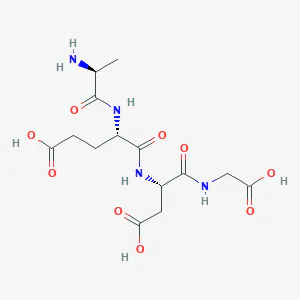
Sequence: Ala-Glu-Asp-Gly
Molecular Formula: C14H22N4O9
Molecular Weight: 338.213 g/mol
PubChem CID: 219042
CAS Number: 3031-94-5
Synonyms: 307297-39-8
Studies conducted in cell culture have revealed that Epithalon influences gene expression in neurogenetic differentiation and protein synthesis. Molecular modeling suggests that this occurs through epigenetic modulation of specific genes responsible for proteins such as Nestin, GAP43, β Tubulin III, and Doublecortin. Epithalon increases the expression of these peptides by binding to specific histone proteins, facilitating easier access to the genes. This increased accessibility leads to elevated gene expression and heightened protein production.
These proteins play critical roles in neuronal growth and development: Nestin aids in nerve cell growth and stem cell differentiation, stimulating tissue growth in the central nervous system (CNS). GAP43 is crucial for neuronal growth cones during development, axonal regeneration, and learning. β Tubulin III is involved in microtubule formation, oxidative stress responses, and cellular adaptation to molecular stress. Doublecortin is essential for the development of complex brain structures and a deficiency is linked to intellectual disability. Epithalon's ability to enhance access to DNA regions controlling these proteins is associated with improved learning, enhanced CNS injury recovery, and potential reductions in age-related brain effects. Moreover, Epithalon promotes neuronal stem cell differentiation, fostering neuron growth and development from stem cell progenitors. With an extended half-life and improved CNS penetration, N-Acetyl Epithalon Amidate exhibits enhanced potency and effects compared to standard Epithalon.
N-Acetyl Epithalon Amidate and Skin Health: Epithalon's capacity to regulate gene expression extends beyond the CNS. Research in skin stem cell cultures demonstrates that even at low concentrations, Epithalon significantly increases stem cell proliferation, particularly among fibroblasts, by up to 45%. Epithalon not only stimulates fibroblast growth but also reduces apoptosis rates and enhances functional activity, normalizing the intracellular matrix. This normalization restores skin homeostasis, shifting aging skin toward a more youthful production of collagen, elastin, and other essential proteins. The result is improved skin health, expanding into a field known as gerontocosmetology, which emphasizes overall skin health, including its immune system functions.
N-Acetyl Epithalon Amidate and Immune Health: Epithalon plays a role in regulating the immune system by altering the expression of immune signaling molecules, such as CD5, IL-2, Arylalkylamine-N-acetyltransferase, interferon gamma, and Tram1. These proteins influence immune function, stem cell differentiation, white blood cell production, melatonin production, and the body's response to infections. Epithalon's impact on the immune system helps counteract age-related deterioration in immune response, which is linked to chronic inflammation, cardiovascular disease, and dementia. Its ability to penetrate the CNS ensures that its immune-enhancing effects also extend to the brain, where regulation of inflammation can mitigate processes leading to dementia.
N-Acetyl Epithalon Amidate and Cancer: Research in rat models indicates that daily administration of Epithalon reduces tumor growth. It is being explored as a potential adjuvant in treating specific cancers, including Her-2/neu positive breast cancers, leukemia, and testicular cancer. Notably, Epithalon's action in cancer regulation is associated with the PER1 gene, which is responsible for circadian rhythm regulation and often under-expressed in cancer patients.
N-Acetyl Epithalon Amidate and Sleep: Epithalon's role in regulating the protein PER1, involved in circadian rhythm, is consistent with its origin in the pineal gland, which regulates the sleep-wake cycle. Epithalon also influences melatonin production and release, a key regulator of sleep patterns. By increasing melatonin production, Epithalon can restore normal sleep-wake cycles, impacting various aspects of health, including cognitive function, wound healing, immune response, growth hormone secretion, weight regulation, bone health, and cardiovascular health.
N-Acetyl Epithalon Amidate and Aging: Epithalon's primary function is to restore DNA expression patterns to a more youthful state. This restoration is achieved through potential epigenetic changes involving histone protein binding. Epithalon also affects antioxidant activity and telomere health. It reduces lipid peroxidation production, counteracting oxidative protein damage, and increases telomerase activity, which helps maintain DNA integrity by repairing telomeres. Aging results from DNA damage, protein malfunction, cellular dysfunction, and senescence. Epithalon mitigates these processes by regulating DNA and protein damage, contributing to the maintenance of biological function. Studies in insects and rodents have demonstrated that Epithalon can extend lifespan and reduce mortality rates significantly. In conclusion, while Epithalon may not be a sole solution to halting aging, it provides valuable insights into countering fundamental processes responsible for DNA and protein damage. Epithalon research, including the development of N-Acetyl Epithalon Amidate, offers a deeper understanding of the factors influencing aging and opens avenues for potential interventions.
The above literature was researched, edited and organized by Dr. Logan, M.D. Dr. Logan holds a doctorate degree from https://case.edu/medicine/Case Western Reserve University School of Medicine and a B.S. in molecular biology.
Case Western Reserve University School of Medicine
ALL ARTICLES AND PRODUCT INFORMATION PROVIDED ON THIS WEBSITE ARE FOR INFORMATIONAL AND EDUCATIONAL PURPOSES ONLY.
The product information featured on this website pertains exclusively to in-vitro studies. In-vitro studies, also known as 'in glass' studies, are conducted outside of living organisms. It's important to emphasize that these products do not constitute medicines or drugs and have not received FDA approval for the prevention, treatment, or cure of any medical conditions, ailments, or diseases. It is crucial to note that the introduction of these products into the bodies of humans or animals is strictly prohibited by law.
THIS PRODUCT IS INTENDED AS A RESEARCH CHEMICAL ONLY. This designation allows the use of research chemicals strictly for in vitro testing and laboratory experimentation only. All product information available on this website is for educational purposes only. Bodily introduction of any kind into humans or animals is strictly forbidden by law. This product should only be handled by licensed, qualified professionals. This product is not a drug, food, or cosmetic and may not be misbranded, misused or mislabled as a drug, food or cosmetic.