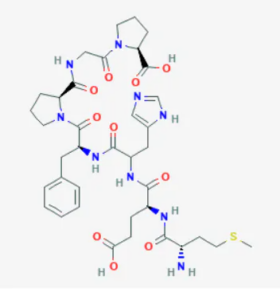
N-Acetyl Semax Amidate
N-Acetyl Semax, a synthetic peptide, has gained recognition for its remarkable neurogenic and neurorestorative qualities. Although it has received clinical approval in Russia, its potential benefits have yet to be explored in other regions. Extensive research suggests that N-Acetyl Semax can enhance memory and cognitive function, offering promise in addressing conditions like optic nerve disorders, stroke, and ischemic heart disease. Furthermore, there is evidence to suggest that it may have a positive impact on immune function. Explore the possibilities with N-Acetyl Semax today.
PEPTIDES LIST
- Adipotide (FTPP)
- AICAR
- AOD9604
- ARA-290
- B7-33
- BPC-157
- Bronchogen
- Cagrisema
- Cagrilintides
- Cardiogen
- Cartalax
- Cerebrolysin (215mg/ml, 10ml)
- Chonluten
- CJC-1295 DAC
- Cortagen
- DSIP
- Epithalon (Epitalon)
- Follistatin-315
- Follistatin-344
- FOXO4-DRI
- GHK-Cu (Copper Peptide)
- GHK Basic
- GHRP-2
- GHRP-6
- GHRH (GH-Releasing Hormone)
- Glutathione
- Gonadorelin (GnRH)
- GLP2 & GLP3
- hGH Fragment 176-191
- Hexarelin
- Humanin
- Ipamorelin
- Kisspeptin-10
- KPV (ACTH (11-13) alpha-MSH)
- Liraglutide (GLP-1 Analogue)
- Livagen
- LL-37 (CAP-18)
- Melanotan 2 (Melanotan II)
- Mezdutide
- MGF (C-terminal)
- ModGRF 1-29 (CJC-1295 No DAC)
- MK-677 (Ibutamoren)
- MOTS-c
- N-Acetyl Epithalon Amidate
- N-Acetyl Selank Amidate
- N-Acetyl Semax Amidate
- NAD+
- Ovagen
- Oxytocin+
- Pancragen
- PE-22-28
- PEG-MGF (Pegylated MGF)
- Pinealon
- PNC-27
- Prostamax
- PT-141 (Bremelanotide)
- P21 (P021)
- Retatrutide
- Snap8
- Tesa_Ipa_Blend
- Triblend
- Selank
- Semaglutide (GLP-1 Analogue)
- Semax
- Sermorelin
- SS-31
- Survodutide
- TB-500
- Tesamorelin
- Testagen
- Thymagen
- Thyrotropin-TRH
- Tirzepatide
- Triptorelin
- Vesugenas
- Vesilute
- Vilon
- VIP (Vasoactive Intestinal Peptide)
- GLP2
- GLP3
- Klow
- Klow8
- SLU-PP-332
- BAM-15
- Orforglipron
- Noopept
- 9-Me-BC
- Methylene Blue
- Lemon Bottle

N-Acetyl Semax Amidate is a synthetic analogue of adrenocorticotropic hormone (ACTH) with potential benefits in cognitive enhancement, stroke recovery, and immune modulation. It increases levels of brain-derived neurotrophic factor (BDNF) and modulates serotonin and dopamine levels, promoting cognitive and emotional well-being.
The research findings are compelling, revealing that Semax's mechanism of action involves the elevation of crucial neurotransmitters and growth factors. Notably, it increases levels of brain-derived neurotrophic factor (BDNF) within the central nervous system, a key player in neuronal health and synaptic plasticity. Additionally, Semax has been shown to modulate levels of serotonin and dopamine, further underscoring its potential in promoting cognitive and emotional well-being.
Semax is a synthetic analogue of adrenocorticotropic hormone (ACTH). It consists of the amino acids 4-10 of ACTH.
*COMING SOON - THIS SECTION IS CURRENTLY UNDER CONSTRUCTION* This protocol outlines a standard, gradual dosing approach for BPC-157, designed to parallel preclinical study practices while ensuring practical daily administration.
Dosing Schedule (3.0 mL → ~3.33 mg/mL):
Route & Frequency: Administer once daily via the subcutaneous route, reflecting the cadence commonly used in preclinical models (previously intraperitoneal or local injection). Technique recommendations follow established immunization best-practice guidance.
Precision Tip: For smaller injections ≤ 0.10 mL (≤ 10 units, e.g., 200–300 mcg), use 30- or 50-unit insulin syringes for better visibility and measurement accuracy.
| Week | Daily Dose (mcg) | Injection Volume (mL / Units) |
|---|---|---|
| Weeks 1–2 | 200 mcg (0.200 mg) | 0.06 mL (6 units) |
| Weeks 3–4 | 300 mcg (0.300 mg) | 0.09 mL (9 units) |
| Weeks 5–6 | 400 mcg (0.400 mg) | 0.12 mL (12 units) |
| Weeks 7–12 | 500 mcg (0.500 mg) | 0.15 mL (15 units) |
Reconstitution Instructions:
• Draw 3.0 mL of bacteriostatic water using a sterile syringe.
• Inject slowly along the vial wall to minimize foaming.
• Gently swirl or roll until fully dissolved (do not shake).
• Label and store refrigerated at 2–8 °C, protected from light.
• Avoid repeated freeze-thaw cycles; aliquot if long-term storage is required.
Sequence: Ac-MEHFPGP-NH2
Molecular Formula: C37H51N9O10S
Molecular Weight: 858.98 g/mol
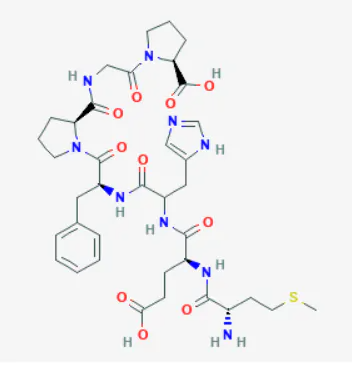
Semax: Enhancing Brain Function and Cognitive Health: Semax, a product developed in Russia, has garnered attention for its potential benefits in various health settings, including stroke recovery, cognitive impairment, dementia, and inflammation.
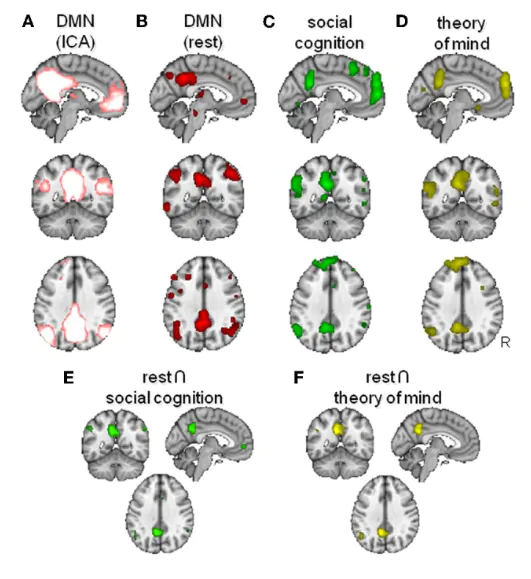
Improving Resting Brain Structure with N-Acetyl Semax: Functional magnetic resonance imaging (fMRI) has shed light on how Semax positively impacts brain function. Specifically, it enhances the activity of the default mode network, a network that becomes more active during rest than during task performance. This network is vital for social cognition and environmental monitoring, making it crucial for our overall attention. Conditions affecting cognition, like Alzheimer's disease, often involve compromised default mode network activity, reinforcing its importance in social awareness.
By increasing default mode network activity, N-acetyl Semax heightens our general alertness during rest, particularly in social contexts. This heightened awareness allows for better focus and attention, facilitating the transition from a resting state to a focused one. Moreover, enhanced default mode network activity correlates with increased connectivity across different brain regions. While there is no direct evidence of Semax's impact on brain connectivity, it's conceivable that this peptide fosters greater interconnectivity, potentially resulting in improved problem-solving abilities, memory, and creativity.
N-Acetyl Semax in Stroke Recovery: In Russia, N-acetyl Semax is employed for treating acute cerebral hypoxia, such as that occurring in stroke or traumatic brain injury. Studies in rats reveal that N-acetyl Semax triggers various molecular mechanisms related to gene transcription in the central nervous system (CNS). Notably, it influences the expression of 24 genes linked to brain and spinal cord blood vessel function. These genes regulate processes like smooth muscle cell migration, red blood cell formation, and new blood vessel formation. This might explain why N-acetyl Semax displays neuroprotective properties during stroke, promoting neuron survival, stabilizing mitochondria, and enhancing brain nutrition.
Research on stroke patients in Russia indicates that N-acetyl Semax accelerates the recovery rate and leads to improved overall function after therapy. Early rehabilitation combined with Semax administration raises brain-derived neurotrophic factor (BDNF) plasma levels, expediting functional recovery and enhancing motor performance. BDNF is a natural peptide crucial for learning and memory, suggesting that N-acetyl Semax, by stimulating BDNF, may enhance brain plasticity, making it easier for undamaged brain regions to take over tasks previously handled by damaged ones. Furthermore, Semax activates the default mode network, as mentioned earlier, a key component of resting attention and social function.
N-Acetyl Semax and Brain Gene Expression: The impact of N-acetyl Semax on gene expression isn't limited to stroke recovery. Studies in healthy rats demonstrate that a single intranasal administration of Semax affects multiple genes in the hippocampus and frontal cortex within 20 minutes. These brain regions are critical for memory, learning, concentration, planning, and information organization. Semax's effects on nerve growth factor (NGF) and BDNF are particularly noteworthy. Researchers speculate that Semax may hold promise in unraveling how we learn and process information, potentially enhancing cognition and learning.
Enhancing Cognitive Performance with N-Acetyl Semax: Emerging evidence suggests that N-acetyl Semax could be effective in boosting learning and memory, especially in individuals with neurological impairments. Studies show that ACTH, the natural protein upon which N-acetyl Semax is based, protects learning and memory in mouse models of epilepsy. ACTH has long been used to treat epileptic disorders as a means of safeguarding against learning and memory deficits during seizures. N-acetyl Semax, a derivative of ACTH, may offer unique advantages. While more research is needed, it's worth noting that even low doses of ACTH can prevent learning and memory dysfunction during seizures. This suggests potential nootropic properties of ACTH and Semax, with the possibility of enhancing cognitive performance through regular, low-dose administration.
N-Acetyl Semax and Depression: Studies in mice suggest that increasing BDNF levels can regulate brain function in depression. Current antidepressants, like SSRIs, often take weeks to show effects, but the delayed response has been puzzling. Insight from N-acetyl Semax and other BDNF stimulators suggests that SSRIs may work by increasing BDNF levels, stimulating neurogenesis in depressed brains. Combining BDNF stimulators, such as N-acetyl Semax, with SSRIs may enhance efficacy and revolutionize depression treatment. It's important to note that N-Acetyl Semax exhibits minimal side effects and excellent bioavailability. However, it is intended for research purposes only and should not be used for human consumption without proper licensing.
The above literature was researched, edited and organized by Dr. Logan, M.D. Dr. Logan holds a doctorate degree from https://case.edu/medicine/Case Western Reserve University School of Medicine and a B.S. in molecular biology.
Case Western Reserve University School of Medicine
ALL ARTICLES AND PRODUCT INFORMATION PROVIDED ON THIS WEBSITE ARE FOR INFORMATIONAL AND EDUCATIONAL PURPOSES ONLY.
The product information featured on this website pertains exclusively to in-vitro studies. In-vitro studies, also known as 'in glass' studies, are conducted outside of living organisms. It's important to emphasize that these products do not constitute medicines or drugs and have not received FDA approval for the prevention, treatment, or cure of any medical conditions, ailments, or diseases. It is crucial to note that the introduction of these products into the bodies of humans or animals is strictly prohibited by law.
THIS PRODUCT IS INTENDED AS A RESEARCH CHEMICAL ONLY. This designation allows the use of research chemicals strictly for in vitro testing and laboratory experimentation only. All product information available on this website is for educational purposes only. Bodily introduction of any kind into humans or animals is strictly forbidden by law. This product should only be handled by licensed, qualified professionals. This product is not a drug, food, or cosmetic and may not be misbranded, misused or mislabled as a drug, food or cosmetic.