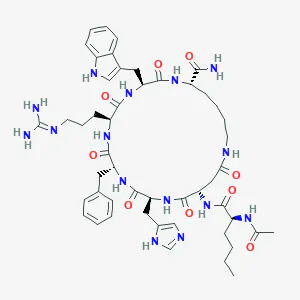
Melanotan 2 (MT2)
Melanotan 2, also known as MT-2, is a synthetic analog of alpha-melanocyte-stimulating hormone. It was developed in the 1980s and has demonstrated several effects, including increasing sexual arousal, reducing compulsive/addictive behavior, suppressing appetite, and promoting the development of lean body mass. Research indicates that this peptide can stimulate melanocytes, resulting in heightened skin pigmentation. Moreover, there is ongoing investigation into its potential application in addressing autism when administered during early childhood development.
PEPTIDES LIST
- Adipotide (FTPP)
- AICAR
- AOD9604
- ARA-290
- B7-33
- BPC-157
- Bronchogen
- Cagrisema
- Cagrilintides
- Cardiogen
- Cartalax
- Cerebrolysin (215mg/ml, 10ml)
- Chonluten
- CJC-1295 DAC
- Cortagen
- DSIP
- Epithalon (Epitalon)
- Follistatin-315
- Follistatin-344
- FOXO4-DRI
- GHK-Cu (Copper Peptide)
- GHK Basic
- GHRP-2
- GHRP-6
- GHRH (GH-Releasing Hormone)
- Glutathione
- Gonadorelin (GnRH)
- GLP2 & GLP3
- hGH Fragment 176-191
- Hexarelin
- Humanin
- Ipamorelin
- Kisspeptin-10
- KPV (ACTH (11-13) alpha-MSH)
- Liraglutide (GLP-1 Analogue)
- Livagen
- LL-37 (CAP-18)
- Melanotan 2 (Melanotan II)
- Mezdutide
- MGF (C-terminal)
- ModGRF 1-29 (CJC-1295 No DAC)
- MK-677 (Ibutamoren)
- MOTS-c
- N-Acetyl Epithalon Amidate
- N-Acetyl Selank Amidate
- N-Acetyl Semax Amidate
- NAD+
- Ovagen
- Oxytocin+
- Pancragen
- PE-22-28
- PEG-MGF (Pegylated MGF)
- Pinealon
- PNC-27
- Prostamax
- PT-141 (Bremelanotide)
- P21 (P021)
- Retatrutide
- Snap8
- Tesa_Ipa_Blend
- Triblend
- Selank
- Semaglutide (GLP-1 Analogue)
- Semax
- Sermorelin
- SS-31
- Survodutide
- TB-500
- Tesamorelin
- Testagen
- Thymagen
- Thyrotropin-TRH
- Tirzepatide
- Triptorelin
- Vesugenas
- Vesilute
- Vilon
- VIP (Vasoactive Intestinal Peptide)
- GLP2
- GLP3
- Klow
- Klow8
- SLU-PP-332
- BAM-15
- Orforglipron
- Noopept
- 9-Me-BC
- Methylene Blue
- Lemon Bottle

Melanotan 2 (MT-2) is a synthetic derivative of human alpha-melanocyte-stimulating hormone (α-MSH). Developed in the 1980s at the University of Arizona, this compound was originally intended as a sunless tanning solution. However, researchers soon discovered that MT-2 had a broad spectrum of effects, including:
The source material presents Melanotan 2 (MT2) in several use-patterns (most commonly for pigmentation/tanning), with additional notes for metabolic support and sexual stimulation. The tables below reflect the listed dosing/cycling formats (educational context only; not medical advice).
Tanning Protocol (As Listed)
Note: Desired pigmentation may be reached faster if sun exposure occurs shortly after dosing.
| Phase | Dose | Cycling / Frequency |
|---|---|---|
| Loading Phase | 200–300 mcg per dose | Daily until desired pigmentation (skin tone) is reached |
| Maintenance Phase | 50–100 mcg per dose | 1–2× per week after the skin-tone goal is reachedCycles can last 1–4 months, with a 1-month minimum cycle break betweenDosing frequency/amount varies by goal, natural sun exposure, and individual reaction |
| Use-Pattern | Dose | Cycling / Timing |
|---|---|---|
| Metabolic Support | 50–100 mcg per dose | Daily for up to 1–4 months, with a 1-month minimum cycle break between (frequency/amount varies by goal and individual reaction) |
| Sexual Stimulation | 200–1000 mcg per dose | Ideally 30–60 minutes before intercourse |
Caution & Contraindications (As Listed):
Caution:
• May cause headache, nausea, blood pressure changes, darkening of moles/freckles, and priapism (painful erection lasting > 4 hours)
• Use caution in individuals with autoimmune conditions (history or active)
Contraindications:
• Individuals with active or history of skin cancer
• Do not combine with other PDE-5 inhibitors (e.g., Cialis/Viagra)
Reconstitution Options (Vial Format):
• 2 mg
• 10 mg
Reconstitution (General Handling):
• Use sterile technique and sanitize the vial stopper before access.
• Add bacteriostatic water slowly along the vial wall to minimize foaming.
• Gently swirl/roll until fully dissolved (do not shake).
• Store refrigerated at 2–8 °C, protected from light.
Sequence: Nle-Asp(1)-His-D-Phe-Arg-Trp-Lys(1)
Molecular Formula: C50H69N15O9
Molecular Weight: 1024.198 g mol^-1
PubChem CID: 92432
CAS Number: 121062-08-6
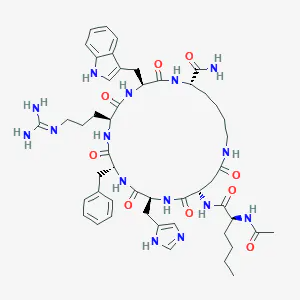
Melanotan 2 functions by binding with various melanocortin receptors, including MC-4R and MC-1R, with a weaker affinity for MC-3R. These receptors have distinct roles: MC-1R: Found on melanocytes, MC-1R stimulation darkens the skin and hair. MC-2R: Located in the adrenal glands, MC-2R activation promotes the secretion of adrenal hormones like cortisol. MC-3R: MC-3R is associated with appetite regulation and energy control, with limited knowledge about its other functions. MC-4R: Stimulation of MC-4R influences feeding habits, sexual behavior, male erectile function, and energy balance. MC-5R: MC-5R is expressed in sweat glands and pancreatic islet cells.
Recent research highlights that Melanotan 2 (MT-2) can ameliorate certain autism-related traits in a commonly used mouse model of Autism Spectrum Disorder (ASD). Traditional ASD treatments are limited, but new findings suggest the potential utility of oxytocin therapy in mitigating ASD-related behavioral issues. Using a mouse model associated with maternal immune activation leading to autism, scientists explored MT-2's ability to stimulate oxytocin release and counteract ASD symptoms. The study demonstrated that MT-2 administration reverses reduced communication, impaired social interaction, and repetitive behaviors linked to autism in this specific model. Additionally, MT-2 administration was found to increase oxytocin receptor expression in specific brain regions, indicating a direct link between oxytocin signaling and ASD-specific behaviors. These discoveries not only offer prospects for ASD treatments but also contribute to the understanding of ASD's underlying mechanisms, potentially leading to preventive measures.
The development of diabetes involves elevated blood sugar levels, overproduction of glucagon, and the generation of ketone bodies[6]. It has long been understood that leptin counters these factors by enhancing glucose uptake, inhibiting glucagon production, and interfering with the ketone body formation pathway. Importantly, these actions are not reliant on insulin, prompting active exploration of leptin signaling as a potential alternative for diabetes treatment. Research has shown that leptin's influence on blood sugar regulation involves melanocortin receptors, and Melanotan 2 (MT-2) can produce similar effects[7]. This finding holds significance because leptin primarily acts in the brain but has limited ability to cross the blood-brain barrier compared to MT-2. Consequently, exogenously administered leptin fails to reach the central nervous system in substantial quantities, reducing its effectiveness as a drug and giving MT-2 an advantage, despite the peptides' nearly identical impact on melanocortin receptors.
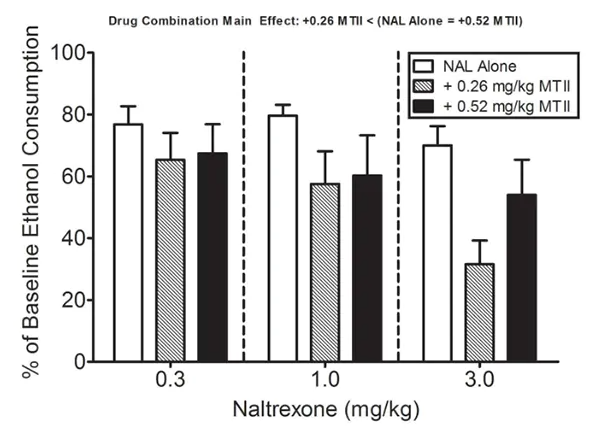
In line with the notion that MT-2 may affect oxytocin signaling and, consequently, behavior in Autism Spectrum Disorder (ASD), research also indicates that the MC-4R receptor could play a role in impulse control. Previous studies in rats have demonstrated that MT-2 administration reduces alcohol consumption and increases water intake, even in rats that typically prefer alcohol[8]. More recent investigations have revealed that Melanotan-2 synergizes with naltrexone, enhancing its effectiveness more than sevenfold in reducing binge-like ethanol consumption in mice[9]. These findings suggest that MT-2 might not only be a valuable treatment for alcohol-related disorders but could also be influencing a fundamental process related to cravings and desires in the mammalian brain. This research may open up avenues to better understand not only alcohol abuse and hunger but also the role of oxytocin in impulsive behavior, potentially advancing our comprehension of human motivation in various aspects of life, from work to relationships.
Erectile dysfunction (ED) is often attributed to vascular issues and is effectively treated in a majority of men with medications like sildenafil (Viagra), which improve blood flow by reducing vascular resistance. However, not all ED cases stem from vascular problems, and thus, sildenafil and similar drugs are ineffective in a small portion of men and most women with hypoactive sexual desire disorder. It has long been recognized that MT-2 is an efficacious treatment for ED, with research suggesting broader applications than drugs like sildenafil due to its actions in the central nervous system. In a study involving men who had not responded to Viagra treatment, eighty percent showed positive responses to MT-2 treatment[10]. MT-2 has been actively examined as a potential treatment for both male and female sexual desire disorders.
MT-2 remains a subject of extensive research, particularly in the realms of human behavior, sexual desire, and impulse control. Various forms of this peptide have been studied in clinical trials, although challenges related to administration methods have prompted researchers to reevaluate their approaches. Ongoing investigations continue to explore the potential benefits of MT-2, making it a subject of active scientific interest. MT-2 exhibits minimal to moderate side effects, possesses low oral and excellent subcutaneous bioavailability in mice. However, the dosage per kilogram in mice is not directly applicable to humans. It's essential to note that MT-2 available for purchase from Peptide Sciences is intended solely for educational and scientific research purposes and is not meant for human consumption. Buyers should only consider MT-2 if they hold appropriate research licenses.
MT-2 reduces fat storage, hunger-related behaviors, and may be superior to leptin in reducing food intake by stimulating both leptin-dependent and leptin-independent pathways. It shows promise in managing diabetes by regulating blood sugar and glucagon levels, and reducing impulse control issues and alcohol intake.
The above literature was researched, edited and organized by Dr. Logan, M.D. Dr. Logan holds a doctorate degree from https://case.edu/medicine/Case Western Reserve University School of Medicine and a B.S. in molecular biology.
Case Western Reserve University School of Medicine
ALL ARTICLES AND PRODUCT INFORMATION PROVIDED ON THIS WEBSITE ARE FOR INFORMATIONAL AND EDUCATIONAL PURPOSES ONLY.
The product information featured on this website pertains exclusively to in-vitro studies. In-vitro studies, also known as 'in glass' studies, are conducted outside of living organisms. It's important to emphasize that these products do not constitute medicines or drugs and have not received FDA approval for the prevention, treatment, or cure of any medical conditions, ailments, or diseases. It is crucial to note that the introduction of these products into the bodies of humans or animals is strictly prohibited by law.
THIS PRODUCT IS INTENDED AS A RESEARCH CHEMICAL ONLY. This designation allows the use of research chemicals strictly for in vitro testing and laboratory experimentation only. All product information available on this website is for educational purposes only. Bodily introduction of any kind into humans or animals is strictly forbidden by law. This product should only be handled by licensed, qualified professionals. This product is not a drug, food, or cosmetic and may not be misbranded, misused or mislabled as a drug, food or cosmetic.