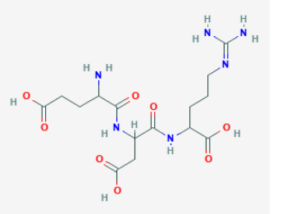
Pinealon (Bioregulator)
Pinealon is a synthetic peptide consisting of only three amino acids. Research has revealed its capacity to influence behavior and safeguard various cell types from the impacts of hypoxia (oxygen deprivation). Extensive studies have been conducted on Pinealon, focusing on its potential to regulate circadian rhythms, enhance memory, and improve the learning process. Furthermore, Pinealon has demonstrated the ability to counteract the effects of aging, particularly in the central nervous system, making it a potential candidate for the treatment of cognitive disorders such as Alzheimer's disease.
PEPTIDES LIST
- Adipotide (FTPP)
- AICAR
- AOD9604
- ARA-290
- B7-33
- BPC-157
- Bronchogen
- Cagrisema
- Cagrilintides
- Cardiogen
- Cartalax
- Cerebrolysin (215mg/ml, 10ml)
- Chonluten
- CJC-1295 DAC
- Cortagen
- DSIP
- Epithalon (Epitalon)
- Follistatin-315
- Follistatin-344
- FOXO4-DRI
- GHK-Cu (Copper Peptide)
- GHK Basic
- GHRP-2
- GHRP-6
- GHRH (GH-Releasing Hormone)
- Glutathione
- Gonadorelin (GnRH)
- GLP2 & GLP3
- hGH Fragment 176-191
- Hexarelin
- Humanin
- Ipamorelin
- Kisspeptin-10
- KPV (ACTH (11-13) alpha-MSH)
- Liraglutide (GLP-1 Analogue)
- Livagen
- LL-37 (CAP-18)
- Melanotan 2 (Melanotan II)
- Mezdutide
- MGF (C-terminal)
- ModGRF 1-29 (CJC-1295 No DAC)
- MK-677 (Ibutamoren)
- MOTS-c
- N-Acetyl Epithalon Amidate
- N-Acetyl Selank Amidate
- N-Acetyl Semax Amidate
- NAD+
- Ovagen
- Oxytocin+
- Pancragen
- PE-22-28
- PEG-MGF (Pegylated MGF)
- Pinealon
- PNC-27
- Prostamax
- PT-141 (Bremelanotide)
- P21 (P021)
- Retatrutide
- Snap8
- Tesa_Ipa_Blend
- Triblend
- Selank
- Semaglutide (GLP-1 Analogue)
- Semax
- Sermorelin
- SS-31
- Survodutide
- TB-500
- Tesamorelin
- Testagen
- Thymagen
- Thyrotropin-TRH
- Tirzepatide
- Triptorelin
- Vesugenas
- Vesilute
- Vilon
- VIP (Vasoactive Intestinal Peptide)
- GLP2
- GLP3
- Klow
- Klow8
- SLU-PP-332
- BAM-15
- Orforglipron
- Noopept
- 9-Me-BC
- Methylene Blue
- Lemon Bottle

Pinealon is a concise peptide composed of only three amino acids. It belongs to a group of synthetic peptides known as peptide bioregulators, recognized for their capacity to directly interact with DNA, thereby influencing gene expression levels. Pinealon has been associated with behavior modification and is believed to offer protection to various cell types, including neurons, against the consequences of oxygen deprivation (hypoxia). Its direct influence on the pineal gland suggests that Pinealon may play a role in mitigating issues related to drug metabolism, circadian rhythm disorders, memory, learning, and other related functions.
Pinealon is described as a bioregulator peptide discussed for interacting with DNA / gene expression in the pineal gland. It’s also discussed for helping protect certain cell types (notably neurons) under low-oxygen (hypoxia) stress and for potential relevance to sleep–wake and cognitive domains. (Educational context only.)
Deeper Research Notes (Summary):
• Described as supporting irisin signaling (a protein discussed in exercise adaptation and metabolism), with downstream discussion around cellular resilience.
• Described as helping reduce hypoxia-related cellular damage in the brain by supporting the body’s antioxidant defenses.
• Described as influencing mood-related signaling via increased 5-tryptophan hydroxylase activity, which is involved in serotonin production.
• Because it’s discussed in the context of the pineal gland, it’s also described as potentially supporting circadian rhythm alignment and sleep.
Dosing & Cycling (As Listed):The source frames Pinealon like other bioregulators—typically used in periodic cycles rather than continuous daily use year-round.
| Protocol Item | Guidance |
|---|---|
| Dose | 1–5 mg per dose |
| Loading Phase (Year 1) | Month 1: Daily Months 2–4: Daily for 10–20 days at the start of each month Months 5–12: Off |
| Maintenance (Year 2+) | 10–20 day cycles, about 3× per year, spaced evenly |
Caution & Contraindications:
Caution:
• Described as generally well tolerated based on the referenced research summary
Contraindications:
• Also described as generally well tolerated based on the referenced research summary
Reconstitution Options (Vial Format):
• 20 mg
Reconstitution (General Handling):
• Use sterile technique and sanitize the vial stopper before access.
• Add diluent slowly along the vial wall to minimize foaming.
• Gently swirl/roll until fully dissolved (avoid vigorous shaking).
• Store according to the product label/spec sheet and protect from light as applicable.
Sequence: Glu-Asp-Arg
Molecular Formula: C15H26N6O8
Molecular Weight: 418.407 g/mol
PubChem CID: 18220191
CAS Number: 3031-94-5
Synonyms: Glutamylaspartylarginine, T-33 peptide
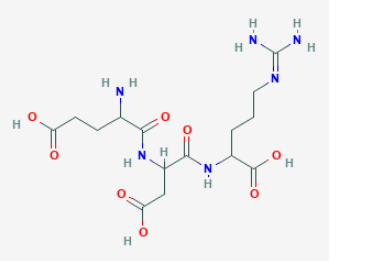
Unlike most peptides, pinealon does not appear to bind to cell surface or cytoplasmic receptors. This has led scientists to wonder how the short peptide can have any effect. In the past, it was suggested that pinealon may be small enough to cross lipid bilayers (e.g. the cell membrane, nuclear membrane) and may therefore be able to interact directly with DNA. Testing in cell cultures (HeLa cells) indicates that pinealon directly penetrates the cell membrane as well as the nuclear membrane to interact with DNA. This makes pinealon a regulator of gene expression and explains the peptide's myriad effects that cannot be explained by receptor interactions.
Research conducted in Russia suggests that Pinealon and a similar peptide called Vesugen may possess anti-aging properties, particularly in the central nervous system. These peptides have been found to have anabolic effects in the brain, potentially slowing the aging process when assessed using biological age indicators.
Pinealon's influence extends beyond the central nervous system, as it also affects muscle cells by modulating the expression of irisin. Irisin plays a crucial role in safeguarding muscle cells during exercise, promoting fat burning, and is believed to induce telomere elongation. By increasing the lifespan of irisin, Pinealon enhances telomere protection, combating the effects of aging and oxidative stress. Notably, plasma irisin levels are directly linked to telomere length in healthy adults. Furthermore, irisin levels have been associated with calorie restriction, a well-established method to prolong life and improve overall fitness. These observations suggest that irisin, which Pinealon affects, may have systemic anti-aging effects throughout the body, including the brain.
Pinealon Research and Neuron Protection Studies in prenatal rats indicate that Pinealon can protect neurons from oxidative stress, thereby preserving cognitive function and motor coordination. These studies have demonstrated significant reductions in reactive oxygen species accumulation and the number of necrotic cells in the brains of prenatal rats treated with Pinealon. In essence, Pinealon helps safeguard neurons from cell death caused by oxidative stress. The findings from the prenatal rat study have been substantiated and expanded upon in subsequent research. It has been confirmed that Pinealon offers protection against reactive oxygen species and reduces necrotic cell death. Additionally, it has been revealed that Pinealon modulates the cell cycle, primarily by activating proliferation pathways. In typical circumstances, this activation would lead to an increase in cell numbers. However, under conditions of oxidative stress, this effect counteracts some of the detrimental effects caused by reactive oxygen species. This modulation at the DNA level suggests that Pinealon interacts with DNA, highlighting its potential therapeutic significance. Please note that Pinealon's application is primarily intended for educational and scientific research purposes and is restricted for sale to licensed researchers. It is not intended for human consumption.
Article Author:
The above literature was researched, edited and organized by Dr. Logan, M.D. Dr. Logan holds a doctorate degree from https://case.edu/medicine/Case Western Reserve University School of Medicine and a B.S. in molecular biology.
Case Western Reserve University School of Medicine
ALL ARTICLES AND PRODUCT INFORMATION PROVIDED ON THIS WEBSITE ARE FOR INFORMATIONAL AND EDUCATIONAL PURPOSES ONLY.
The product information featured on this website pertains exclusively to in-vitro studies. In-vitro studies, also known as 'in glass' studies, are conducted outside of living organisms. It's important to emphasize that these products do not constitute medicines or drugs and have not received FDA approval for the prevention, treatment, or cure of any medical conditions, ailments, or diseases. It is crucial to note that the introduction of these products into the bodies of humans or animals is strictly prohibited by law.
THIS PRODUCT IS INTENDED AS A RESEARCH CHEMICAL ONLY. This designation allows the use of research chemicals strictly for in vitro testing and laboratory experimentation only. All product information available on this website is for educational purposes only. Bodily introduction of any kind into humans or animals is strictly forbidden by law. This product should only be handled by licensed, qualified professionals. This product is not a drug, food, or cosmetic and may not be misbranded, misused or mislabled as a drug, food or cosmetic.