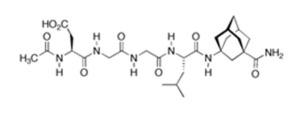
P21 (P021)
P21 is a nootropic peptide known for its potential to enhance neurogenesis. In animal research, P21 has demonstrated the ability to elevate BDNF (brain-derived neurotrophic factor) levels, which plays a vital role in stimulating nerve growth while also reducing the formation of Amyloid plaques and Tau proteins associated with Alzheimer's disease. BDNF is not only associated with boosting neurogenesis but also with the regulation of specific enzymes responsible for the development of tau and amyloid plaques in Alzheimer's brains. Studies in animals have indicated that P21 can lead to improved cognitive function.
PEPTIDES LIST
- Adipotide (FTPP)
- AICAR
- AOD9604
- ARA-290
- B7-33
- BPC-157
- Bronchogen
- Cagrisema
- Cagrilintides
- Cardiogen
- Cartalax
- Cerebrolysin (215mg/ml, 10ml)
- Chonluten
- CJC-1295 DAC
- Cortagen
- DSIP
- Epithalon (Epitalon)
- Follistatin-315
- Follistatin-344
- FOXO4-DRI
- GHK-Cu (Copper Peptide)
- GHK Basic
- GHRP-2
- GHRP-6
- GHRH (GH-Releasing Hormone)
- Glutathione
- Gonadorelin (GnRH)
- GLP2 & GLP3
- hGH Fragment 176-191
- Hexarelin
- Humanin
- Ipamorelin
- Kisspeptin-10
- KPV (ACTH (11-13) alpha-MSH)
- Liraglutide (GLP-1 Analogue)
- Livagen
- LL-37 (CAP-18)
- Melanotan 2 (Melanotan II)
- Mezdutide
- MGF (C-terminal)
- ModGRF 1-29 (CJC-1295 No DAC)
- MK-677 (Ibutamoren)
- MOTS-c
- N-Acetyl Epithalon Amidate
- N-Acetyl Selank Amidate
- N-Acetyl Semax Amidate
- NAD+
- Ovagen
- Oxytocin+
- Pancragen
- PE-22-28
- PEG-MGF (Pegylated MGF)
- Pinealon
- PNC-27
- Prostamax
- PT-141 (Bremelanotide)
- P21 (P021)
- Retatrutide
- Snap8
- Tesa_Ipa_Blend
- Triblend
- Selank
- Semaglutide (GLP-1 Analogue)
- Semax
- Sermorelin
- SS-31
- Survodutide
- TB-500
- Tesamorelin
- Testagen
- Thymagen
- Thyrotropin-TRH
- Tirzepatide
- Triptorelin
- Vesugenas
- Vesilute
- Vilon
- VIP (Vasoactive Intestinal Peptide)
- GLP2
- GLP3
- Klow
- Klow8
- SLU-PP-332
- BAM-15
- Orforglipron
- Noopept
- 9-Me-BC
- Methylene Blue
- Lemon Bottle

P21 is a synthetic modification designed to mimic CNTF (ciliary neurotrophic factor), a naturally occurring protein that plays a crucial role in promoting neuron growth in humans. While CNTF's effects have primarily been explored within the nervous system, receptors for this peptide can also be found in other parts of the body, such as bone. CNTF has been demonstrated to support the synthesis of neurotransmitters and the growth of neurites. Moreover, it provides protection to neurons and their supporting cells against inflammatory attacks. Beyond its neurotrophic properties, CNTF is known to increase feelings of satiety, leading to reduced food intake.
It's important to note that CNTF and cerebrolysin are distinct molecules, just as P21 differs from cerebrolysin. A recombinant version of CNTF was developed and marketed as Axokine, primarily tested as a potential treatment for amyotrophic lateral sclerosis (ALS). However, Axokine is currently unavailable for sale. An intriguing observation is that the body tends to produce antibodies against Axokine relatively quickly.
P21 is commonly described as a CNTF (ciliary neurotrophic factor)–related peptide studied for neurotrophic signaling and supportive effects on cognitive function. (Research/educational context only.)
Dosing & Cycling (As Listed):Note: The source states there is limited information available on dosing and cycling for this peptide.
| Protocol Item | Guidance |
|---|---|
| Dose | 100–500 mcg per dose |
| Cycling | Daily, for 30-day cycles (or shorter), with a 30-day minimum cycle break between |
Caution & Contraindications:
Caution:
• Caution in individuals with existing neurological disorders
• May cause headache and/or fatigue
Contraindications:
• Unknown at the moment due to limited research
Reconstitution Options (Vial Format):
• 5 mg
Reconstitution (General Handling):
• Use sterile technique and sanitize the vial stopper before access.
• Add diluent slowly along the vial wall to minimize foaming.
• Gently swirl/roll until fully dissolved (avoid vigorous shaking).
• Store according to the product label/spec sheet and protect from light as applicable.
Sequence: DGGL-adamantane-G
Molecular Formula: C30H54N6O5
Molecular Weight: 578.3 g/mol
Synonyms: P021, Peptide 021
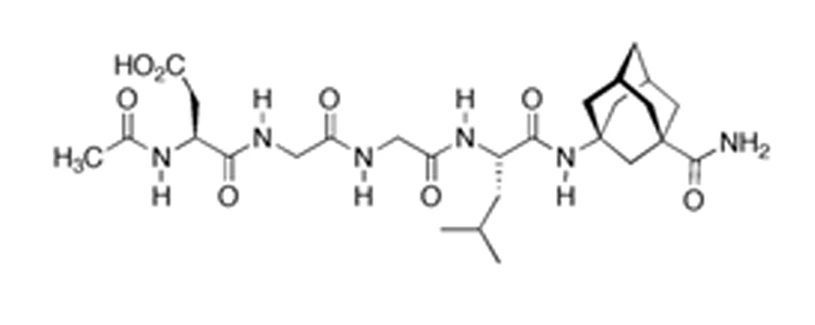
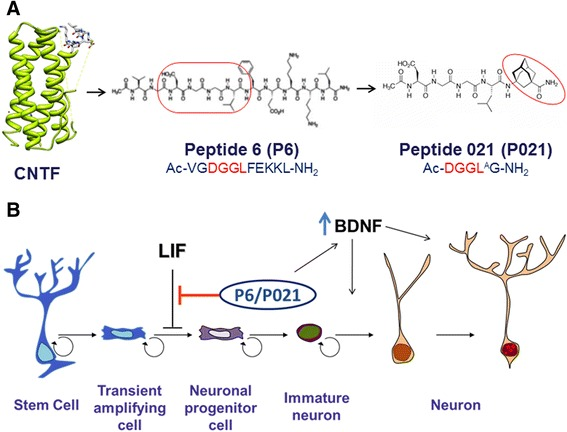
Development of P21: P21 is a small peptide derivative of CNTF (Ciliary Neurotrophic Factor). The development of P21 involved a process called epitope mapping utilizing antibodies to identify specific binding sites. P21 not only binds to the CNTF receptor but also has the ability to traverse the blood-brain barrier. P21 is a tetra-peptide derived from the most active region of CNTF, specifically amino acid residues 148–151. An adamantylated glycine was added to enhance its permeability through the blood-brain barrier and reduce degradation.
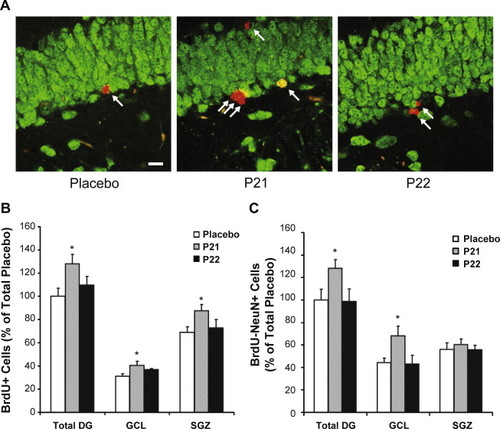
Mechanism of Action: P21 exerts several effects within the central nervous system, with its primary impact occurring in the dentate gyrus. Here, it enhances neurogenesis and neuron maturation. The dentate gyrus contributes to the formation of new episodic memories, spontaneous exploration/learning in new environments, and information pre-processing, particularly in pattern separation.
Research in mouse models suggests that P21 does not directly bind to the CNTF receptor. Instead, it appears to inhibit antibodies or other molecules that neutralize CNTF. Consequently, P21 increases the concentration of CNTF, which is one of the most potent promoters of neurogenesis.
Alzheimer's Disease Applications: In Alzheimer's Disease, P21 enhances the activity of the dentate gyrus enough to overcome limitations in neurogenesis. Research has demonstrated that P21's neurotrophic support leads to elevated levels of brain-derived neurotrophic factor (BDNF) and neurotrophin-4. When administered before the onset of AD in mouse models, P21 prevents the cognitive decline typically associated with the condition.
Cerebrolysin vs. P21: Cerebrolysin and P21 are distinct compounds. P21 is a synthetic analogue of CNTF, while cerebrolysin is a peptide mixture containing various brain chemicals. P21 has demonstrated greater efficacy in animal studies than cerebrolysin.
Summary: P21 is a nootropic peptide known for its ability to promote neurogenesis in both healthy and diseased states. It contains adamantane which facilitates its passage through the blood-brain barrier. In animal studies, P21 has been shown to increase BDNF levels, promoting neurogenesis and inhibiting the formation of plaques and tangles seen in Alzheimer's disease.
The above literature was researched, edited and organized by Dr. Logan, M.D. Dr. Logan holds a doctorate degree from https://case.edu/medicine/Case Western Reserve University School of Medicine and a B.S. in molecular biology.
Case Western Reserve University School of Medicine
ALL ARTICLES AND PRODUCT INFORMATION PROVIDED ON THIS WEBSITE ARE FOR INFORMATIONAL AND EDUCATIONAL PURPOSES ONLY.
The product information featured on this website pertains exclusively to in-vitro studies. In-vitro studies, also known as 'in glass' studies, are conducted outside of living organisms. It's important to emphasize that these products do not constitute medicines or drugs and have not received FDA approval for the prevention, treatment, or cure of any medical conditions, ailments, or diseases. It is crucial to note that the introduction of these products into the bodies of humans or animals is strictly prohibited by law.
THIS PRODUCT IS INTENDED AS A RESEARCH CHEMICAL ONLY. This designation allows the use of research chemicals strictly for in vitro testing and laboratory experimentation only. All product information available on this website is for educational purposes only. Bodily introduction of any kind into humans or animals is strictly forbidden by law. This product should only be handled by licensed, qualified professionals. This product is not a drug, food, or cosmetic and may not be misbranded, misused or mislabled as a drug, food or cosmetic.