Peptides for Skincare and Anti-Aging
Peptides have emerged as a significant player in skincare, particularly for their anti-aging properties. These amino acid chains offer a range of benefits, from boosting collagen production to enhancing skin hydration. Their gentle formulation appeals to many, especially those seeking alternatives to harsher treatments. However, questions remain about their effectiveness compared to other popular ingredients. Exploring the nuances of peptides may reveal surprising insights about their role in skincare.
PEPTIDES LIST
- Adipotide (FTPP)
- AICAR
- AOD9604
- ARA-290
- B7-33
- BPC-157
- Bronchogen
- Cagrisema
- Cagrilintides
- Cardiogen
- Cartalax
- Cerebrolysin (215mg/ml, 10ml)
- Chonluten
- CJC-1295 DAC
- Cortagen
- DSIP
- Epithalon (Epitalon)
- Follistatin-315
- Follistatin-344
- FOXO4-DRI
- GHK-Cu (Copper Peptide)
- GHK Basic
- GHRP-2
- GHRP-6
- GHRH (GH-Releasing Hormone)
- Glutathione
- Gonadorelin (GnRH)
- GLP2 & GLP3
- hGH Fragment 176-191
- Hexarelin
- Humanin
- Ipamorelin
- Kisspeptin-10
- KPV (ACTH (11-13) alpha-MSH)
- Liraglutide (GLP-1 Analogue)
- Livagen
- LL-37 (CAP-18)
- Melanotan 2 (Melanotan II)
- Mezdutide
- MGF (C-terminal)
- ModGRF 1-29 (CJC-1295 No DAC)
- MK-677 (Ibutamoren)
- MOTS-c
- N-Acetyl Epithalon Amidate
- N-Acetyl Selank Amidate
- N-Acetyl Semax Amidate
- NAD+
- Ovagen
- Oxytocin+
- Pancragen
- PE-22-28
- PEG-MGF (Pegylated MGF)
- Pinealon
- PNC-27
- Prostamax
- PT-141 (Bremelanotide)
- P21 (P021)
- Retatrutide
- Snap8
- Tesa_Ipa_Blend
- Triblend
- Selank
- Semaglutide (GLP-1 Analogue)
- Semax
- Sermorelin
- SS-31
- Survodutide
- TB-500
- Tesamorelin
- Testagen
- Thymagen
- Thyrotropin-TRH
- Tirzepatide
- Triptorelin
- Vesugenas
- Vesilute
- Vilon
- VIP (Vasoactive Intestinal Peptide)
- GLP2
- GLP3
- Klow
- Klow8
- SLU-PP-332
- BAM-15
- Orforglipron
- Noopept
- 9-Me-BC
- Methylene Blue
- Lemon Bottle

Peptides have emerged as a significant player in skincare, particularly for their anti-aging properties. These amino acid chains offer a range of benefits, from boosting collagen production to enhancing skin hydration. Their gentle formulation appeals to many, especially those seeking alternatives to harsher treatments. However, questions remain about their effectiveness compared to other popular ingredients. Exploring the nuances of peptides may reveal surprising insights about their role in skincare.
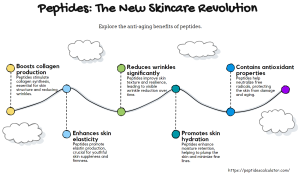
Peptides play an essential role in skincare by enhancing collagen synthesis, which is important for maintaining skin structure. They also contribute to increased skin elasticity and firmness, helping to create a more youthful appearance. Additionally, their ability to reduce wrinkles makes peptides a powerful ingredient in anti-aging formulations.
Stimulating collagen synthesis is a key factor in the effectiveness of peptides in skincare. Peptides, which are short chains of amino acids, play an essential role in communicating with skin cells to initiate the production of collagen, a critical protein responsible for skin structure and strength. As collagen levels increase, the skin becomes more resilient, reducing the appearance of fine lines and wrinkles. Various peptides, such as palmitoyl pentapeptide and acetyl hexapeptide, have been scientifically shown to enhance collagen synthesis. By mimicking the natural signals that trigger collagen production, these peptides can effectively support the skin's healing and rejuvenation processes. This makes them a powerful ingredient in anti-aging formulations aimed at promoting youthful, healthy-looking skin.
The enhancement of skin elasticity and firmness is another significant benefit of incorporating peptides into skincare regimens. Peptides, which are short chains of amino acids, play a vital role in promoting the production of elastin and collagen. These proteins are essential for maintaining the skin's structural integrity and resilience. By stimulating fibroblasts, peptides encourage the skin to regain its youthful suppleness and firmness. Additionally, certain peptides possess the ability to improve moisture retention, further contributing to a plump and healthy appearance. As skin elasticity declines with age, the inclusion of peptides in daily routines can help mitigate this loss, providing a more resilient and toned complexion. Users often experience noticeable improvements in skin texture and overall firmness.
Harnessing the power of peptides in skincare can lead to significant wrinkle reduction, making them a popular choice in anti-aging formulations. Peptides are short chains of amino acids that signal skin cells to perform essential functions, promoting a youthful appearance. Their effectiveness in wrinkle reduction can be attributed to several key factors:
Collagen Stimulation: Peptides encourage collagen production, enhancing skin structure and reducing fine lines.
Skin Repair: They facilitate the healing process, improving overall skin texture and resilience.
Hydration Boost: Peptides enhance moisture retention, plumping the skin and minimizing the appearance of wrinkles.
Cell Regeneration: They promote faster skin cell turnover, helping to reveal smoother, more radiant skin.
These properties make peptides a powerful asset in any anti-aging skincare regimen.
The exploration of top anti-aging peptides reveals key compounds that markedly enhance skin health. GHK-Cu, Matrixyl, and Palmitoyl peptides, along with Epithalon, are recognized for their ability to stimulate collagen production, reduce wrinkles, and promote cellular rejuvenation. Understanding these peptides and their specific benefits can empower individuals to make informed choices in their skincare routines.
GHK-Cu, known as copper peptide, stands out as a powerful ally in the domain of anti-aging skincare. This naturally occurring peptide is renowned for its ability to rejuvenate the skin, making it a staple in many cosmetic formulations. Its multifaceted benefits include:
Collagen Production: Stimulates the synthesis of collagen, enhancing skin elasticity and firmness.
Wound Healing: Accelerates skin repair by promoting cellular regeneration and reducing inflammation.
Antioxidant Properties: Neutralizes free radicals, protecting the skin from environmental damage.
Skin Brightening: Improves overall skin tone and texture, contributing to a more youthful appearance.
Incorporating GHK-Cu into skincare routines can markedly improve skin vitality and reduce visible signs of aging, reinforcing its importance in anti-aging formulations.
Matrixyl and palmitoyl peptides represent a significant advancement in anti-aging skincare, offering potent solutions for reducing the visible signs of aging. Matrixyl, specifically known for its ability to stimulate collagen production, helps to smooth fine lines and enhance skin elasticity. This peptide works by mimicking the natural signaling processes of the skin, encouraging repair and regeneration. Similarly, palmitoyl peptides, such as palmitoyl pentapeptide-4, promote collagen synthesis and improve skin texture. Both peptides contribute to a more youthful appearance by reducing wrinkles and increasing skin firmness. Their effectiveness has garnered attention in the skincare industry, leading to a rise in formulations designed to deliver these beneficial peptides directly to the skin for ideal results.
Among the array of peptides celebrated for their anti-aging properties, Epithalon stands out as a remarkable agent for cellular rejuvenation. This peptide, derived from a naturally occurring protein, is known for its potential to enhance cellular longevity and promote overall skin health. Its mechanisms of action include:
Telomere Extension: Epithalon may help elongate telomeres, which are essential for cellular division and longevity.
Collagen Production: It can stimulate collagen synthesis, contributing to skin elasticity and firmness.
Antioxidant Properties: Epithalon exhibits antioxidant effects, reducing oxidative stress and skin damage.
Improved Skin Texture: Regular use may lead to smoother, more youthful skin, minimizing the appearance of fine lines and wrinkles.
These benefits highlight Epithalon’s role in the pursuit of youthful, radiant skin.
As skin ages, the natural production of collagen and elastin declines, leading to a loss of firmness and elasticity; this is where skincare peptides come into play. Peptides are short chains of amino acids that serve as signaling molecules within the skin. When applied topically, they penetrate the epidermis and interact with skin cells, stimulating various biological processes.
Specifically, peptides can trigger fibroblasts to increase collagen synthesis, thereby enhancing skin structure and reducing the appearance of fine lines and wrinkles. Certain peptides also promote the production of hyaluronic acid, which aids in hydration and plumpness. Additionally, some peptides possess antioxidant properties, helping to protect skin cells from oxidative stress and environmental damage.
Through these mechanisms, skincare peptides contribute to improved skin texture, resilience, and overall appearance, making them a valuable component in anti-aging formulations.
Understanding the role of peptides in skincare leads to a consideration of their sources, specifically the distinction between natural and synthetic peptides. Natural peptides are derived from biological sources, such as plants and animals, while synthetic peptides are created in laboratories through chemical processes. Each has its advantages and drawbacks.
Efficacy: Synthetic peptides can be designed for targeted effects, often proving more potent than their natural counterparts.
Purity: Natural peptides may contain impurities, while synthetic versions can be produced with high purity.
Cost: Synthetic peptides are generally less expensive to produce, making them more accessible in commercial products.
Allergenic Potential: Natural peptides might trigger allergic reactions in some individuals, whereas synthetic ones can be formulated to minimize such risks.
This distinction is essential for consumers seeking effective anti-aging solutions while considering their skin's unique needs.
How do peptides compare to well-known skincare ingredients like retinol and vitamin C when it comes to effectiveness? Peptides are signaling molecules that can promote collagen production and skin repair, offering a gentle alternative to retinol, which is known for its potent anti-aging properties but may cause irritation for some users. Vitamin C, a powerful antioxidant, helps brighten the skin and reduce the appearance of fine lines by combating free radicals.
While peptides excel in hydration and skin barrier support, retinol is often lauded for its ability to accelerate cell turnover, leading to more noticeable wrinkle reduction. Vitamin C, on the other hand, is favored for its skin-brightening effects. Ultimately, the effectiveness of these ingredients may vary based on individual skin types and concerns. A combination of peptides, retinol, and vitamin C could yield the most thorough anti-aging benefits, addressing multiple skin issues simultaneously.
Incorporating peptide skincare products into a daily routine can considerably enhance skin health and appearance. To maximize their benefits, individuals should follow a few essential steps for effective use.
Choose the Right Product: Select a peptide formulation suitable for specific skin concerns, such as wrinkles or firmness.
Layer Correctly: Apply peptide products after cleansing and toning but before heavier creams and oils to allow better absorption.
Consistency is Key: Use peptide-infused products regularly, ideally twice daily, to see significant improvements over time.
Combine Wisely: Pair peptides with other skincare actives like hyaluronic acid for hydration and antioxidants for additional protection.
Are peptides universally safe for all skin types? Generally, peptides are well-tolerated by various skin types, including sensitive, dry, oily, and combination skin. However, individual reactions can vary based on specific formulations and skin sensitivities. It is advisable to conduct a patch test to ascertain compatibility before incorporating new peptide products into a skincare routine.
While peptides offer significant benefits for skin health and anti-aging, they cannot fully replace Botox. The two treatments serve different purposes and mechanisms in addressing skin concerns. Botox works by temporarily paralyzing muscles to reduce the appearance of wrinkles, while peptides promote collagen production and skin repair. Here are key distinctions:
Mechanism of Action: Botox inhibits muscle movement, whereas peptides stimulate skin cells.
Target Areas: Botox is primarily used for dynamic wrinkles like frown lines, while peptides improve overall skin texture and firmness.
Duration of Results: Botox effects last three to six months, while peptides require consistent use for visible results.
Side Effects: Botox may cause temporary bruising or muscle weakness, while peptides generally have fewer side effects and are well-tolerated.
Results from peptide skincare products can vary considerably depending on the specific peptides used, the formulation of the product, and individual skin types. Generally, users can expect to see initial improvements within four to six weeks of consistent application. However, ideal results may take up to three months, particularly for deeper wrinkles and significant skin texture changes.
The effectiveness of peptides is often enhanced when combined with other active ingredients, making personal routine adjustments essential for achieving the best outcomes.
THIS PRODUCT IS INTENDED AS A RESEARCH CHEMICAL ONLY. This designation allows the use of research chemicals strictly for in vitro testing and laboratory experimentation only. All product information available on this website is for educational purposes only. Bodily introduction of any kind into humans or animals is strictly forbidden by law. This product should only be handled by licensed, qualified professionals. This product is not a drug, food, or cosmetic and may not be misbranded, misused or mislabled as a drug, food or cosmetic.