Are Peptides Natural or Synthetic
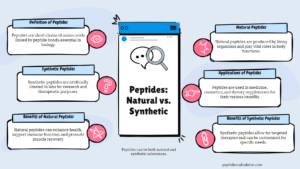
Peptides are fascinating biomolecules that can be classified as either natural or synthetic. Naturally occurring peptides are essential for various biological functions within living organisms, while synthetic peptides are engineered for specific applications. Each type offers unique benefits and potential uses in fields such as medicine and cosmetics. The distinction between these two forms raises important questions about their roles and implications. What advantages do synthetic peptides hold over their natural counterparts?
PEPTIDES LIST
- Adipotide (FTPP)
- AICAR
- AOD9604
- ARA-290
- B7-33
- BPC-157
- Bronchogen
- Cagrisema
- Cagrilintides
- Cardiogen
- Cartalax
- Cerebrolysin (215mg/ml, 10ml)
- Chonluten
- CJC-1295 DAC
- Cortagen
- DSIP
- Epithalon (Epitalon)
- Follistatin-315
- Follistatin-344
- FOXO4-DRI
- GHK-Cu (Copper Peptide)
- GHK Basic
- GHRP-2
- GHRP-6
- GHRH (GH-Releasing Hormone)
- Glutathione
- Gonadorelin (GnRH)
- GLP2 & GLP3
- hGH Fragment 176-191
- Hexarelin
- Humanin
- Ipamorelin
- Kisspeptin-10
- KPV (ACTH (11-13) alpha-MSH)
- Liraglutide (GLP-1 Analogue)
- Livagen
- LL-37 (CAP-18)
- Melanotan 2 (Melanotan II)
- Mezdutide
- MGF (C-terminal)
- ModGRF 1-29 (CJC-1295 No DAC)
- MK-677 (Ibutamoren)
- MOTS-c
- N-Acetyl Epithalon Amidate
- N-Acetyl Selank Amidate
- N-Acetyl Semax Amidate
- NAD+
- Ovagen
- Oxytocin+
- Pancragen
- PE-22-28
- PEG-MGF (Pegylated MGF)
- Pinealon
- PNC-27
- Prostamax
- PT-141 (Bremelanotide)
- P21 (P021)
- Retatrutide
- Snap8
- Tesa_Ipa_Blend
- Triblend
- Selank
- Semaglutide (GLP-1 Analogue)
- Semax
- Sermorelin
- SS-31
- Survodutide
- TB-500
- Tesamorelin
- Testagen
- Thymagen
- Thyrotropin-TRH
- Tirzepatide
- Triptorelin
- Vesugenas
- Vesilute
- Vilon
- VIP (Vasoactive Intestinal Peptide)
- GLP2
- GLP3
- Klow
- Klow8
- SLU-PP-332
- BAM-15
- Orforglipron
- Noopept
- 9-Me-BC
- Methylene Blue
- Lemon Bottle

Peptides are fascinating biomolecules that can be classified as either natural or synthetic. Naturally occurring peptides are essential for various biological functions within living organisms, while synthetic peptides are engineered for specific applications. Each type offers unique benefits and potential uses in fields such as medicine and cosmetics. The distinction between these two forms raises important questions about their roles and implications. What advantages do synthetic peptides hold over their natural counterparts?
Peptides, the fundamental building blocks of proteins, are short chains of amino acids linked by peptide bonds. These molecules typically consist of between two to fifty amino acids, distinguishing them from proteins, which are longer and more complex. Peptides play crucial roles in various biological functions, including hormone regulation, immune response, and cellular signaling. The sequence and arrangement of amino acids within a peptide determine its specific function and characteristics.
Peptides are categorized based on their origin. Naturally occurring peptides are produced by living organisms and play essential roles in physiological processes. In contrast, lab-synthesized peptides are artificially created through chemical methods and can be tailored for specific applications, such as pharmaceuticals or research. Understanding the definition of peptides is vital for exploring their diverse functions and implications in health and science, paving the way for advancements in therapeutic development and biotechnology.
Naturally occurring peptides are vital components of biological systems, contributing to numerous physiological processes within living organisms. These peptides are formed through the translation of specific genes and play critical roles in signaling, immune response, and metabolic regulation. They are typically composed of 2 to 50 amino acids and can be found in various tissues, fluids, and secretions.
The synthesis of naturally occurring peptides occurs through ribosomal translation, which allows for precise control over amino acid sequences, ensuring proper biological function. Furthermore, these peptides can exhibit diverse biological activities, often acting as hormones, neurotransmitters, or antimicrobial agents.
The study of naturally occurring peptides is essential for understanding their functions in health and disease, as well as their potential applications in therapeutics. By exploring these naturally derived molecules, researchers can uncover insights into cellular communication and metabolic pathways, enhancing knowledge in both biology and medicine.
Moreover, antimicrobial peptides, found in various organisms, serve as a first line of defense against pathogens, showcasing their protective role in the immune response. Other examples include neuropeptides, which facilitate communication between neurons and influence processes such as pain perception and stress response. These naturally occurring peptides highlight the intricate biochemical interactions essential for maintaining health and facilitating various physiological processes in living organisms.
A wide array of synthetic peptides has been developed for various applications, ranging from pharmaceuticals to research tools. These peptides are created through chemical synthesis, allowing scientists to design and produce them with specific sequences and properties. This customization is crucial for targeting particular biological pathways, enhancing therapeutic efficacy, or studying protein interactions.
Synthetic peptides can mimic naturally occurring peptides, but they can also possess modified structures that improve stability or bioavailability. Their production often involves solid-phase peptide synthesis, a method that allows for the rapid assembly of amino acid sequences. This technology has enabled breakthroughs in drug development, including treatments for diseases such as cancer and diabetes.
Additionally, synthetic peptides serve as valuable tools in research, helping scientists understand cellular mechanisms and develop diagnostic assays. Overall, the versatility and precision of synthetic peptides make them an essential component in both scientific research and clinical applications.
While many synthetic peptides are designed for specific therapeutic purposes, several notable examples highlight their diverse applications. One prominent synthetic peptide is insulin, a critical hormone used to regulate blood glucose levels in diabetes management. Another example is Liraglutide, which mimics the action of natural hormones to improve glycemic control and promote weight loss. Additionally, the peptide BPC-157 has gained attention for its potential in healing injuries and reducing inflammation.
Synthetic peptides also play vital roles in the development of vaccines; for instance, peptide-based vaccines can stimulate immune responses against specific pathogens. Furthermore, the peptide Thymosin Beta-4 is being researched for its regenerative properties in tissue repair. These examples illustrate that synthetic peptides not only serve essential therapeutic functions but also pave the way for innovative medical treatments across various fields, showcasing their versatility and significance in modern medicine.
The distinction between natural and synthetic peptides lies primarily in their origin and structural composition. Natural peptides are biologically derived, produced by living organisms such as plants, animals, and microorganisms. These peptides typically exhibit complex structures and functions, often playing crucial roles in biological processes like signaling, metabolism, and immune response. For example, insulin is a naturally occurring peptide hormone that regulates blood sugar levels.
In contrast, synthetic peptides are artificially created in laboratories through chemical processes. These peptides can be designed with precision, allowing scientists to modify their sequences and structures for specific purposes. This synthetic approach enables the development of peptides that may not exist in nature or that can be tailored to enhance stability and efficacy. While both types serve various applications in medicine, research, and biotechnology, their fundamental differences in origin significantly influence their properties and potential uses.
Naturally occurring peptides offer numerous benefits that stem from their complex structures and biological roles. These peptides, formed through natural processes within organisms, often exhibit enhanced bioactivity and greater compatibility with human physiology compared to synthetic alternatives. Their inherent ability to interact with biological systems allows them to function as hormones, neurotransmitters, and enzymes, playing crucial roles in various physiological processes.
Additionally, naturally occurring peptides tend to have fewer side effects, as they are recognized by the body as native molecules. This recognition can lead to improved efficacy in therapeutic applications, such as immune response modulation and tissue repair. Furthermore, the diverse sources of these peptides, ranging from plants to animals, contribute to a wide array of potential health benefits, including anti-inflammatory, antioxidant, and antimicrobial properties. Overall, the natural origin of these peptides underscores their significance in health and wellness.
Synthetic peptides provide distinct advantages that enhance their utility in research and therapeutic applications. One primary benefit is the ability to design peptides with specific sequences tailored for particular functions, allowing for targeted interactions in biological systems. This customization can lead to improved efficacy in various studies and treatments.
Furthermore, synthetic methods enable the production of peptides in large quantities, ensuring consistency and purity essential for reliable results. Unlike natural peptides, which may vary in structure and concentration, synthetic peptides offer reproducibility, making them ideal for experimental protocols.
Additionally, synthetic peptides can be modified to enhance stability and reduce immunogenicity, increasing their potential for use in therapeutic settings. This versatility allows researchers to explore a wider range of biological activities and potential applications. Overall, synthetic peptides represent a powerful tool in advancing scientific understanding and developing new therapeutic strategies.
Peptides have emerged as pivotal components in both medicine and cosmetics, driving innovations in treatment and skincare. In the medical field, peptides serve as essential tools for drug development, functioning as hormones, enzymes, and signaling molecules that regulate bodily functions. They are utilized in therapies for conditions such as diabetes, cancer, and cardiovascular diseases, demonstrating their therapeutic potential.
In cosmetics, peptides are celebrated for their ability to enhance skin health and appearance. They promote collagen production, improve skin elasticity, and reduce the visibility of fine lines and wrinkles. Products containing peptides are increasingly popular, appealing to consumers seeking effective anti-aging solutions.
Both naturally occurring and synthetic peptides are employed in these applications, each offering unique benefits. As research continues to evolve, the role of peptides in enhancing health and beauty remains significant, highlighting their versatility and effectiveness in diverse fields.
The remarkable applications of peptides in medicine and cosmetics signal a promising horizon for research and development in this field. As researchers delve deeper into the biochemical properties of peptides, new therapeutic and cosmetic applications are on the rise. Innovations in synthesis techniques and understanding of peptide interactions with biological systems may lead to groundbreaking treatments for a variety of conditions.
THIS PRODUCT IS INTENDED AS A RESEARCH CHEMICAL ONLY. This designation allows the use of research chemicals strictly for in vitro testing and laboratory experimentation only. All product information available on this website is for educational purposes only. Bodily introduction of any kind into humans or animals is strictly forbidden by law. This product should only be handled by licensed, qualified professionals. This product is not a drug, food, or cosmetic and may not be misbranded, misused or mislabled as a drug, food or cosmetic.