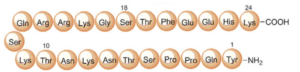
PEG-MGF (Pegylated Mechano-Growth Factor)
PEGylated Mechano-Growth Factor is a modified form of MGF, itself a modified form of IGF-1. Research has shown it to lower cholesterol and total body fat, boost immune function, and improve rates of wound healing.
PEPTIDES LIST
- Adipotide (FTPP)
- AICAR
- AOD9604
- ARA-290
- B7-33
- BPC-157
- Bronchogen
- Cagrisema
- Cagrilintides
- Cardiogen
- Cartalax
- Cerebrolysin (215mg/ml, 10ml)
- Chonluten
- CJC-1295 DAC
- Cortagen
- DSIP
- Epithalon (Epitalon)
- Follistatin-315
- Follistatin-344
- FOXO4-DRI
- GHK-Cu (Copper Peptide)
- GHK Basic
- GHRP-2
- GHRP-6
- GHRH (GH-Releasing Hormone)
- Glutathione
- Gonadorelin (GnRH)
- GLP2 & GLP3
- hGH Fragment 176-191
- Hexarelin
- Humanin
- Ipamorelin
- Kisspeptin-10
- KPV (ACTH (11-13) alpha-MSH)
- Liraglutide (GLP-1 Analogue)
- Livagen
- LL-37 (CAP-18)
- Melanotan 2 (Melanotan II)
- Mezdutide
- MGF (C-terminal)
- ModGRF 1-29 (CJC-1295 No DAC)
- MK-677 (Ibutamoren)
- MOTS-c
- N-Acetyl Epithalon Amidate
- N-Acetyl Selank Amidate
- N-Acetyl Semax Amidate
- NAD+
- Ovagen
- Oxytocin+
- Pancragen
- PE-22-28
- PEG-MGF (Pegylated MGF)
- Pinealon
- PNC-27
- Prostamax
- PT-141 (Bremelanotide)
- P21 (P021)
- Retatrutide
- Snap8
- Tesa_Ipa_Blend
- Triblend
- Selank
- Semaglutide (GLP-1 Analogue)
- Semax
- Sermorelin
- SS-31
- Survodutide
- TB-500
- Tesamorelin
- Testagen
- Thymagen
- Thyrotropin-TRH
- Tirzepatide
- Triptorelin
- Vesugenas
- Vesilute
- Vilon
- VIP (Vasoactive Intestinal Peptide)
- GLP2
- GLP3
- Klow
- Klow8
- SLU-PP-332
- BAM-15
- Orforglipron
- Noopept
- 9-Me-BC
- Methylene Blue
- Lemon Bottle

PEGylated Mechano-Growth Factor (PEG-MGF) is a modified form of insulin-like growth factor 1 (IGF-1). Studies demonstrate that it stimulates the proliferation and differentiation of myoblasts (muscle cells). It has also been investigated for its potential in enhancing endurance, improving immune system function, reducing cholesterol, and decreasing total body fat. Additionally, there is evidence suggesting that PEG-MGF may expedite wound healing by enhancing immune-related functions.
PEG-MGF (Pegylated Mechano-Growth Factor) is described as a modified version of MGF (a split variant of IGF-1) that is naturally upregulated after muscle injury/exercise. Adding PEG (polyethylene glycol) is described as improving stability and extending the compound’s half-life to ~48–72 hours. (Educational context only.)
Dosing & Cycling (As Listed):The source describes per-dose ranges (not a fixed daily schedule) and suggests lower-frequency dosing consistent with the longer half-life.
| Protocol Item | Guidance |
|---|---|
| Dose | 100–500 mcg per dose |
| Frequency | 2–3× per week |
| Cycle | 4–8 weeks on, followed by a break equal to or longer than the usage duration (to allow a “reset” and minimize potential desensitization) |
| Common Timing Notes | Often used on rest days (the source notes muscle stem cell stimulation may decrease). Some theorize targeted muscle injection may increase localized effects. |
Caution & Contraindications:
Caution:
• May cause headache, nausea, tiredness, changes in blood pressure, changes in blood sugar, water retention, and/or an increase in cortisol
• Use caution in individuals with a history of cancer, as it may promote cell proliferation (cell growth)
Contraindications:
• Individuals with active cancer
Reconstitution Options (Vial Format):
• 2 mg
• 5 mg
Reconstitution (General Handling):
• Use sterile technique and sanitize the vial stopper before access.
• Add diluent slowly along the vial wall to minimize foaming.
• Gently swirl/roll until fully dissolved (avoid vigorous shaking).
• Store according to the product label/spec sheet and protect from light as applicable.
Sequence: PEG-Suc-Tyr-Gln-Pro-Pro-Ser-Thr-Asn-Lys-Asn-Thr-Lys-Ser-Gln-Arg-Arg-Lys-Gly-Ser-Thr-Phe-Glu-Glu-Arg-Lys-Cys
Molecular Formula: C121H200N42O39
PubChem SID: 178101669
Synonyms: Pegylated MGF, PEG IGF-1 Ec, PEG myotrophin
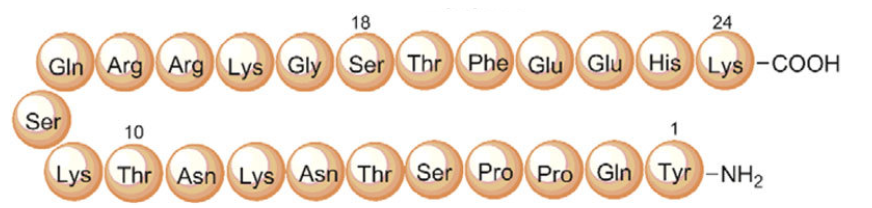
Pegylation is a process in which polyethylene glycol (PEG) is attached to another chemical compound. This is frequently done to decrease the body's natural immune response to the compound or, as seen with PEG-MGF, to extend the compound's presence in the bloodstream by reducing its elimination through the kidneys. Pegylation is a common, safe, and advantageous procedure.
The development of PEG-MGF was driven by the short half-life of MGF in the bloodstream. While MGF lingers for extended periods in muscle tissue, its exogenous administration results in a brief half-life because it initially passes through the bloodstream unless directly injected into muscle tissue. PEG-MGF serves to mitigate this specific limitation.
Muscle injuries are common in sports, ranging from strains and sprains to severe avulsion injuries, often necessitating surgical intervention. Regardless of the treatment, recovery is typically lengthy, and outcomes are not always ideal. Research using a mouse model of muscle injury suggests that direct MGF injection into muscle can protect cells by reducing the expression of specific inflammatory hormones and decreasing oxidative stress. Another study indicates that MGF plays a role in modulating muscle inflammation, enhancing the recruitment of macrophages and neutrophils to the injury site.
International endocrinology researchers have found that MGF stimulates the insulin-like growth factor 1 receptor similarly to IGF-1. Activation of this receptor has been linked to reduced aging effects, increased lean body mass, and improved energy balance in humans. These findings suggest that PEG-MGF may yield effects comparable to IGF-1, ultimately enhancing muscle repair, promoting fat metabolism, and increasing overall lean body mass.
Additionally, research in mice demonstrates a 25% increase in the mean size of muscle fibers when MGF is administered to exercising mice. Notably, MGF was directly injected into the muscle in this study, which the authors acknowledge as a limitation, as it would require multiple intramuscular injections to optimize hypertrophy in various muscles. PEG-MGF circumvents this limitation by prolonging MGF's plasma half-life, enabling administration via a single intravenous injection instead of multiple intramuscular injections.
PEG-MGF has also been studied for its potential in heart muscle repair, bone repair and growth, cartilage protection, dental applications, and neuroprotective effects. Please note that PEG-MGF is primarily intended for educational and scientific research purposes, and its sale is restricted to licensed researchers. It is not intended for human consumption.
Article Author:
The above literature was researched, edited and organized by Dr. Logan, M.D. Dr. Logan holds a doctorate degree from https://case.edu/medicine/Case Western Reserve University School of Medicine and a B.S. in molecular biology.
Case Western Reserve University School of Medicine
ALL ARTICLES AND PRODUCT INFORMATION PROVIDED ON THIS WEBSITE ARE FOR INFORMATIONAL AND EDUCATIONAL PURPOSES ONLY.
The product information featured on this website pertains exclusively to in-vitro studies. In-vitro studies, also known as 'in glass' studies, are conducted outside of living organisms. It's important to emphasize that these products do not constitute medicines or drugs and have not received FDA approval for the prevention, treatment, or cure of any medical conditions, ailments, or diseases. It is crucial to note that the introduction of these products into the bodies of humans or animals is strictly prohibited by law.
THIS PRODUCT IS INTENDED AS A RESEARCH CHEMICAL ONLY. This designation allows the use of research chemicals strictly for in vitro testing and laboratory experimentation only. All product information available on this website is for educational purposes only. Bodily introduction of any kind into humans or animals is strictly forbidden by law. This product should only be handled by licensed, qualified professionals. This product is not a drug, food, or cosmetic and may not be misbranded, misused or mislabled as a drug, food or cosmetic.