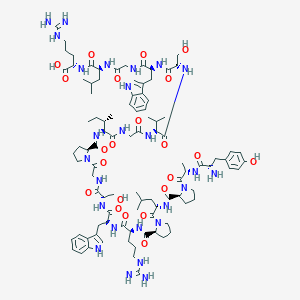
PE-22-28
PE-22-28 is a synthetic derivative of the naturally occurring peptide spadin, and it has an affinity for binding to TREK-1, a protein found in brain regions responsible for regulating mood, memory, and learning. Research on PE-22-28 is underway, exploring its potential applications, which include antidepressant effects, enhancement of learning processes, facilitation of stroke recovery, and its role in addressing neurodegenerative conditions like Alzheimer's disease.
PEPTIDES LIST
- Adipotide (FTPP)
- AICAR
- AOD9604
- ARA-290
- B7-33
- BPC-157
- Bronchogen
- Cagrisema
- Cagrilintides
- Cardiogen
- Cartalax
- Cerebrolysin (215mg/ml, 10ml)
- Chonluten
- CJC-1295 DAC
- Cortagen
- DSIP
- Epithalon (Epitalon)
- Follistatin-315
- Follistatin-344
- FOXO4-DRI
- GHK-Cu (Copper Peptide)
- GHK Basic
- GHRP-2
- GHRP-6
- GHRH (GH-Releasing Hormone)
- Glutathione
- Gonadorelin (GnRH)
- GLP2 & GLP3
- hGH Fragment 176-191
- Hexarelin
- Humanin
- Ipamorelin
- Kisspeptin-10
- KPV (ACTH (11-13) alpha-MSH)
- Liraglutide (GLP-1 Analogue)
- Livagen
- LL-37 (CAP-18)
- Melanotan 2 (Melanotan II)
- Mezdutide
- MGF (C-terminal)
- ModGRF 1-29 (CJC-1295 No DAC)
- MK-677 (Ibutamoren)
- MOTS-c
- N-Acetyl Epithalon Amidate
- N-Acetyl Selank Amidate
- N-Acetyl Semax Amidate
- NAD+
- Ovagen
- Oxytocin+
- Pancragen
- PE-22-28
- PEG-MGF (Pegylated MGF)
- Pinealon
- PNC-27
- Prostamax
- PT-141 (Bremelanotide)
- P21 (P021)
- Retatrutide
- Snap8
- Tesa_Ipa_Blend
- Triblend
- Selank
- Semaglutide (GLP-1 Analogue)
- Semax
- Sermorelin
- SS-31
- Survodutide
- TB-500
- Tesamorelin
- Testagen
- Thymagen
- Thyrotropin-TRH
- Tirzepatide
- Triptorelin
- Vesugenas
- Vesilute
- Vilon
- VIP (Vasoactive Intestinal Peptide)
- GLP2
- GLP3
- Klow
- Klow8
- SLU-PP-332
- BAM-15
- Orforglipron
- Noopept
- 9-Me-BC
- Methylene Blue
- Lemon Bottle

PE-22-28 is a synthetic derivative of the naturally occurring peptide spadin. Spadin is derived from sortilin and acts as an antagonist to the TREK-1 (TWIK-related-potassium channel) receptor, a two-pore potassium channel that has been identified as a potential target for the treatment of depression and a potential regulator of neurogenesis. Early studies involving mice have revealed that the removal of the TREK-1 receptor makes them resistant to depression.
What's particularly intriguing is that shortened analogs of spadin have exhibited even better TREK-1 inhibition than the natural spadin itself. Among these synthetic spadin analogs, PE-22-28 stands out as a representative peptide. PE-22-28 has demonstrated increased stability and improved antidepressant and neurogenic properties compared to naturally occurring spadin.
One of the long-term effects of taking antidepressant medications, such as SSRIs, is the promotion of neurogenesis. PE-22-28 has been shown to induce neurogenesis in as little as four days, a significantly faster timeline than any known antidepressant. This suggests that PE-22-28 may have potential applications in areas beyond depression treatment, such as enhancing learning, aiding in stroke recovery, and possibly even addressing neurodegenerative diseases.
PE-22-88 (also referenced as PE-22-28 in some materials) is described as a peptide derived from spadin—an antidepressant peptide found in human blood. It’s discussed for binding to and blocking the TREK-1 channel in the brain, where higher TREK-1 activity is associated with low mood and cognitive impairment.
Deeper Research Notes (Summary):
• Described as binding to and blocking TREK-1 receptors in areas involved in mood, memory, and learning.
• Described as fast-acting with higher affinity for TREK-1 than traditional antidepressants, supporting mood regulation and stress-response adaptation.
• Also described as potentially enhancing muscle function and an immune response via TREK-1–linked signaling.
| Protocol Item | Guidance |
|---|---|
| Dosing | 200–600 mcg daily |
| Cycling | Daily for 30-day cycles (or shorter), with a 30-day minimum cycle break between |
Example Volume Reference (if reconstituted with 2.0 mL):
• 8 mg + 2.0 mL → 4 mg/mL• 10 mg + 2.0 mL → 5 mg/mL
| Daily Dose | Volume @ 4 mg/mL (8 mg / 2.0 mL) | Volume @ 5 mg/mL (10 mg / 2.0 mL) |
|---|---|---|
| 200 mcg (0.2 mg) | 0.05 mL (5 units) | 0.04 mL (4 units) |
| 400 mcg (0.4 mg) | 0.10 mL (10 units) | 0.08 mL (8 units) |
| 600 mcg (0.6 mg) | 0.15 mL (15 units) | 0.12 mL (12 units) |
Caution & Contraindications:
Caution:
• May cause headache, fatigue, and/or anxiety
• Use caution in individuals taking other antidepressants or antipsychotics
Contraindications:
• Generally well tolerated based on current research
Reconstitution Options (Vial Format):
• 8 mg
• 10 mg
Reconstitution (General Handling):
• Use sterile technique and sanitize the vial stopper before access.
• Add diluent slowly along the vial wall to minimize foaming.
• Gently swirl/roll until fully dissolved (avoid vigorous shaking).
• Store refrigerated at 2–8 °C and protect from light as applicable.
Sequence: YAPLPRWSGPIGVSWGLR
Molecular Formula: C96H142N26O22
Molecular Weight: 2012.3492 g/mol
PE-22-28 Sequence: GVSWGLR
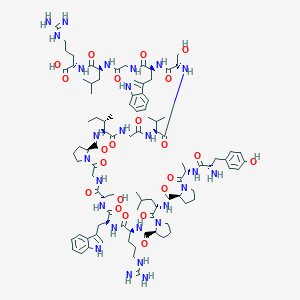
Understanding TREK-1: TREK-1, also known as TWIK-related K+ channel 1, is a two-pore potassium channel that plays a vital role in regulating the excitability of neurons. TREK-1 is prominently found in specific brain regions associated with mood regulation, memory, and learning, including the prefrontal cortex, the amygdala, and the hippocampus.
Depression Treatment: Research conducted in mouse models of depression has revealed that PE-22-28 holds remarkable efficacy in alleviating depression symptoms, surpassing the effectiveness of currently employed treatments while exhibiting fewer side effects. Notably, PE-22-28 has demonstrated the capacity to relieve depression in just four days without affecting other functions regulated by the TREK-1 channel.
Neurogenesis Enhancement: Antidepressant drugs are known for their capacity to stimulate neurogenesis in the hippocampus. Research has shown that PE-22-28 can achieve a similar outcome but in a much shorter timeframe. Studies in mice indicate that after just four days of PE-22-28 administration, both neurogenesis and synaptogenesis are significantly increased.
Post-Stroke Depression: Post-stroke depression (PSD) often follows brain ischemia and proves challenging to treat using standard methods. Recent research suggests that overexpression of TREK-1 contributes to PSD. In mouse models, this upregulation can be mitigated or reversed using TREK-1 blockers like spadin. PE-22-28 may hold promise as a potential treatment for PSD in future trials.
Summary: PE-22-28 presents a promising target for guiding the development of a new generation of antidepressants and contributes to the evolving field of nootropics. It demonstrates effectiveness as a depression treatment and serves as a potent stimulator of neurogenesis and synaptogenesis in the hippocampus, with minimal side effects compared to existing medications.
The above literature was researched, edited and organized by Dr. Logan, M.D. Dr. Logan holds a doctorate degree from https://case.edu/medicine/Case Western Reserve University School of Medicine and a B.S. in molecular biology.
Case Western Reserve University School of Medicine
ALL ARTICLES AND PRODUCT INFORMATION PROVIDED ON THIS WEBSITE ARE FOR INFORMATIONAL AND EDUCATIONAL PURPOSES ONLY.
The product information featured on this website pertains exclusively to in-vitro studies. In-vitro studies, also known as 'in glass' studies, are conducted outside of living organisms. It's important to emphasize that these products do not constitute medicines or drugs and have not received FDA approval for the prevention, treatment, or cure of any medical conditions, ailments, or diseases. It is crucial to note that the introduction of these products into the bodies of humans or animals is strictly prohibited by law.
THIS PRODUCT IS INTENDED AS A RESEARCH CHEMICAL ONLY. This designation allows the use of research chemicals strictly for in vitro testing and laboratory experimentation only. All product information available on this website is for educational purposes only. Bodily introduction of any kind into humans or animals is strictly forbidden by law. This product should only be handled by licensed, qualified professionals. This product is not a drug, food, or cosmetic and may not be misbranded, misused or mislabled as a drug, food or cosmetic.