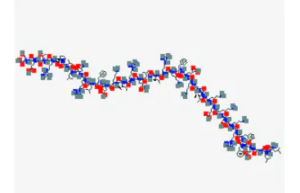
LL-37 (CAP-18)
LL-37, like all Cathelicidins, possesses antimicrobial, antibacterial, antiviral, and anti-fungal properties. Additionally, it has demonstrated anti-inflammatory effects. Research has also indicated its potential effectiveness against specific cancers and its ability to promote blood vessel growth in specific contexts.
PEPTIDES LIST
- Adipotide (FTPP)
- AICAR
- AOD9604
- ARA-290
- B7-33
- BPC-157
- Bronchogen
- Cagrisema
- Cagrilintides
- Cardiogen
- Cartalax
- Cerebrolysin (215mg/ml, 10ml)
- Chonluten
- CJC-1295 DAC
- Cortagen
- DSIP
- Epithalon (Epitalon)
- Follistatin-315
- Follistatin-344
- FOXO4-DRI
- GHK-Cu (Copper Peptide)
- GHK Basic
- GHRP-2
- GHRP-6
- GHRH (GH-Releasing Hormone)
- Glutathione
- Gonadorelin (GnRH)
- GLP2 & GLP3
- hGH Fragment 176-191
- Hexarelin
- Humanin
- Ipamorelin
- Kisspeptin-10
- KPV (ACTH (11-13) alpha-MSH)
- Liraglutide (GLP-1 Analogue)
- Livagen
- LL-37 (CAP-18)
- Melanotan 2 (Melanotan II)
- Mezdutide
- MGF (C-terminal)
- ModGRF 1-29 (CJC-1295 No DAC)
- MK-677 (Ibutamoren)
- MOTS-c
- N-Acetyl Epithalon Amidate
- N-Acetyl Selank Amidate
- N-Acetyl Semax Amidate
- NAD+
- Ovagen
- Oxytocin+
- Pancragen
- PE-22-28
- PEG-MGF (Pegylated MGF)
- Pinealon
- PNC-27
- Prostamax
- PT-141 (Bremelanotide)
- P21 (P021)
- Retatrutide
- Snap8
- Tesa_Ipa_Blend
- Triblend
- Selank
- Semaglutide (GLP-1 Analogue)
- Semax
- Sermorelin
- SS-31
- Survodutide
- TB-500
- Tesamorelin
- Testagen
- Thymagen
- Thyrotropin-TRH
- Tirzepatide
- Triptorelin
- Vesugenas
- Vesilute
- Vilon
- VIP (Vasoactive Intestinal Peptide)
- GLP2
- GLP3
- Klow
- Klow8
- SLU-PP-332
- BAM-15
- Orforglipron
- Noopept
- 9-Me-BC
- Methylene Blue
- Lemon Bottle

LL-37 is the sole known human cathelicidin, belonging to the expansive cathelicidin protein family that serves various functions. These peptides are predominantly present in macrophages and polymorphonuclear leukocytes, both types of white blood cells. They play a crucial role in bacterial eradication, but their impact extends far beyond that. This entire class is commonly known as antimicrobial peptides (AMPs). LL-37 has emerged as a significant player in autoimmune diseases, cancer, and the process of wound healing.
LL-37 is a human cathelicidin that belongs to a broader family of antimicrobial peptides (AMPs). It’s primarily produced by certain white blood cells (including macrophages and neutrophils) and is discussed for roles in both innate and adaptive immunity, with interest as a potential alternative approach to antibiotics in research contexts.
Deeper Research Notes (Summary):
• LL-37 is described as an antimicrobial protein produced by immune cells that fights bacteria and helps regulate inflammation—partly by interacting with bacterial cell walls and disrupting membranes (forming pores), which can lead to bacterial cell death.
• Although elevated LL-37 levels are often noted in inflammatory diseases, some research discussions frame LL-37 as potentially protective against excessive immune reactions; depending on context, it may help boost or calm immune activity to maintain balance.
• LL-37 is discussed as supporting tissue repair in the lungs and intestinesby attracting epithelial cells to wound areas, supporting new blood vessel formation (nutrient delivery), and helping regulate inflammation—often mentioned in relation to asthma and inflammatory bowel disease models.
• LL-37 is also discussed for a potential immune-support role in cancer contexts, particularly within the gastrointestinal tract, by helping immune surveillance recognize and clear abnormal cells.
| Protocol Item | Guidance |
|---|---|
| Dose | 100–500 mcg per dose |
| Cycling | Daily for 30 days; may be extended to 60 or 90 days with a 30-day minimum cycle break between cycles |
| How to Adjust | Cycle length and intensity depend on response and goal |
Caution & Contraindications:
Cautions:
• May cause and/or worsen autoimmune and inflammatory responses
• May cause nausea, diarrhea, and stomach discomfort
Contraindications:
• Individuals with an active, uncontrolled inflammatory and/or autoimmune response
Reconstitution Options (Vial Format):
• 5 mg
• 10 mg
Reconstitution (General Handling):
• Use sterile technique and sanitize the vial stopper before access.
• Add bacteriostatic water slowly along the vial wall to minimize foaming.
• Gently swirl/roll until fully dissolved (avoid vigorous shaking).
• Store according to the product label/spec sheet and protect from light as applicable.
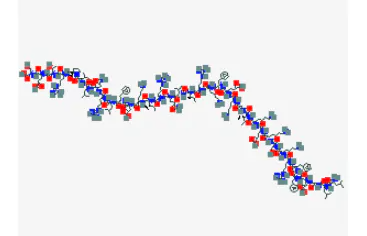
Sequence: Leu-Leu-Gly-Asp-Phe-Phe-Arg-Lys-Ser-Lys-Glu-Lys-Ile-Gly-Lys-Glu-Phe-Lys-Arg-Ile-Val-Gln-Arg-Ile-Lys-Asp-Phe-Leu-Arg-Asn-Leu-Val-Pro-Arg-Thr-Glu-Ser
Molecular Formula: C205H340N60O53
Molecular Weight: 4493.342 g mol^-1
PubChem CID: 16198951
CAS Number: 154947-66-7
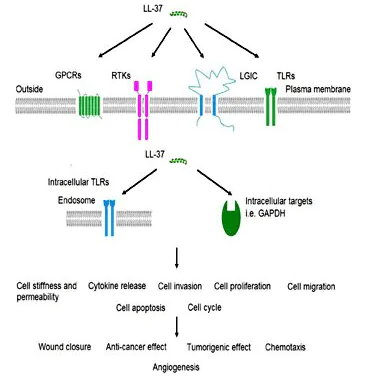
LL-37, primarily recognized as an antimicrobial peptide, plays a role in various inflammatory diseases such as psoriasis, lupus, rheumatoid arthritis, and atherosclerosis. Depending on the local inflammatory environment and the specific cells involved, LL-37 exhibits various immune system-modulating behaviors, including:
- Reducing keratinocyte apoptosis.
- Increasing IFN-alpha production.
- Modifying the chemotaxis of neutrophils and eosinophils.
- Down-regulating signaling through toll-like receptor 4 (TLR4).
- Enhancing IL-18 production.
- Reducing levels of atherosclerotic plaques.
- Reducing keratinocyte apoptosis.
- Increasing IFN-alpha production.
- Modifying the chemotaxis of neutrophils and eosinophils.
- Down-regulating signaling through toll-like receptor 4 (TLR4).
- Enhancing IL-18 production.
- Reducing levels of atherosclerotic plaques.
Interestingly, LL-37's impact on the immune system varies depending on the context. In cell culture studies, it has been observed that LL-37 affects immune cells differently, with T-cells, for example, increasing their inflammatory actions in response to LL-37 when unactivated but decreasing inflammation when already activated. LL-37 seems to have significant homeostatic effects, helping to balance the immune response and prevent excessive inflammation in the presence of infection. This may explain the strong correlation between LL-37 levels and autoimmune diseases. Contrary to previous beliefs, recent evidence suggests that high LL-37 levels in autoimmune diseases may actually dampen inflammation rather than provoke it.
LL-37 is a crucial component of the innate immune system and is rapidly activated in response to infections. Research in skin infections indicates that LL-37 levels in normal skin are low but increase rapidly when pathogens invade. LL-37 works in conjunction with other proteins, such as human beta-defensin 2, to combat infections. LL-37 primarily acts by binding to bacterial lipopolysaccharide (LPS), a major component of the outer membrane of gram-negative bacteria. LPS is vital for the integrity of these bacteria's membranes. LL-37's ability to bind to and interfere with LPS makes it highly effective against certain bacteria, making it a potential treatment for serious bacterial infections. Additionally, LL-37 exhibits potent effects against gram-positive bacteria, which could make it useful in treating staph infections and other similar conditions.
LPS, which contains LL-37's target, is not exclusive to bacterial cell walls but is also found in various organisms and can become airborne in contaminated environments, leading to lung issues. Inhaling LPS triggers a response in lung tissue, which, unfortunately, often proves insufficient to prevent conditions like toxic dust syndrome, asthma, and COPD. Research is ongoing regarding the use of LL-37 as an inhaled treatment for toxic dust syndrome. One intriguing discovery in LL-37 research related to lung disease is that the peptide promotes epithelial cell proliferation and wound closure in the airways. This indicates LL-37's role as a crucial homeostatic regulator in the respiratory system, much like its role in immune function regulation.
Studies in rats have shown that LL-37 is found in high concentrations in joints affected by rheumatoid arthritis. However, it remains unclear whether the peptide is a causative factor or part of the body's response to control the pathological process. Current evidence suggests that LL-37 is likely beneficial in inflammation rather than causative. Research indicates that LL-37 deficiency does not affect the outcomes in animal models of arthritis or lupus, suggesting that LL-37 reactivity in arthritis is likely an incidental result of extensive over-expression in inflamed tissues. Mouse models of arthritis show that LL-37-derived peptides protect against collagen damage and reduce the severity of the disease. This protective activity may explain the high concentrations of LL-37 in tissues with substantial inflammation. Arthritis has also been associated with an up-regulation of toll-like receptor 3, and LL-37's effects on this receptor are still under investigation. LL-37's selective reduction of pro-inflammatory responses in macrophages further supports its potential anti-inflammatory role.
LL-37 has several effects in the intestine, including increasing cell migration necessary for maintaining the intestinal epithelial barrier and reducing apoptosis during intestinal inflammation. Research suggests that LL-37 may be a useful adjuvant treatment in inflammatory bowel conditions, post-intestinal surgery, or during acute intestinal infections. Additionally, LL-37's partnership with human beta defensin 2 aids in repairing and maintaining intestinal epithelium while reducing TNF-related cell death. The development of LL-37-based treatments could reduce reliance on TNF-alpha inhibitors in the treatment of inflammatory bowel disease.
Research indicates that LL-37 is beneficial in intestinal and gastric cancers, particularly those associated with smoking and tobacco use. The effects appear to be mediated through a vitamin D-dependent pathway, which may explain the reduced risk of GI cancer associated with vitamin D intake. LL-37 induces anti-cancer activity in tumor-associated macrophages via this pathway.
LL-37 triggers the synthesis of prostaglandin E2 (PGE2) in endothelial cells, leading to angiogenesis (blood vessel growth). This ability to regulate angiogenesis has implications for cancer development, heart disease, stroke outcomes, wound healing, and more.
LL-37's unique structure in humans compared to other mammals offers insight into the impact of three-dimensional configuration on receptor binding. This property makes LL-37 of great interest for studying amino acid sequence changes and their effects on structure and function, potentially advancing the field of biochemistry and protein manipulation for specific outcomes.
The above literature was researched, edited and organized by Dr. Logan, M.D. Dr. Logan holds a doctorate degree from https://case.edu/medicine/Case Western Reserve University School of Medicine and a B.S. in molecular biology.
Case Western Reserve University School of Medicine
ALL ARTICLES AND PRODUCT INFORMATION PROVIDED ON THIS WEBSITE ARE FOR INFORMATIONAL AND EDUCATIONAL PURPOSES ONLY.
The product information featured on this website pertains exclusively to in-vitro studies. In-vitro studies, also known as ‘in glass’ studies, are conducted outside of living organisms. It’s important to emphasize that these products do not constitute medicines or drugs and have not received FDA approval for the prevention, treatment, or cure of any medical conditions, ailments, or diseases. It is crucial to note that the introduction of these products into the bodies of humans or animals is strictly prohibited by law.
THIS PRODUCT IS INTENDED AS A RESEARCH CHEMICAL ONLY. This designation allows the use of research chemicals strictly for in vitro testing and laboratory experimentation only. All product information available on this website is for educational purposes only. Bodily introduction of any kind into humans or animals is strictly forbidden by law. This product should only be handled by licensed, qualified professionals. This product is not a drug, food, or cosmetic and may not be misbranded, misused or mislabled as a drug, food or cosmetic.