Klows-8
KLOW is a multi-peptide research blend designed around a simple idea: recovery is rarely a single-pathway problem. By combining GHK-Cu, BPC-157, TB-500, and KPV in a single formulation, KLOW is positioned as a broad-spectrum tool for investigators interested in tissue remodeling, inflammation signaling, and restoration of barrier and connective structures. While each peptide has its own body of preclinical and emerging clinical discussion, the purpose of KLOW is to explore how these mechanisms may complement one another—collagen support and antioxidant activity alongside repair signaling, cell migration, and inflammation modulation—while keeping in mind that rigorous human data on blends remains limited and conclusions should be drawn conservatively.
PEPTIDES LIST
- Adipotide (FTPP)
- AICAR
- AOD9604
- ARA-290
- B7-33
- BPC-157
- Bronchogen
- Cagrisema
- Cagrilintides
- Cardiogen
- Cartalax
- Cerebrolysin (215mg/ml, 10ml)
- Chonluten
- CJC-1295 DAC
- Cortagen
- DSIP
- Epithalon (Epitalon)
- Follistatin-315
- Follistatin-344
- FOXO4-DRI
- GHK-Cu (Copper Peptide)
- GHK Basic
- GHRP-2
- GHRP-6
- GHRH (GH-Releasing Hormone)
- Glutathione
- Gonadorelin (GnRH)
- GLP2 & GLP3
- hGH Fragment 176-191
- Hexarelin
- Humanin
- Ipamorelin
- Kisspeptin-10
- KPV (ACTH (11-13) alpha-MSH)
- Liraglutide (GLP-1 Analogue)
- Livagen
- LL-37 (CAP-18)
- Melanotan 2 (Melanotan II)
- Mezdutide
- MGF (C-terminal)
- ModGRF 1-29 (CJC-1295 No DAC)
- MK-677 (Ibutamoren)
- MOTS-c
- N-Acetyl Epithalon Amidate
- N-Acetyl Selank Amidate
- N-Acetyl Semax Amidate
- NAD+
- Ovagen
- Oxytocin+
- Pancragen
- PE-22-28
- PEG-MGF (Pegylated MGF)
- Pinealon
- PNC-27
- Prostamax
- PT-141 (Bremelanotide)
- P21 (P021)
- Retatrutide
- Snap8
- Tesa_Ipa_Blend
- Triblend
- Selank
- Semaglutide (GLP-1 Analogue)
- Semax
- Sermorelin
- SS-31
- Survodutide
- TB-500
- Tesamorelin
- Testagen
- Thymagen
- Thyrotropin-TRH
- Tirzepatide
- Triptorelin
- Vesugenas
- Vesilute
- Vilon
- VIP (Vasoactive Intestinal Peptide)
- GLP2
- GLP3
- Klow
- Klow8
- SLU-PP-332
- BAM-15
- Orforglipron
- Noopept
- 9-Me-BC
- Methylene Blue
- Lemon Bottle

KLOWS-8 is presented as a multi-peptide research blend that combines four widely discussed bioactive peptides: GHK-Cu, KPV, Thymosin β4 (commonly marketed as “TB-500”), and BPC-157. In the scientific literature, these peptides are most often examined individually across experimental settings relevant to tissue remodeling and inflammatory signaling—such as extracellular matrix maintenance, cell migration, vascular-response biology, and immune modulation.
The conceptual rationale behind combining these components is pathway coverage rather than reliance on a single mechanism. GHK-Cu is frequently discussed in connective tissue and skin remodeling contexts; KPV is described as an α-MSH–derived tripeptide motif studied for anti-inflammatory and immunomodulatory effects; thymosin β4 is associated with actin dynamics and cell migration; and BPC-157 has an extensive preclinical footprint in gastrointestinal protection and soft-tissue injury models.
While this framework helps explain why a four-peptide blend is proposed, most supporting evidence remains tied to the individual peptides and to preclinical or translational research models—not to large, controlled human studies of the combined formulation. Accordingly, KLOWS-8 is best discussed with clear evidence-tier labeling, careful interpretation of mechanism-based claims, and strong emphasis on identity/purity verification in research contexts.
KLOWS-8 is a multi-peptide blend (80 mg total per vial). The dosing guidance below reflects common anecdotal protocols discussed for total daily blend amount (not per-peptide), typically run in cycles to support recovery-focused research.
Route & Frequency: Subcutaneous injection once daily is commonly used. Rotate injection sites (abdomen or other subcutaneous areas) to reduce irritation. Many protocols use a 5 days on / 2 days off schedule.
Reconstitution Target (80 mg vial): Reconstitute with 3–4 mL bacteriostatic water.
• 3.0 mL → ~26.7 mg/mL (more concentrated)
• 4.0 mL → 20 mg/mL (easier measuring, often preferred)
Conversion: 1 mL = 100 insulin units (U). Example: 10U = 0.10 mL.
| Protocol Option | Total Daily Dose (Blend) | Volume @ 3.0 mL (≈26.7 mg/mL) | Volume @ 4.0 mL (20 mg/mL) |
|---|---|---|---|
| Conservative start | 200–250 mcg (0.20–0.25 mg) | ~0.0075–0.0094 mL (0.75–0.94U) | 0.010–0.0125 mL (1.0–1.25U) |
| Standard range | 2.5–4.0 mg | ~0.094–0.150 mL (9.4–15U) | 0.125–0.200 mL (12.5–20U) |
| Optional loading phase* | 8.0 mg daily | ~0.300 mL (30U) | 0.400 mL (40U) |
*Loading phase example: Some protocols use 8 mg daily for the first 2 weeks (5 on / 2 off), then 4 mg daily for ~10 weeks using the same schedule.
Cycle duration: often 4–12 weeks, followed by 2–4 weeks off.
Precision Tip: If your calculated volume is very small (a few units or less), measurement accuracy becomes difficult. Many users choose 4.0 mL reconstitution for easier dosing and use 30U or 50U insulin syringes for better visibility.
Reconstitution Instructions:
• Clean vial tops with alcohol; use new sterile needles/syringes.
• Draw 3–4 mL bacteriostatic water and inject slowly down the vial wall to reduce foaming.
• Gently swirl/roll until fully dissolved (do not shake).
• Label with date and concentration; store refrigerated at 2–8 °C, protected from light.
• Use sterile technique for every draw; avoid contamination and unnecessary temperature cycling.
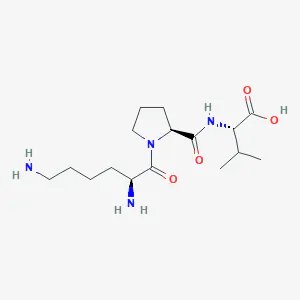
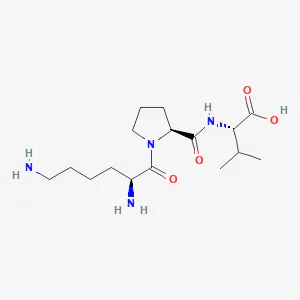
Sequence: Lys-Pro-Val
Molecular Formula: C16H30N4O4
Molecular Weight: 342.43 g mol^-1
PubChem CID: 125672
CAS Number: 67727-97-3
KLOWS-8 is described as a multi-peptide composite that combines the four-peptide KLOW blend—GHK-Cu, KPV, Thymosin β4 (often marketed as “TB-500”), and BPC-157—with SNAP-8 (also known as Acetyl Octapeptide-3). Scientifically, the most defensible way to discuss a new blend is to summarize what is known about each component and to distinguish hypothesized pathway coverage from demonstrated outcomes (which generally require direct studies on the exact combined formulation).
SNAP-8 (Acetyl Octapeptide-3) is an eight–amino acid synthetic peptide widely used in cosmetic research and formulation. It is commonly described as an extension of Acetyl Hexapeptide-8 (Argireline) and is discussed as a SNAP-25/SNARE complex–interacting, “neuromodulatory” topical ingredient intended to help reduce the appearance of dynamic expression lines (e.g., around the eyes and forehead) by modulating pathways related to neurotransmitter release at neuromuscular junctions (Nguyen et al., 2024).
In the peer-reviewed cosmetic literature, SNAP-8 is positioned as a non-invasive alternative conceptually related to mechanisms targeted by botulinum toxin, but with topical application and typically more gradual, subtle effects compared with injectables (Nguyen et al., 2024).
KLOWS-8 incorporates peptides that have been studied across different biological contexts:
• GHK-Cu: frequently discussed in dermal remodeling and tissue maintenance contexts, including connective-tissue and skin-related research.
• KPV: a tripeptide motif associated with α-MSH biology and investigated in inflammatory models; intestinal research has highlighted PepT1-linked uptake and anti-inflammatory effects in experimental colitis settings (e.g., Dalmasso et al., 2008).
• Thymosin β4: studied in relation to actin dynamics, cell migration, and wound-repair/angiogenesis biology (predominantly preclinical).
• BPC-157: widely reported in preclinical protection/repair models; recent reviews emphasize that strong human clinical evidence remains limited relative to the volume of experimental data.
In a skin-focused framework, KLOWS-8 is often conceptually framed as combining: neuromodulatory wrinkle biology (SNAP-8) with remodeling/repair signaling (GHK-Cu), plus additional peptides discussed in inflammation and repair contexts (KPV, Thymosin β4, BPC-157).
This “division of labor” explains why a blend might be proposed; however, claims of additive or synergistic benefits require direct testing of the exact combined formulation and should not be assumed from component-level studies alone.
The most citable human-facing evidence within the KLOWS-8 concept is typically on SNAP-8 as a cosmetic ingredient and on delivery systems designed to improve peptide penetration into skin. Reviews also note that topical “Botox-like” peptides face permeability limitations and often rely on continuous use and optimized formulations (Nguyen et al., 2024).
For several KLOW components (notably Thymosin β4 and BPC-157), many widely discussed effects are supported primarily by experimental and preclinical literature, and the translational status varies significantly by peptide and indication.
A practical constraint for many peptides is limited passive diffusion through the stratum corneum. As a result, the SNAP-8 literature frequently emphasizes the role of formulation strategy—sometimes including advanced delivery approaches (e.g., dissolving microneedle systems)—to improve local delivery to target skin layers.
This is relevant to KLOWS-8 because the overall performance of a composite topical peptide concept can be strongly influenced by vehicle, stability, concentration in the finished formula, and delivery modality, not only by ingredient selection.
There is no established “standard dosage” for the combined KLOWS-8 concept. However, for SNAP-8 specifically, a published clinical evaluation of a dissolving microneedle patch containing acetyl octapeptide-3 reported a defined application schedule: once nightly for 14 days, followed by once every 3 days for the next 14 days (through day 28) (Shin et al., 2024). This schedule is tied to that specific microneedle product format and should not be generalized across unrelated formulations.
A responsible scientific description of KLOWS-8 should note that the evidence base is uneven across components and that many claims in the broader peptide space arise from preclinical models and formulation testing rather than large, independent clinical trials. For any multi-peptide preparation, it is also critical to emphasizeidentity and purity verification (e.g., analytical documentation) because supplier-to-supplier variability can meaningfully change what is being studied.
Overall, KLOWS-8 is best presented as a research-oriented composite concept that brings together a topical “Botox-like” peptide (SNAP-8) with a repair/inflammation-oriented peptide set (KLOW), while avoiding overclaims about synergy or standardized dosing in the absence of direct studies on the combined formulation.
The above literature was researched, edited and organized by Dr. Logan, M.D. Dr. Logan holds a doctorate degree from https://case.edu/medicine/Case Western Reserve University School of Medicine and a B.S. in molecular biology.
Case Western Reserve University School of Medicine
ALL ARTICLES AND PRODUCT INFORMATION PROVIDED ON THIS WEBSITE ARE FOR INFORMATIONAL AND EDUCATIONAL PURPOSES ONLY.
The product information featured on this website pertains exclusively to in-vitro studies. In-vitro studies, also known as 'in glass' studies, are conducted outside of living organisms. It's important to emphasize that these products do not constitute medicines or drugs and have not received FDA approval for the prevention, treatment, or cure of any medical conditions, ailments, or diseases. It is crucial to note that the introduction of these products into the bodies of humans or animals is strictly prohibited by law.
THIS PRODUCT IS INTENDED AS A RESEARCH CHEMICAL ONLY. This designation allows the use of research chemicals strictly for in vitro testing and laboratory experimentation only. All product information available on this website is for educational purposes only. Bodily introduction of any kind into humans or animals is strictly forbidden by law. This product should only be handled by licensed, qualified professionals. This product is not a drug, food, or cosmetic and may not be misbranded, misused or mislabled as a drug, food or cosmetic.