The Role of Peptides in Modern Therapeutic Medicine
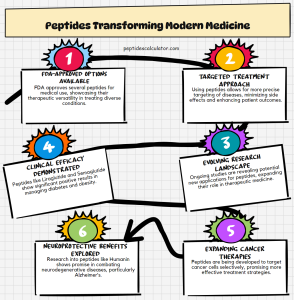
Peptides have emerged as an essential component of contemporary therapeutic medicine. Their targeted approach allows for more effective treatment of conditions like diabetes, obesity, and cancer. FDA-approved peptides, such as GLP-1 analogs, illustrate their potential to enhance metabolic processes. However, the landscape of peptide therapies extends beyond these approved options. Exploring their applications in various diseases reveals a complex yet promising future for peptide-based treatments. What lies ahead in this evolving field?
PEPTIDES LIST
- Adipotide (FTPP)
- AICAR
- AOD9604
- ARA-290
- B7-33
- BPC-157
- Bronchogen
- Cagrisema
- Cagrilintides
- Cardiogen
- Cartalax
- Cerebrolysin (215mg/ml, 10ml)
- Chonluten
- CJC-1295 DAC
- Cortagen
- DSIP
- Epithalon (Epitalon)
- Follistatin-315
- Follistatin-344
- FOXO4-DRI
- GHK-Cu (Copper Peptide)
- GHK Basic
- GHRP-2
- GHRP-6
- GHRH (GH-Releasing Hormone)
- Glutathione
- Gonadorelin (GnRH)
- GLP2 & GLP3
- hGH Fragment 176-191
- Hexarelin
- Humanin
- Ipamorelin
- Kisspeptin-10
- KPV (ACTH (11-13) alpha-MSH)
- Liraglutide (GLP-1 Analogue)
- Livagen
- LL-37 (CAP-18)
- Melanotan 2 (Melanotan II)
- Mezdutide
- MGF (C-terminal)
- ModGRF 1-29 (CJC-1295 No DAC)
- MK-677 (Ibutamoren)
- MOTS-c
- N-Acetyl Epithalon Amidate
- N-Acetyl Selank Amidate
- N-Acetyl Semax Amidate
- NAD+
- Ovagen
- Oxytocin+
- Pancragen
- PE-22-28
- PEG-MGF (Pegylated MGF)
- Pinealon
- PNC-27
- Prostamax
- PT-141 (Bremelanotide)
- P21 (P021)
- Retatrutide
- Snap8
- Tesa_Ipa_Blend
- Triblend
- Selank
- Semaglutide (GLP-1 Analogue)
- Semax
- Sermorelin
- SS-31
- Survodutide
- TB-500
- Tesamorelin
- Testagen
- Thymagen
- Thyrotropin-TRH
- Tirzepatide
- Triptorelin
- Vesugenas
- Vesilute
- Vilon
- VIP (Vasoactive Intestinal Peptide)
- GLP2
- GLP3
- Klow
- Klow8
- SLU-PP-332
- BAM-15
- Orforglipron
- Noopept
- 9-Me-BC
- Methylene Blue
- Lemon Bottle

Peptides have emerged as an essential component of contemporary therapeutic medicine. Their targeted approach allows for more effective treatment of conditions like diabetes, obesity, and cancer. FDA-approved peptides, such as GLP-1 analogs, illustrate their potential to enhance metabolic processes. However, the landscape of peptide therapies extends beyond these approved options. Exploring their applications in various diseases reveals a complex yet promising future for peptide-based treatments. What lies ahead in this evolving field?
FDA-approved peptide therapies, such as Liraglutide, Tesamorelin, Buserelin, and Semaglutide, are making significant impacts in medical treatment. These peptides serve various therapeutic roles, from managing diabetes to treating hormonal deficiencies. Their approval marks an essential advancement in the integration of peptide-based solutions within modern medicine.
Liraglutide stands out as a significant advancement in the domain of peptide therapies, specifically designed for the management of type 2 diabetes and obesity. As a glucagon-like peptide-1 (GLP-1) analog, liraglutide mimics the body's natural hormones that regulate glucose levels and appetite. Approved by the FDA, it aids in enhancing insulin secretion in response to meals while simultaneously suppressing glucagon release, which helps lower blood sugar levels. Additionally, liraglutide promotes satiety, contributing to weight loss, a vital factor in diabetes management. Clinical studies have demonstrated its efficacy in improving glycemic control and supporting weight reduction, making it a valuable option for healthcare providers aiming to offer thorough treatment strategies for patients affected by these conditions.
Tesamorelin represents a significant advancement in peptide therapies, specifically targeting the reduction of excess abdominal fat in patients with HIV-associated lipodystrophy. This synthetic analog of growth hormone-releasing hormone stimulates the pituitary gland to produce more growth hormone, leading to lipolysis and decreased visceral fat. Clinical studies have demonstrated its efficacy, showing significant reductions in abdominal fat and improvements in metabolic parameters. Tesamorelin is administered via subcutaneous injection and has been well-tolerated by patients, with a favorable safety profile. Its approval by the FDA underscores the potential of peptide therapies in managing conditions linked to metabolic disorders. As research continues, tesamorelin's role may expand, offering new insights into therapeutic strategies for other related conditions.
Buserelin, a potent synthetic analog of gonadotropin-releasing hormone (GnRH), has emerged as a valuable tool in the treatment of hormone-sensitive conditions, particularly prostate cancer and endometriosis. By inhibiting the secretion of luteinizing hormone (LH) and follicle-stimulating hormone (FSH), Buserelin effectively reduces estrogen and testosterone levels, which are essential in the progression of these diseases. Its application in clinical settings showcases its efficacy in managing symptoms and improving quality of life for patients. Administered via injection, Buserelin demonstrates a favorable pharmacological profile, allowing for controlled hormone modulation. Healthcare providers often consider it a cornerstone therapy, particularly in cases where traditional treatments may be inadequate or undesirable. Consequently, Buserelin represents a significant advancement in peptide-based therapeutic strategies.
Semaglutide and Tirzepatide represent a significant advancement in the field of peptide-based therapies, particularly for the management of obesity and type 2 diabetes. Both peptides mimic the action of incretin hormones, which play a vital role in regulating glucose metabolism and appetite. Semaglutide, administered weekly, has demonstrated substantial weight loss and improved glycemic control in clinical trials. Similarly, Tirzepatide, a dual agonist targeting GLP-1 and GIP receptors, has shown even more pronounced effects on weight management and blood sugar regulation. These therapies not only enhance patient outcomes but also offer new hope in combating metabolic diseases. As evidence mounts regarding their efficacy, they underscore the growing importance of peptides in therapeutic medicine.
Experimental and research peptides are at the forefront of innovation in medical science, with compounds like Humanin, PNC-27, Cardiogen, and Livagen showing promise in various therapeutic applications. These peptides are being investigated for their potential roles in disease management and treatment enhancement. Ongoing studies aim to clarify their mechanisms of action and efficacy in clinical settings.
Humanin, a notable peptide, has garnered attention within the domain of experimental and research peptides due to its potential neuroprotective and metabolic benefits. Originating from the mitochondrial genome, Humanin is recognized for its ability to counteract cell death induced by various stressors, particularly in neuronal cells. Research indicates that it may play a role in mitigating neurodegenerative diseases such as Alzheimer’s and Parkinson’s by enhancing cellular resilience. Additionally, Humanin has been associated with improvements in insulin sensitivity and overall metabolic health, suggesting its therapeutic promise in conditions like obesity and type 2 diabetes. As studies continue, the peptide's multifaceted effects may pave the way for novel treatment strategies, highlighting its significance in the evolving landscape of modern medicine.
Building on the insights gained from Humanin's role in neuroprotection and metabolic health, PNC-27 emerges as another promising peptide in the domain of research. This experimental peptide is being studied for its potential to target and induce apoptosis in cancer cells, representing a significant advancement in therapeutic options. Researchers are particularly intrigued by PNC-27's ability to selectively affect malignant cells while sparing healthy tissue, making it a focal point for innovative cancer treatments.
Key emotional resonances surrounding PNC-27 include:
Hope for patients facing aggressive cancers.
The promise of targeted therapies reducing side effects.
The potential to revolutionize cancer treatment paradigms.
The drive for scientific discovery leading to life-saving interventions.
Cardiogen represents a novel frontier in peptide research, focusing on heart health and regenerative medicine. This innovative area explores the potential of specific peptides to enhance cardiac function, promote tissue repair, and mitigate the effects of heart disease. Researchers are investigating various peptide sequences that may improve myocardial regeneration and reduce inflammation, vital factors in heart health. Cardiogen peptides may also play a role in modulating metabolic pathways, thereby offering a dual approach to both cardiovascular and metabolic conditions. Early studies suggest promising outcomes, although further clinical trials are necessary to establish efficacy and safety. As research progresses, Cardiogen could markedly impact therapeutic strategies for patients suffering from cardiovascular diseases, potentially reshaping future treatment protocols.
Livagen represents a significant advancement in the exploration of experimental and research peptides, particularly in the domain of cellular health and longevity. This peptide aims to enhance cellular function and promote regenerative processes, making it a focal point of current research.
Key aspects of Livagen that evoke interest include:
Cellular Rejuvenation: Potential to restore youthful cellular function.
Longevity Research: Investigated for its effects on lifespan extension.
Regenerative Medicine: Promises applications in healing and recovery.
Innovative Therapies: Offers hope for new treatment modalities in age-related diseases.
As research progresses, Livagen could redefine therapeutic approaches, addressing the challenges of aging and cellular decline, ultimately improving quality of life.
As researchers continue to explore innovative cancer therapies, peptides have emerged as pivotal players in the fight against this complex disease. These small chains of amino acids are uniquely capable of targeting specific cancer cells while sparing healthy tissue, thereby minimizing side effects commonly associated with traditional treatments. Peptides can function as therapeutic agents, capable of inhibiting tumor growth or promoting apoptosis, the programmed cell death that is often disrupted in cancerous cells.
Moreover, peptide-based vaccines are being developed to stimulate the immune system, enhancing its ability to recognize and attack cancer cells. Their versatility also extends to diagnostic applications, where peptide markers can help in the early detection of various cancers. As the understanding of peptide biology deepens, their role in personalized medicine is becoming increasingly significant, paving the way for tailored therapeutic strategies that improve patient outcomes in the ongoing battle against cancer.
Research into the therapeutic potential of peptides has expanded beyond oncology to encompass neurodegenerative diseases, particularly Alzheimer’s disease. This shift highlights the urgency to address a condition that profoundly affects millions of individuals and their families. Peptides may serve as essential agents in combating Alzheimer’s by targeting specific pathways involved in disease progression. Their ability to modulate brain functions holds promise for innovative treatments.
The emotional weight of Alzheimer’s is underscored by:
The staggering 6 million Americans living with Alzheimer’s, often losing memories of loved ones.
The emotional toll on caregivers, who face daily challenges in providing support.
The financial burden on families, with costs exceeding $300 billion annually in the U.S.
The profound impact on society, as Alzheimer’s remains a leading cause of death.
As research continues, the hope is to harness peptides to improve outcomes for those affected.
An increasing body of evidence suggests that peptides play a significant role in addressing obesity, a complex and multifactorial condition affecting millions worldwide. Several peptides, such as glucagon-like peptide-1 (GLP-1) and peptide YY (PYY), have shown promise in regulating appetite and enhancing metabolic processes. These peptides function by signaling satiety and reducing hunger, thereby aiding in weight management.
Research indicates that synthetic analogs of these naturally occurring peptides can effectively promote weight loss and improve metabolic health. For instance, GLP-1 receptor agonists have been developed as therapeutic agents, leading to significant reductions in body weight among patients with obesity. Furthermore, ongoing studies continue to explore additional peptide-based interventions, emphasizing their potential as a cornerstone in obesity treatment strategies. As the understanding of peptide mechanisms deepens, their incorporation into therapeutic regimens may offer a novel approach to combating obesity and its associated health complications.
The use of peptides in modern medicine, particularly in areas like obesity treatment, is accompanied by a complex regulatory landscape that governs their development and application. Regulatory bodies, such as the FDA, play an important role in guaranteeing the safety and efficacy of peptide-based therapies. These regulations not only influence research and clinical trials but also impact the approval and market accessibility of these innovative treatments.
Key considerations in the regulatory framework include:
Safety Assessment: Thorough evaluations to prevent adverse effects on patients.
Efficacy Standards: Requirements to demonstrate that peptides provide significant clinical benefits.
Manufacturing Regulations: Compliance with Good Manufacturing Practices (GMP) to guarantee product consistency and quality.
Post-Market Surveillance: Ongoing monitoring of peptide drugs to guarantee long-term safety and effectiveness.
Understanding these regulatory aspects is essential for stakeholders involved in peptide-based medical advancements.
The safety and efficacy of peptides in clinical use have raised important questions among healthcare professionals and patients alike. Current research is exploring the potential of peptides in treating various diseases, sparking interest in their therapeutic applications. Additionally, the administration methods for these peptides, particularly whether they are all injectable, warrant further examination.
While many healthcare professionals and patients are increasingly exploring the potential benefits of peptides, questions about their safety for clinical use remain prevalent. Research indicates that peptides can exhibit a favorable safety profile; however, concerns persist regarding their long-term effects and potential side effects. The following points highlight key considerations surrounding peptide safety:
Allergic Reactions: Some individuals may experience allergic responses to specific peptides.
Dosage Variability: Incorrect dosing can lead to adverse effects, emphasizing the need for professional supervision.
Unregulated Products: The market contains unapproved peptide products that may pose risks due to lack of quality control.
Long-Term Studies: Insufficient long-term research leaves uncertainties about chronic use consequences.
Understanding these factors is essential for informed decision-making in clinical applications.
Peptides are being investigated for their therapeutic potential across a range of diseases, reflecting their versatility in modern medicine. Current research focuses on conditions such as cancer, where peptides can target tumor cells, and metabolic disorders, including diabetes, where they may enhance insulin function. Moreover, peptides are being explored for their role in treating cardiovascular diseases by improving heart function and reducing plaque formation. Neurological disorders, such as Alzheimer's disease, are also under investigation, with peptides aimed at protecting neurons and improving cognitive function. Additionally, antimicrobial peptides are being studied for their ability to combat resistant infections, highlighting their importance in addressing public health challenges. Overall, peptides present exciting possibilities for future therapeutic interventions.
How are therapeutic peptides administered in clinical settings? While many therapeutic peptides are indeed injectable, not all require this method of delivery. Some peptides can be administered through alternative routes, depending on their molecular structure and intended use. This flexibility allows for a variety of treatment options suitable for different patient needs.
Convenience: Non-injectable forms offer easier administration for patients.
Comfort: Oral or nasal options can alleviate the anxiety associated with injections.
Adherence: Diverse delivery methods may improve patient compliance with treatment regimens.
Innovation: Continuous research is expanding the range of peptide formulations beyond injections.
Understanding these options helps patients and healthcare providers make informed decisions regarding peptide therapies.
THIS PRODUCT IS INTENDED AS A RESEARCH CHEMICAL ONLY. This designation allows the use of research chemicals strictly for in vitro testing and laboratory experimentation only. All product information available on this website is for educational purposes only. Bodily introduction of any kind into humans or animals is strictly forbidden by law. This product should only be handled by licensed, qualified professionals. This product is not a drug, food, or cosmetic and may not be misbranded, misused or mislabled as a drug, food or cosmetic.