GHK-Cu 50mg (Copper Peptide)
GHK-Cu is a natural peptide in human blood plasma, urine, and saliva. Research in animals reveals that GHK-Cu can improve wound healing, immune function, and skin health by stimulating collagen, fibroblasts and promoting blood vessel growth. There has been evidence that has shown that it acts as a feedback signal that is generated after tissue injury. It also suppresses free-radical damage and thus is an potent antioxidant.
PEPTIDES LIST
- Adipotide (FTPP)
- AICAR
- AOD9604
- ARA-290
- B7-33
- BPC-157
- Bronchogen
- Cagrisema
- Cagrilintides
- Cardiogen
- Cartalax
- Cerebrolysin (215mg/ml, 10ml)
- Chonluten
- CJC-1295 DAC
- Cortagen
- DSIP
- Epithalon (Epitalon)
- Follistatin-315
- Follistatin-344
- FOXO4-DRI
- GHK-Cu (Copper Peptide)
- GHK Basic
- GHRP-2
- GHRP-6
- GHRH (GH-Releasing Hormone)
- Glutathione
- Gonadorelin (GnRH)
- GLP2 & GLP3
- hGH Fragment 176-191
- Hexarelin
- Humanin
- Ipamorelin
- Kisspeptin-10
- KPV (ACTH (11-13) alpha-MSH)
- Liraglutide (GLP-1 Analogue)
- Livagen
- LL-37 (CAP-18)
- Melanotan 2 (Melanotan II)
- Mezdutide
- MGF (C-terminal)
- ModGRF 1-29 (CJC-1295 No DAC)
- MK-677 (Ibutamoren)
- MOTS-c
- N-Acetyl Epithalon Amidate
- N-Acetyl Selank Amidate
- N-Acetyl Semax Amidate
- NAD+
- Ovagen
- Oxytocin+
- Pancragen
- PE-22-28
- PEG-MGF (Pegylated MGF)
- Pinealon
- PNC-27
- Prostamax
- PT-141 (Bremelanotide)
- P21 (P021)
- Retatrutide
- Snap8
- Tesa_Ipa_Blend
- Triblend
- Selank
- Semaglutide (GLP-1 Analogue)
- Semax
- Sermorelin
- SS-31
- Survodutide
- TB-500
- Tesamorelin
- Testagen
- Thymagen
- Thyrotropin-TRH
- Tirzepatide
- Triptorelin
- Vesugenas
- Vesilute
- Vilon
- VIP (Vasoactive Intestinal Peptide)
- GLP2
- GLP3
- Klow
- Klow8
- SLU-PP-332
- BAM-15
- Orforglipron
- Noopept
- 9-Me-BC
- Methylene Blue
- Lemon Bottle

GHK-Cu is a naturally occurring peptide first isolated from human blood plasma and later identified in urine and saliva. Research highlights substantial benefits in wound healing and immune modulation. The short peptide exhibits anti-aging properties, suppresses free-radical damage, enhances protein synthesis, combats microbes, and supports the health of skin fibroblasts.
GHK-Cu is described as a naturally occurring copper peptide found in human plasma (with production noted to decrease with age). It’s commonly used in hair and skin products due to its described regenerative and anti-inflammatory properties, and is noted as influencing 500+ gene expressions associated with health and anti-aging benefits. (Educational / research context only.)
Deeper Research Notes (Summary):
• Described as affecting multiple pathways in the body, leading to a wide range of potential benefits.
• For tissue injuries, GHK-Cu is described as acting as a chemoattractant—supporting movement/signaling of cells during inflammatory actions—while releasing proteins associated with tissue growth and repair.
• Described as increasing collagen, supporting stem cell production, and contributing to bone formation by stimulating chondrocytes.
• Described as providing a copper source for cells, supporting angiogenesis (new blood vessel formation), which plays a role in tissue growth and survival.
• Described as blocking oxidative damage release from ferritin channels after injury, supporting enhanced regeneration for skin, hair follicles, stomach lining, bone tissue, fingernails, and other body tissues.
| Protocol Item | Guidance |
|---|---|
| Dose | 1–5 mg per dose |
| Cycling | Daily, for 6 weeks, with a 30-day minimum cycle break between |
| Annual Frequency | Can be cycled 3–4× per year |
Caution & Contraindications:
Caution:
• A stinging or burning sensation may occur upon application (especially when injecting)
• Use caution in individuals with autoimmune diseases
Contraindications:
• None noted at this time of research
Reconstitution Options (Vial Format):
• 5 mg
• 10 mg
• 50 mg
• 100 mg
Reconstitution (General Handling):
• Use sterile technique and sanitize the vial stopper before access.
• Add diluent slowly along the vial wall to minimize foaming.
• Gently swirl/roll until fully dissolved (avoid vigorous shaking).
• Store according to the product label/spec sheet and protect from light as applicable.
Sequence: Gly-His-Lys·Cu·xHAc
Molecular Formula: C14H23CuN6O4
Molecular Weight: 340.384 g/mol
PubChem CID: 73587
CAS Number: 89030-95-5
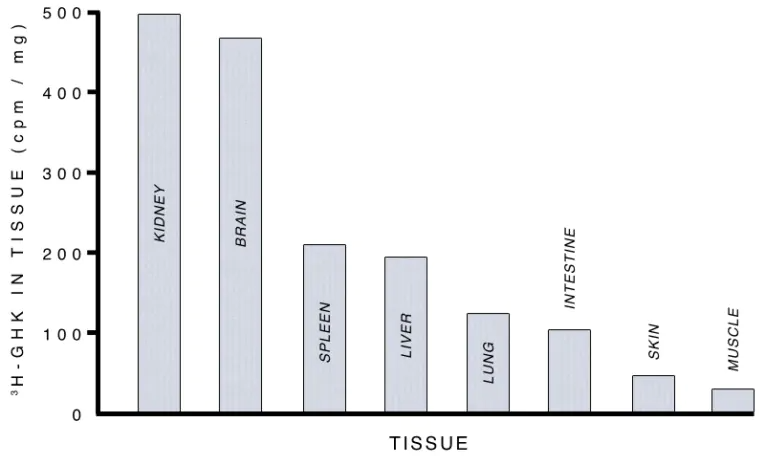
GHK-Cu, a natural component of human blood, plays a crucial role in skin regeneration. Studies on skin cultures have revealed that GHK stimulates the production and breakdown of key skin components, including collagen, glycosaminoglycans, proteoglycans, and chondroitin sulfate. This effect is partially mediated by its ability to attract and coordinate the activity of fibroblasts, immune cells, and endothelial cells at the site of injury. GHK-Cu is commonly found in skincare and cosmetic products, where it enhances skin elasticity, tightens and firms the skin, reduces sun damage, hyperpigmentation, fine lines, and wrinkles. It also helps in scar reduction, prevents hypertrophic healing, smoothes rough skin, and rejuvenates aged skin, partly through its influence on transforming growth factor-Β and gene transcription.
Studies in mice have shown that GHK-Cu accelerates the healing process by up to 33% following burns, not only by recruiting immune cells and fibroblasts but also by promoting blood vessel growth, particularly crucial in burn wound care due to the cauterization effect.
GHK-Cu’s Antimicrobial Properties
The presence of foreign pathogens in tissues can significantly impede the wound healing process. Bacterial and fungal infections are particularly problematic in patients with burns or compromised immune systems, such as diabetes or HIV. GHK-Cu, in combination with specific fatty acids, forms a potent antimicrobial compound effective against various bacteria and fungi that often hinder wound healing. Research in diabetic patients has demonstrated that the addition of GHK-Cu to standard care regimens leads to a significant 40% increase in wound closure and a 27% reduction in infection rates compared to control groups. Similar benefits were observed in patients with ischemic open wounds.
Article Author :
The above literature was researched, edited and organized by Dr. Logan, M.D. Dr. Logan holds a doctorate degree from https://case.edu/medicine/Case Western Reserve University School of Medicine and a B.S. in molecular biology.
Case Western Reserve University School of Medicine
ALL ARTICLES AND PRODUCT INFORMATION PROVIDED ON THIS WEBSITE ARE FOR INFORMATIONAL AND EDUCATIONAL PURPOSES ONLY.
The product information featured on this website pertains exclusively to in-vitro studies. In-vitro studies, also known as ‘in glass’ studies, are conducted outside of living organisms. It’s important to emphasize that these products do not constitute medicines or drugs and have not received FDA approval for the prevention, treatment, or cure of any medical conditions, ailments, or diseases. It is crucial to note that the introduction of these products into the bodies of humans or animals is strictly prohibited by law.
THIS PRODUCT IS INTENDED AS A RESEARCH CHEMICAL ONLY. This designation allows the use of research chemicals strictly for in vitro testing and laboratory experimentation only. All product information available on this website is for educational purposes only. Bodily introduction of any kind into humans or animals is strictly forbidden by law. This product should only be handled by licensed, qualified professionals. This product is not a drug, food, or cosmetic and may not be misbranded, misused or mislabled as a drug, food or cosmetic.