What Is the Difference Between Peptides and Proteins?
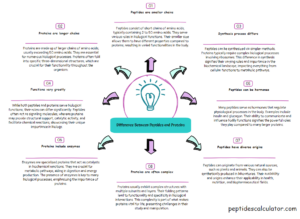
The distinction between peptides and proteins is foundational in biochemistry. Peptides are short chains of amino acids, typically comprising 2 to 50 units, while proteins are longer, often exceeding 50 amino acids. This size difference significantly impacts their functions and roles in biological systems. Understanding these differences is crucial, as they influence various applications in medicine and industry. What implications do these distinctions have for their practical uses?
PEPTIDES LIST
- Adipotide (FTPP)
- AICAR
- AOD9604
- ARA-290
- B7-33
- BPC-157
- Bronchogen
- Cagrisema
- Cagrilintides
- Cardiogen
- Cartalax
- Cerebrolysin (215mg/ml, 10ml)
- Chonluten
- CJC-1295 DAC
- Cortagen
- DSIP
- Epithalon (Epitalon)
- Follistatin-315
- Follistatin-344
- FOXO4-DRI
- GHK-Cu (Copper Peptide)
- GHK Basic
- GHRP-2
- GHRP-6
- GHRH (GH-Releasing Hormone)
- Glutathione
- Gonadorelin (GnRH)
- GLP2 & GLP3
- hGH Fragment 176-191
- Hexarelin
- Humanin
- Ipamorelin
- Kisspeptin-10
- KPV (ACTH (11-13) alpha-MSH)
- Liraglutide (GLP-1 Analogue)
- Livagen
- LL-37 (CAP-18)
- Melanotan 2 (Melanotan II)
- Mezdutide
- MGF (C-terminal)
- ModGRF 1-29 (CJC-1295 No DAC)
- MK-677 (Ibutamoren)
- MOTS-c
- N-Acetyl Epithalon Amidate
- N-Acetyl Selank Amidate
- N-Acetyl Semax Amidate
- NAD+
- Ovagen
- Oxytocin+
- Pancragen
- PE-22-28
- PEG-MGF (Pegylated MGF)
- Pinealon
- PNC-27
- Prostamax
- PT-141 (Bremelanotide)
- P21 (P021)
- Retatrutide
- Snap8
- Tesa_Ipa_Blend
- Triblend
- Selank
- Semaglutide (GLP-1 Analogue)
- Semax
- Sermorelin
- SS-31
- Survodutide
- TB-500
- Tesamorelin
- Testagen
- Thymagen
- Thyrotropin-TRH
- Tirzepatide
- Triptorelin
- Vesugenas
- Vesilute
- Vilon
- VIP (Vasoactive Intestinal Peptide)
- GLP2
- GLP3
- Klow
- Klow8
- SLU-PP-332
- BAM-15
- Orforglipron
- Noopept
- 9-Me-BC
- Methylene Blue
- Lemon Bottle

The distinction between peptides and proteins is foundational in biochemistry. Peptides are short chains of amino acids, typically comprising 2 to 50 units, while proteins are longer, often exceeding 50 amino acids. This size difference significantly impacts their functions and roles in biological systems. Understanding these differences is crucial, as they influence various applications in medicine and industry. What implications do these distinctions have for their practical uses?
Peptides are short chains of amino acids linked by peptide bonds, typically consisting of 2 to 50 amino acids. They are fundamental biological molecules that play various roles in cellular functions. The sequence of amino acids in a peptide determines its specific properties and biological activity. Unlike proteins, which are longer chains of amino acids and often fold into complex three-dimensional structures, peptides are generally simpler and may not achieve such intricate configurations.
Peptides can be classified into different types based on their length and function. For instance, dipeptides consist of two amino acids, while oligopeptides comprise a few more. They often serve as signaling molecules, hormones, or components of larger proteins. Due to their smaller size, peptides can also be more easily absorbed by the body, making them of interest in fields such as nutrition and pharmacology. Overall, peptides are essential building blocks in biological processes.
Proteins are large, complex molecules that play critical roles in the body’s structure and function. Composed of long chains of amino acids, proteins can consist of hundreds or thousands of these building blocks. The specific sequence of amino acids determines a protein's unique structure and, consequently, its function within the body. Proteins are essential for various biological processes, including enzyme activity, immune responses, and cellular signaling. They can also serve as structural components, such as in muscles, hair, and connective tissues. While proteins are synthesized in cells through a process called translation, they also undergo folding and modifications to achieve their functional forms. This complexity highlights the importance of proteins in maintaining life and supporting overall health. Understanding their definition and significance provides a foundation for further exploration into their structural differences and specific functions within biological systems.
While both peptides and proteins are made up of amino acids, their structural differences are significant and impact their biological functions. Peptides are typically shorter chains of amino acids, often consisting of fewer than 50 amino acids. In contrast, proteins are larger, more complex structures that can contain hundreds or thousands of amino acids, forming intricate shapes essential for their specific functions.
The following table summarizes key structural differences:
These structural characteristics lead to distinct roles in biological processes, with peptides frequently serving as hormones or neurotransmitters, while proteins often function as enzymes or structural components within cells. Understanding these differences is crucial for exploring their respective roles in biochemistry.
The size difference between peptides and proteins is a defining characteristic that influences their biological roles. Peptides are typically short chains of amino acids, generally consisting of 2 to 50 amino acids. In contrast, proteins are larger molecules, often comprising 50 or more amino acids, and can extend to hundreds or thousands of amino acids in length. This size disparity affects their stability, folding, and overall function within biological systems.
Due to their smaller size, peptides usually have simpler structures and may not fold into complex three-dimensional shapes. Proteins, being larger, often exhibit intricate structures, allowing them to perform a wide range of functions. The size of these biomolecules also impacts their interactions with other molecules, influencing processes such as signaling, catalysis, and structural support. Understanding this size comparison is crucial for appreciating how peptides and proteins contribute differently to biological processes.
Functional roles of peptides and proteins are integral to various biological processes, reflecting their distinct structures and sizes. Peptides, typically consisting of fewer than 50 amino acids, often act as signaling molecules. They play crucial roles in cellular communication, hormone regulation, and immune responses. For example, insulin, a peptide hormone, regulates blood sugar levels, highlighting how small chains can significantly impact metabolic processes.
In contrast, proteins, which are larger and more complex, perform diverse functions including structural support, enzymatic activity, and transport. Hemoglobin, a protein, is essential for oxygen transport in the bloodstream, showcasing its role in sustaining life. The functional versatility of proteins is largely attributed to their intricate three-dimensional structures formed by the arrangement of numerous amino acids. Thus, both peptides and proteins are vital, with each serving specific roles tailored to their size and complexity within biological systems.
Understanding the synthesis and formation of peptides and proteins reveals fundamental differences in their biochemical processes. Peptides are formed through the condensation of amino acids, typically involving fewer than 50 amino residues, while proteins are larger and more complex structures. The following key points highlight their synthesis:
1. **Amino Acid Sequence**: Peptides have shorter chains, while proteins possess longer, more intricate sequences.
2. **Synthesis Mechanism**: Peptides are often synthesized via ribosomal translation or chemical methods, whereas proteins undergo a more elaborate process involving transcription and translation.
3. **Post-Translational Modifications**: Proteins frequently undergo modifications after synthesis, altering their function, while peptides generally remain unmodified.
4. **Chaperones Role**: Proteins often require molecular chaperones for proper folding, a necessity that is less common in peptide formation.
These differences underscore the distinct roles that peptides and proteins play in biological systems.
Peptides and proteins play crucial roles in various biological processes, serving as essential components in cellular functions. While both are made up of amino acids, their differing structures and sizes influence their biological significance. Peptides typically act as signaling molecules, modulating physiological responses, while proteins serve as enzymes, structural components, and transporters within cells.
Understanding these differences highlights the importance of both peptides and proteins in maintaining homeostasis and facilitating complex biological interactions, underscoring their necessity for life.
While many peptides serve vital roles in biological systems, several specific examples illustrate their diverse functions and significance. Peptides are involved in various physiological processes, showcasing their versatility.
1. **Insulin**: A peptide hormone that regulates glucose metabolism, essential for maintaining energy balance in the body.
3. **Glutathione**: A tripeptide that functions as a powerful antioxidant, protecting cells from oxidative stress and maintaining cellular health.
4. **Vasopressin**: Also known as antidiuretic hormone, it regulates water balance and blood pressure, demonstrating its importance in fluid homeostasis.
These examples highlight how peptides are not only fundamental to biological functions but also contribute to the intricate network of life processes that sustain health and well-being.
Proteins play a fundamental role in numerous biological processes, serving as the building blocks for cells and tissues. They are essential for the structure, function, and regulation of the body's organs and systems. Various types of proteins exist, each with specific roles.
These examples highlight the diversity of proteins and their critical functions in maintaining life. Understanding these roles is key to appreciating how proteins contribute to overall health and biological systems.
Numerous applications of peptides and proteins in medicine and industry showcase their significance in advancing health and technology. These biomolecules play crucial roles in various fields, enhancing efficacy and innovation. Key applications include:
1. **Drug Development**: Peptides serve as the foundation for therapeutic agents targeting specific diseases, providing precision in treatment.
2. **Diagnostics**: Proteins are integral in creating diagnostic assays, enabling early detection of diseases through biomarkers.
3. **Vaccines**: Peptide-based vaccines stimulate immune responses, offering safer and more effective immunizations against infectious diseases.
4. **Biotechnology**: In industry, proteins are employed in enzyme production and biocatalysis, streamlining manufacturing processes and improving sustainability.
The versatility of peptides and proteins not only contributes to healthcare advancements but also drives progress in various industrial applications, demonstrating their vital role in contemporary science and technology.

THIS PRODUCT IS INTENDED AS A RESEARCH CHEMICAL ONLY. This designation allows the use of research chemicals strictly for in vitro testing and laboratory experimentation only. All product information available on this website is for educational purposes only. Bodily introduction of any kind into humans or animals is strictly forbidden by law. This product should only be handled by licensed, qualified professionals. This product is not a drug, food, or cosmetic and may not be misbranded, misused or mislabled as a drug, food or cosmetic.