FOXO4-DRI
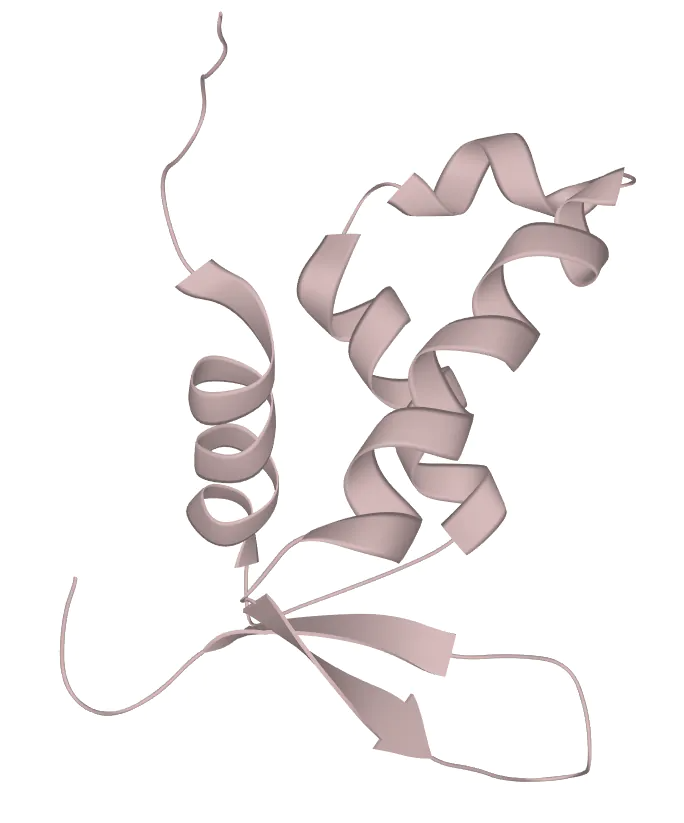
FOXO4-D-retro-inverso (FOXO4-DRI) is a mirror-image derivative of the native FOXO4 protein. Built from D-amino acids in reverse order, it resists enzymatic breakdown while retaining the ability to block FOXO4–p53 binding. The resulting senolytic selectivity removes dysfunctional, senescent cells and rejuvenates tissue niches in preclinical models. Usage must remain within licensed research laboratories.
PEPTIDES LIST
- Adipotide (FTPP)
- AICAR
- AOD9604
- ARA-290
- B7-33
- BPC-157
- Bronchogen
- Cagrisema
- Cagrilintides
- Cardiogen
- Cartalax
- Cerebrolysin (215mg/ml, 10ml)
- Chonluten
- CJC-1295 DAC
- Cortagen
- DSIP
- Epithalon (Epitalon)
- Follistatin-315
- Follistatin-344
- FOXO4-DRI
- GHK-Cu (Copper Peptide)
- GHK Basic
- GHRP-2
- GHRP-6
- GHRH (GH-Releasing Hormone)
- Glutathione
- Gonadorelin (GnRH)
- GLP2 & GLP3
- hGH Fragment 176-191
- Hexarelin
- Humanin
- Ipamorelin
- Kisspeptin-10
- KPV (ACTH (11-13) alpha-MSH)
- Liraglutide (GLP-1 Analogue)
- Livagen
- LL-37 (CAP-18)
- Melanotan 2 (Melanotan II)
- Mezdutide
- MGF (C-terminal)
- ModGRF 1-29 (CJC-1295 No DAC)
- MK-677 (Ibutamoren)
- MOTS-c
- N-Acetyl Epithalon Amidate
- N-Acetyl Selank Amidate
- N-Acetyl Semax Amidate
- NAD+
- Ovagen
- Oxytocin+
- Pancragen
- PE-22-28
- PEG-MGF (Pegylated MGF)
- Pinealon
- PNC-27
- Prostamax
- PT-141 (Bremelanotide)
- P21 (P021)
- Retatrutide
- Snap8
- Tesa_Ipa_Blend
- Triblend
- Selank
- Semaglutide (GLP-1 Analogue)
- Semax
- Sermorelin
- SS-31
- Survodutide
- TB-500
- Tesamorelin
- Testagen
- Thymagen
- Thyrotropin-TRH
- Tirzepatide
- Triptorelin
- Vesugenas
- Vesilute
- Vilon
- VIP (Vasoactive Intestinal Peptide)
- GLP2
- GLP3
- Klow
- Klow8
- SLU-PP-332
- BAM-15
- Orforglipron
- Noopept
- 9-Me-BC
- Methylene Blue
- Lemon Bottle

FOXO4-DRI prevents FOXO4 from sequestering p53 inside senescent cells. Liberated p53 triggers apoptosis, selectively pruning non-functional cells and improving organ performance in aging mice. Ethical, legal, and regulatory frameworks govern any investigational or performance-related use.
FOXO4-DRI (FOXO4-D Retro-Inverso) is described as a modified protein version of FOXO4 that uses D-amino acids to help it stay in the body longer. It’s discussed for targeting senescent (non-functional) cells by binding to p53, supporting p53-mediated removal of dysfunctional cells. (Research/educational context only.)
Deeper Research Notes (Summary):
• Described as promoting apoptosis (cell death) specifically in non-functional/senescent cells, supporting improved tissue health and function.
• Described as interacting with FOXO proteins involved in insulin response; by influencing insulin signaling it may help lower fasting blood sugar, potentially reducing diabetes-related complication risk.
• Described as boosting proteasome function (cellular cleanup), helping remove damaged proteins and reduce oxidative stress in heart and brain tissues—supporting cardiovascular and neurological function.
Dosing & Cycling (As Listed):Note: The source states there is limited information available on FOXO4-DRI dosing and cycling.
| Protocol Item | Guidance |
|---|---|
| Dose | 1–5 mg per dose |
| Cycling | Daily, for 30-day cycles (or shorter), with a 30-day minimum cycle break between |
| Cycle Frequency | Based on the individual response |
Caution & Contraindications:
Caution:
• May cause headache, fatigue, and stomach discomfort
• Use caution in individuals with a history of current blood sugar complications
Contraindications:
• Unknown at the moment due to limited research
Reconstitution Options (Vial Format):
• 10 mg
Reconstitution (General Handling):
• Use sterile technique and sanitize the vial stopper before access.
• Add diluent slowly along the vial wall to minimize foaming.
• Gently swirl/roll until fully dissolved (avoid vigorous shaking).
• Store according to the product label/spec sheet and protect from light as applicable.
Sequence: H-D-Leu-D-Thr-D-Leu-D-Arg-D-Lys-D-Glu-D-Pro-D-Ala-D-Ser-D-Glu-D-Ile-D-Ala-D-Gln-D-Ser-D-Ile-D-Leu-D-Glu-D-Ala-D-Tyr-D-Ser-D-Gln-D-Asn-D-Gly-D-Trp-D-Ala-D-Asn-D-Arg-D-Arg-D-Ser-D-Gly-D-Gly-D-Lys-D-Arg-D-Pro-D-Pro-D-Pro-D-Arg-D-Arg-D-Arg-D-Gln-D-Arg-D-Arg-D-Lys-D-Lys-D-Arg-D-Gly-OH
Molecular Formula: C228H388N86O64
Molecular Weight: 5358.05 g/mol
Synonyms: Forkhead box protein O4 (FOXO4), Proxofim, FOXO4a, AFX, MLLT7
Retro-inverso peptides reverse sequence order and replace L-amino acids with D-isomers. Side-chain orientation is preserved for receptor recognition, yet proteolytic enzymes cannot easily degrade the peptide—extending serum half-life and improving cell penetration.
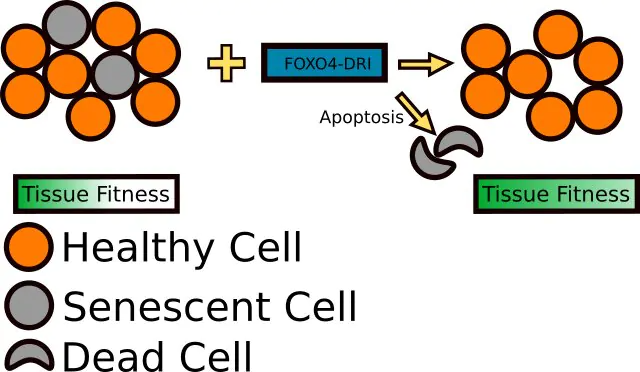
FOXO4-DRI restores p53 activity in senescent cells, inducing apoptosis and rejuvenating tissues. In aged mice this approach improved kidney function, fur density, and mobility—demonstrating enhanced health-span even when lifespan remained unchanged.
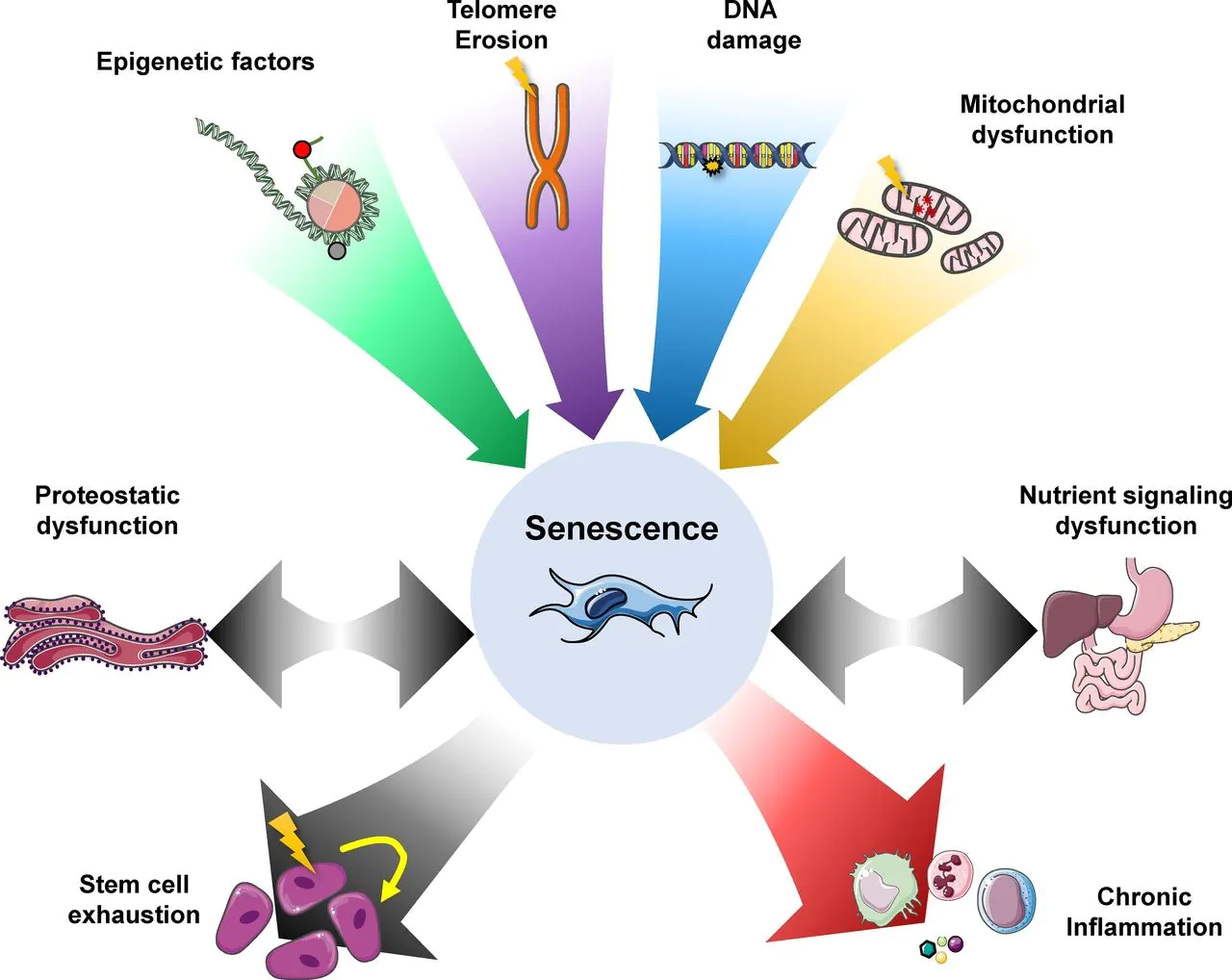
Eliminating senescent cells reduces chronic inflammation and reallocates resources toward healthy progenitor and stem cells—akin to pruning a tree to encourage vigorous growth.
FOXO proteins integrate insulin/IGF-1 signaling with oxidative stress responses and autophagy. Dysregulated FOXO activity drives fasting hyperglycemia, hyperlipidemia, and diabetes complications. FOXO4-DRI offers a probe to explore downstream insulin pathways and proteasome/autophagy modulation in metabolic disease.
Age-related decline in cardiac proteasome activity permits oxidized proteins to accumulate. Modulating FOXO4 signaling may restore proteasome function and protect myocardium. Similar proteostasis deficits are observed in Parkinson’s, Alzheimer’s, Huntington’s, and ALS, spurring research into whether FOXO4-DRI can slow degenerative progression.
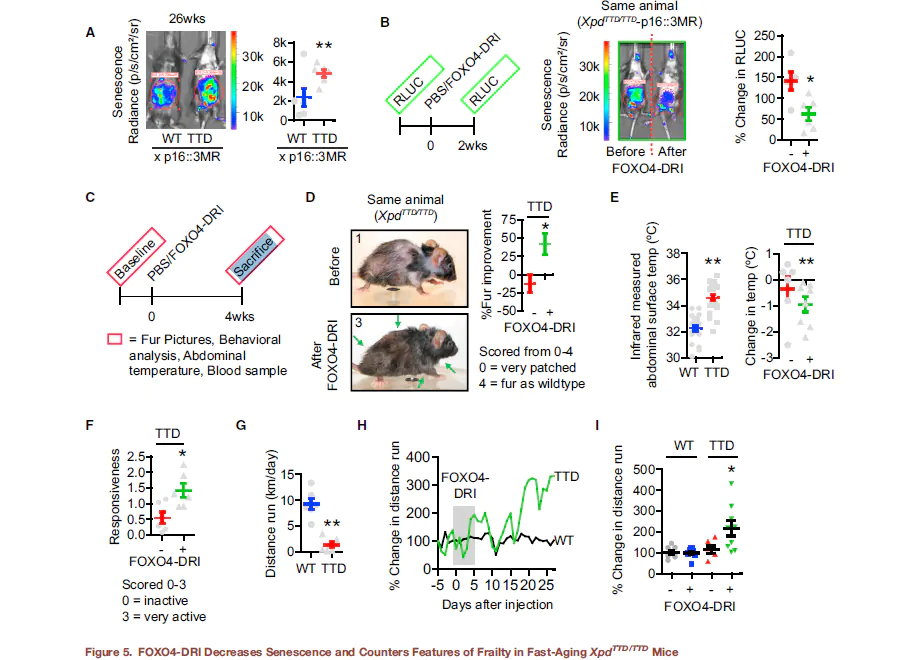
FOXO4-DRI is a senolytic, retro-inverso peptide that removes senescent cells, improves tissue function, and informs studies on aging, metabolism, and degenerative disease. Reported side effects are minimal in murine models; oral bioavailability is poor while subcutaneous delivery is reliable. Animal dosing does not extrapolate to humans. FOXO4-DRI is supplied strictly for in-vitro and licensed laboratory research.
Article Author :
The above literature was researched, edited and organized by Dr. Logan, M.D. Dr. Logan holds a doctorate degree from https://case.edu/medicine/Case Western Reserve University School of Medicine and a B.S. in molecular biology.
Case Western Reserve University School of Medicine
ALL ARTICLES AND PRODUCT INFORMATION PROVIDED ON THIS WEBSITE ARE FOR INFORMATIONAL AND EDUCATIONAL PURPOSES ONLY.
The product information featured on this website pertains exclusively to in-vitro studies. In-vitro studies, also known as ‘in glass’ studies, are conducted outside of living organisms. It’s important to emphasize that these products do not constitute medicines or drugs and have not received FDA approval for the prevention, treatment, or cure of any medical conditions, ailments, or diseases. It is crucial to note that the introduction of these products into the bodies of humans or animals is strictly prohibited by law.
THIS PRODUCT IS INTENDED AS A RESEARCH CHEMICAL ONLY. This designation allows the use of research chemicals strictly for in vitro testing and laboratory experimentation only. All product information available on this website is for educational purposes only. Bodily introduction of any kind into humans or animals is strictly forbidden by law. This product should only be handled by licensed, qualified professionals. This product is not a drug, food, or cosmetic and may not be misbranded, misused or mislabled as a drug, food or cosmetic.