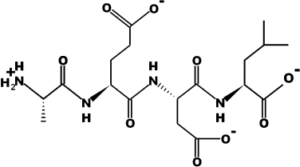
Bronchogen
Bronchogen is a bioregulatory peptide known for its targeted effects on lung tissues. Studies conducted in rat models have demonstrated that Bronchogen has the ability to alleviate inflammation and restore lung health by influencing various DNA transcription pathways. In the lungs, Bronchogen enhances the epithelium, boosts surfactant production, and mitigates inflammation. Ongoing research is exploring the potential benefits of Bronchogen not only in managing lung diseases but also in addressing age-related changes. It appears that Bronchogen possesses geroprotective properties, capable of reversing age-related declines in lung function by reactivating senescent DNA. Furthermore, this peptide may offer insights into the mechanisms protecting against lung cancer development.
PEPTIDES LIST
- Adipotide (FTPP)
- AICAR
- AOD9604
- ARA-290
- B7-33
- BPC-157
- Bronchogen
- Cagrisema
- Cagrilintides
- Cardiogen
- Cartalax
- Cerebrolysin (215mg/ml, 10ml)
- Chonluten
- CJC-1295 DAC
- Cortagen
- DSIP
- Epithalon (Epitalon)
- Follistatin-315
- Follistatin-344
- FOXO4-DRI
- GHK-Cu (Copper Peptide)
- GHK Basic
- GHRP-2
- GHRP-6
- GHRH (GH-Releasing Hormone)
- Glutathione
- Gonadorelin (GnRH)
- GLP2 & GLP3
- hGH Fragment 176-191
- Hexarelin
- Humanin
- Ipamorelin
- Kisspeptin-10
- KPV (ACTH (11-13) alpha-MSH)
- Liraglutide (GLP-1 Analogue)
- Livagen
- LL-37 (CAP-18)
- Melanotan 2 (Melanotan II)
- Mezdutide
- MGF (C-terminal)
- ModGRF 1-29 (CJC-1295 No DAC)
- MK-677 (Ibutamoren)
- MOTS-c
- N-Acetyl Epithalon Amidate
- N-Acetyl Selank Amidate
- N-Acetyl Semax Amidate
- NAD+
- Ovagen
- Oxytocin+
- Pancragen
- PE-22-28
- PEG-MGF (Pegylated MGF)
- Pinealon
- PNC-27
- Prostamax
- PT-141 (Bremelanotide)
- P21 (P021)
- Retatrutide
- Snap8
- Tesa_Ipa_Blend
- Triblend
- Selank
- Semaglutide (GLP-1 Analogue)
- Semax
- Sermorelin
- SS-31
- Survodutide
- TB-500
- Tesamorelin
- Testagen
- Thymagen
- Thyrotropin-TRH
- Tirzepatide
- Triptorelin
- Vesugenas
- Vesilute
- Vilon
- VIP (Vasoactive Intestinal Peptide)
- GLP2
- GLP3
- Klow
- Klow8
- SLU-PP-332
- BAM-15
- Orforglipron
- Noopept
- 9-Me-BC
- Methylene Blue
- Lemon Bottle

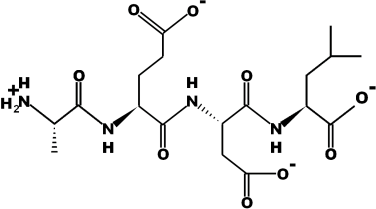
Bronchogen, abbreviated as Ala-Glu-Asp-Leu, is a remarkably short peptide composed of just four amino acids[1]. Scientific research has revealed its role as a bioregulator, particularly within lung tissues, where it stimulates the growth, proliferation, and differentiation of specific cell lines[2]. Notably, Bronchogen is associated with elevating levels of specific DNA transcription factors and reversing age-related declines in DNA transcription[3]. This peptide has been explored for its potential in treating certain lung conditions, its capacity as a growth factor for plants, and its role as an anti-aging geroprotective agent. Similar to many other bioregulators, Bronchogen appears to play a vital role in regulating the inflammatory response.
Bronchogen is described as a peptide bio-regulator that helps stabilize DNA, specifically in the lungs. It’s discussed for supporting lung recovery by boosting essential substances in lung tissue, which may help repair lung damage, reduce inflammation, and improve breathing in research contexts.
Deeper Research Notes (Per Source Summary):
• Said to stabilize DNA by enhancing activity of DNA transcription factors in the lungs, making tissue less prone to damage over time.
• DNA stabilization is described as encouraging growth and differentiation of lung cells; older cells may respond better.
• Reported to boost production of surfactants, helping lungs function optimally by lowering surface tension.
• Also noted for potential plant growth applications via regulatory pathway activation in plant cells.
| Protocol Item | Guidance |
|---|---|
| Dose | 1–5 mg per dose |
| Cycling (General Note) | Bio-regulators are typically used as periodic doses rather than continuous daily consumption. |
| Phase | Schedule |
|---|---|
| Loading Phase (Year 1) | Month 1: DailyMonths 2–3: Daily for 10–20 days at the start of each monthMonths 4–12: Off |
| Maintenance Phase (Year 2+) | 3× per year, spread out evenly |
Caution & Contraindications:
Caution:
• May cause nausea and changes in respiratory rate
• Use extra caution in individuals with severe lung disease
Contraindications:
• Individuals with uncontrolled respiratory conditions
Reconstitution Options (Vial Format):
• 20 mg
Reconstitution (General Handling):
• Use sterile technique and follow the product’s label/spec sheet for diluent type and volume.
• Sanitize the vial stopper; add diluent slowly along the vial wall to reduce foaming.
• Gently swirl/roll until fully dissolved (avoid vigorous shaking).
• Store according to label guidance and protect from light as applicable.
Amino Acid Sequence: Ala-Glu-Asp-Leu (AEDL)
Chemical Formula: C18H30N4O9
Molecular Mass: 446.45 g/mol
Recent research employing microcalorimeter measurements has demonstrated that DNA exhibits a higher melting point in the presence of Bronchogen, a peptide composed of just four amino acids[1]. While this may initially appear to be a technical detail with limited application, it holds broader significance. Studies examining DNA stability have revealed that increased DNA stability corresponds to reduced degradation over time and diminished activation of telomerase, an enzyme associated with telomere protection and cell senescence prevention[4]. Microcalorimeter measurements serve as a valuable indicator of DNA stability in real-world conditions.
Additional mouse studies indicate that Bronchogen enhances DNA stability by reinforcing cellular repair pathways and safeguarding against oxidative damage. This improved stability translates to reduced rates of apoptosis in lung epithelial cells, contributing to healthier tissue maintenance over time.
Interestingly, the role of telomerase activation is not straightforward. While it guards against telomere shortening and cellular senescence, heightened telomerase activity has been linked to an elevated cancer risk. This is because DNA damage can trigger telomerase activity, and this, in turn, may hinder the body's ability to eliminate cells with aberrant DNA. Moreover, elevated telomerase activity is indicative of rapid cell turnover, which is associated with accelerated aging. Striking a balance between telomerase activity and DNA health is crucial. In an ideal scenario, telomerase activation would be infrequent due to sustained DNA health, reducing cell senescence and preserving tissue regeneration potential from stem cells.
Bronchogen contributes to DNA stabilization, minimizing DNA damage accumulation over time and reducing cell turnover rates. These effects decrease the demand for telomerase activity and, more importantly, promote long-term DNA health. Consequently, this prevents unhealthy DNA in cells from transitioning into a senescent state or undergoing apoptosis. The result is a decrease in senescence and enhanced overall tissue health, as cells maintain their well-being for extended periods and safeguard the limited regenerative capacity of human tissue.
Additionally, research in rat models has shown that Bronchogen and similar peptides possess the ability to stimulate repair processes, even at low concentrations[2]. This stimulation is believed to be mediated through the increased expression of CXCL12 and Hoxa factors, which are transcription factors governing growth and differentiation cascades. Interestingly, these effects are more pronounced in older cell lines compared to younger ones[3]. The older the cells, the greater the benefits they seem to derive from Bronchogen administration, leading to increased cell growth and differentiation, ultimately contributing to improved tissue health and function.
Dr. Vladimir Khavinson of the Russian Academy of Sciences suggests that these effects are tissue-specific, with Bronchogen primarily impacting lung tissue in animals and exhibiting relatively few off-target effects in other tissues. This implies the presence of mechanisms within cells that regulate the specificity of short, membrane-penetrating peptides.
Most importantly, research in rats reveals that Bronchogen can restore lung epithelium following the induction of COPD and other inflammatory diseases. This restoration results in increased surfactant production and reduced alveolar surface tension[6]. In essence, Bronchogen directly targets the root cause of disease progression in the lungs, rather than merely alleviating symptoms. By enhancing surfactant production, Bronchogen enhances the lungs' capacity to exchange oxygen and carbon dioxide in the blood. Additionally, by restoring epithelial cells, such as ciliated cells, Bronchogen aids in efficient surfactant distribution and the removal of debris and toxins from the lungs.
One relatively unusual aspect of Bronchogen is that it appears to have activity in plants at a very low concentration. Research shows that Bronchogen, along with Epitalon, increases growth and regeneration in plant tissue by activating several regulatory pathways including the CLE pathway, KNOX1 transcription factors, and GRFs (growth regulatory factors) that bind to DNA and regulate transcription[7]. This work, while interesting to botanists, also underscores the function of Bronchogen as a DNA regulatory factor controlling growth, proliferation, and differentiation.
Article Author :
The above literature was researched, edited and organized by Dr. Logan, M.D. Dr. Logan holds a doctorate degree from https://case.edu/medicine/Case Western Reserve University School of Medicine and a B.S. in molecular biology.
Case Western Reserve University School of Medicine
ALL ARTICLES AND PRODUCT INFORMATION PROVIDED ON THIS WEBSITE ARE FOR INFORMATIONAL AND EDUCATIONAL PURPOSES ONLY.
The product information featured on this website pertains exclusively to in-vitro studies. In-vitro studies, also known as ‘in glass’ studies, are conducted outside of living organisms. It’s important to emphasize that these products do not constitute medicines or drugs and have not received FDA approval for the prevention, treatment, or cure of any medical conditions, ailments, or diseases. It is crucial to note that the introduction of these products into the bodies of humans or animals is strictly prohibited by law.
THIS PRODUCT IS INTENDED AS A RESEARCH CHEMICAL ONLY. This designation allows the use of research chemicals strictly for in vitro testing and laboratory experimentation only. All product information available on this website is for educational purposes only. Bodily introduction of any kind into humans or animals is strictly forbidden by law. This product should only be handled by licensed, qualified professionals. This product is not a drug, food, or cosmetic and may not be misbranded, misused or mislabled as a drug, food or cosmetic.