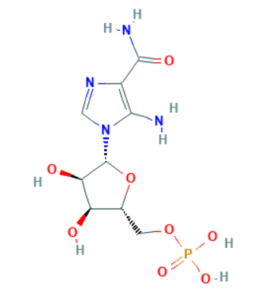
AICAR
AICAR, an analog of adenosine monophosphate, has found clinical application in safeguarding against cardiac ischemia post-heart attack. Its antioxidant attributes make it a potential candidate for retarding the natural aging process. Ongoing investigations explore the potential of AICAR in mitigating the impact of conditions such as diabetes, autoimmune disorders, and various inflammatory ailments.
PEPTIDES LIST
- Adipotide (FTPP)
- AICAR
- AOD9604
- ARA-290
- B7-33
- BPC-157
- Bronchogen
- Cagrisema
- Cagrilintides
- Cardiogen
- Cartalax
- Cerebrolysin (215mg/ml, 10ml)
- Chonluten
- CJC-1295 DAC
- Cortagen
- DSIP
- Epithalon (Epitalon)
- Follistatin-315
- Follistatin-344
- FOXO4-DRI
- GHK-Cu (Copper Peptide)
- GHK Basic
- GHRP-2
- GHRP-6
- GHRH (GH-Releasing Hormone)
- Glutathione
- Gonadorelin (GnRH)
- GLP2 & GLP3
- hGH Fragment 176-191
- Hexarelin
- Humanin
- Ipamorelin
- Kisspeptin-10
- KPV (ACTH (11-13) alpha-MSH)
- Liraglutide (GLP-1 Analogue)
- Livagen
- LL-37 (CAP-18)
- Melanotan 2 (Melanotan II)
- Mezdutide
- MGF (C-terminal)
- ModGRF 1-29 (CJC-1295 No DAC)
- MK-677 (Ibutamoren)
- MOTS-c
- N-Acetyl Epithalon Amidate
- N-Acetyl Selank Amidate
- N-Acetyl Semax Amidate
- NAD+
- Ovagen
- Oxytocin+
- Pancragen
- PE-22-28
- PEG-MGF (Pegylated MGF)
- Pinealon
- PNC-27
- Prostamax
- PT-141 (Bremelanotide)
- P21 (P021)
- Retatrutide
- Snap8
- Tesa_Ipa_Blend
- Triblend
- Selank
- Semaglutide (GLP-1 Analogue)
- Semax
- Sermorelin
- SS-31
- Survodutide
- TB-500
- Tesamorelin
- Testagen
- Thymagen
- Thyrotropin-TRH
- Tirzepatide
- Triptorelin
- Vesugenas
- Vesilute
- Vilon
- VIP (Vasoactive Intestinal Peptide)
- GLP2
- GLP3
- Klow
- Klow8
- SLU-PP-332
- BAM-15
- Orforglipron
- Noopept
- 9-Me-BC
- Methylene Blue
- Lemon Bottle

AICAR, or 5-aminoimidazole-4-carboxamide ribonucleoside, is a short peptide that contributes to maintaining energy balance and influencing various metabolic pathways. It plays a crucial role in regulating insulin receptors and their function in muscle cells. AICAR is actively being studied for its potential in combating cancer and protecting cardiovascular tissues. It functions as an activator of AMP kinase (AMPK).
AICAR represents the activated form of the naturally occurring acadesine, presently utilized in treating acute lymphoblastic leukemia. Research indicates that, similar to AICAR, acadesine possesses anti-cancer properties and has also been observed to inhibit platelet activity, thus aiding in preventing the early stages of blood clot formation.
AICAR is described as an analogue of adenosine monophosphate (AMP) that can selectively activate AMP-activated protein kinase (AMPK) in multiple tissues (e.g., skeletal muscle, adipose, liver). In the referenced dosing write-up, AICAR is discussed in the context of research on glucose/lipid metabolism, cardiac ischemia/heart failure models, and inflammatory signaling. This section summarizes study-style dosing examples from the article (preclinical/research context), not a clinical protocol.
Dosing & Cycling (Examples Reported):The article presents multiple dosing approaches depending on the research goal. The table below consolidates the timelines and ranges exactly as described.
| Research Context (as described) | Timeline | Dose | Notes |
|---|---|---|---|
| Skeletal muscle research (6.5-week protocol) | Weeks 1–4 | 500 mg/kg body weight (daily injection) | Front-loaded “high dose” phase |
| Skeletal muscle research (6.5-week protocol) | Weeks 4–6.5 | Lower dose (daily injection) | Article notes the dose is reduced, but does not specify the exact amount |
| Metabolic syndrome / type 2 diabetes example | Up to 13 weeks | 1 mg/kg per day (injections) | Presented as an example tied to blood sugar homeostasis research |
| Fat tissue metabolism example | 4–8 weeks | 0.5–1.0 g/kg per day (intraperitoneal injection) | Article cites 0.7 g/kg as an “optimal” value for this context |
Caution & Research Notes (as discussed):
• AICAR is described as a strong metabolic regulator via AMPK, so study designs commonly track metabolic endpoints (e.g., glucose/lipids, body weight, inflammatory markers) when applying these protocols.
• Because dosing varies widely by model and goal, the article repeatedly frames dosing as purpose-dependent.
Reconstitution / Preparation (General Lab Handling):
The article does not provide vial-size-specific reconstitution volumes. For lab preparation, align with your supplier’s CoA/spec sheet and your institution’s SOPs:
• Use sterile technique for solution prep and labeling.
• Prepare a stock solution using an appropriate sterile diluent specified by the supplier (commonly sterile water or buffered aqueous diluent for research use).
• Mix gently until fully dissolved; avoid vigorous shaking if foaming occurs.
• Aliquot if needed to reduce repeat handling; store per supplier stability guidance (light/temperature).
Sequence: 5-aminoimidazole-4-carboxamide ribonucleoside
Molecular Formula: C9H15N4O8P
Molecular Weight: 338.213 g/mol
PubChem CID: 65110
CAS Number: 3031-94-5
Synonyms: AICA ribonucleotide, Z-nucleotide
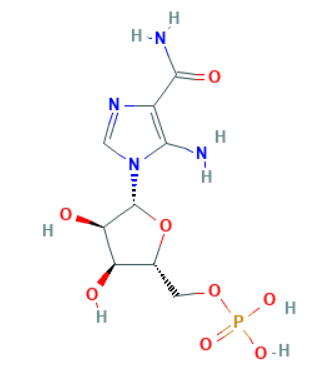
AICAR and Insulin Resistance: Studies conducted in mice have demonstrated that even at low doses, AICAR exhibits the ability to diminish inflammation in adipose tissue. Inflammation within fat deposits is associated with heightened insulin resistance, and AICAR's capacity to reduce inflammation contributes to improved glucose regulation and increased insulin sensitivity, irrespective of changes in body weight. AICAR seems to employ various pathways to impact adipose tissue inflammation, with one of these pathways involving SIRT1 and macrophages.
The influence of AICAR on adipose tissue inflammation aligns with expectations, given that AMPK has been shown to mitigate inflammatory responses in metabolic disorders, both in healthy and diabetic mice. Research conducted in mice indicates that the activation of AMPK, as facilitated by AICAR, enhances insulin sensitivity, maintains energy balance, regulates lipid metabolism, and reduces inflammatory markers.
AICAR and Cancer Research: AMPK's role in cancer growth and metastasis is multifaceted, exhibiting the potential to either decelerate or hasten tumor growth under different conditions. In a broader context, studies suggest that sustained activation of this enzyme ultimately induces the demise of cancer cells by retarding their metabolic processes and rendering them more vulnerable to external stressors. This phenomenon has been substantiated in both laboratory cell cultures and rat-based experiments.
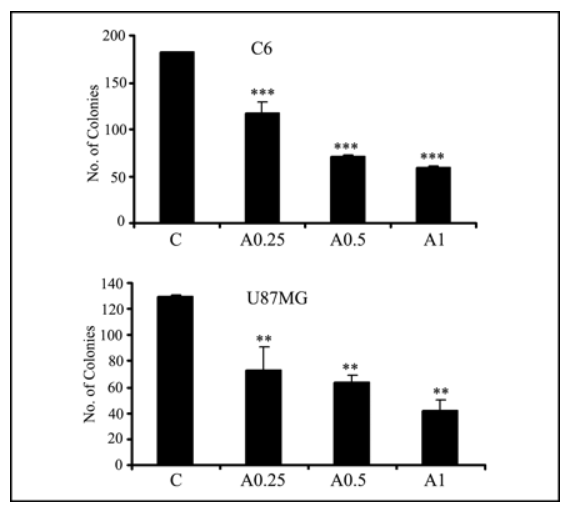
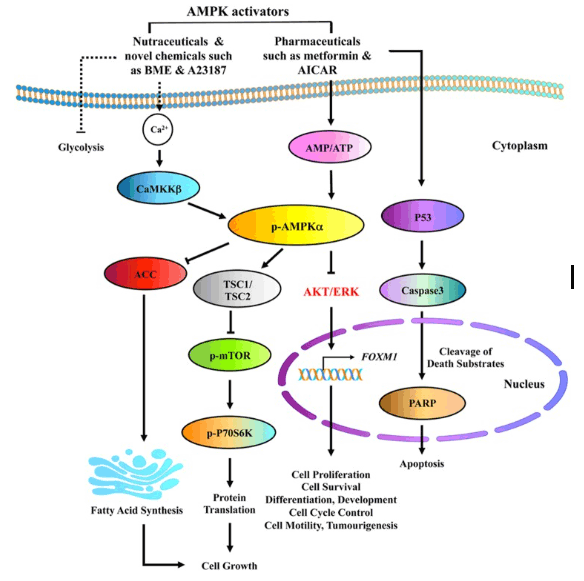
Studies conducted on thyroid cancer cells suggest that AICAR may have a role in triggering apoptosis, a programmed form of cell death. This mechanism seems to involve the buildup of p21 and subsequent activation of caspase 3. Consequently, it results in the suppression of cancer cell growth and their ability to survive.
Activation of AMPK has been revealed to play a crucial role in combating cellular-level inflammation. Research focusing on metformin, a widely used diabetes medication, suggests that one of its key mechanisms of effectiveness lies in reducing inflammation and enhancing pancreatic function. Similarly, AICAR exhibits comparable effects, serving as a protective agent in inflammatory conditions such as acute lung injury, asthma, colitis, atherosclerosis, and hepatitis.
A substantial body of research has centered on AICAR's potential to enhance sperm motility, energy metabolism, and fertilization capabilities. Studies conducted in various animals, including cats, goats, and chickens, suggest that AMPK activators like AICAR can boost sperm motility by improving energy metabolism. AICAR is known for its minimal side effects and excellent subcutaneous bioavailability in mice. However, it's important to note that the dosage per kilogram in mice does not directly translate to human dosages. It's crucial to understand that AICAR available at Peptide Sciences is strictly intended for educational and scientific research purposes and should not be used for human consumption. Therefore, if you are not a licensed researcher, it is advisable not to purchase AICAR.
Article Author :
The above literature was researched, edited and organized by Dr. Logan, M.D. Dr. Logan holds a doctorate degree from https://case.edu/medicine/Case Western Reserve University School of Medicine and a B.S. in molecular biology.
Case Western Reserve University School of Medicine
ALL ARTICLES AND PRODUCT INFORMATION PROVIDED ON THIS WEBSITE ARE FOR INFORMATIONAL AND EDUCATIONAL PURPOSES ONLY.
The product information featured on this website pertains exclusively to in-vitro studies. In-vitro studies, also known as ‘in glass’ studies, are conducted outside of living organisms. It’s important to emphasize that these products do not constitute medicines or drugs and have not received FDA approval for the prevention, treatment, or cure of any medical conditions, ailments, or diseases. It is crucial to note that the introduction of these products into the bodies of humans or animals is strictly prohibited by law.
THIS PRODUCT IS INTENDED AS A RESEARCH CHEMICAL ONLY. This designation allows the use of research chemicals strictly for in vitro testing and laboratory experimentation only. All product information available on this website is for educational purposes only. Bodily introduction of any kind into humans or animals is strictly forbidden by law. This product should only be handled by licensed, qualified professionals. This product is not a drug, food, or cosmetic and may not be misbranded, misused or mislabled as a drug, food or cosmetic.