Calorie Tracker
BMI is a measurement of a person's leanness or corpulence based on their height and weight, and is intended to quantify tissue mass. It is widely used as a general indicator of whether a person has a healthy body weight for their height. Specifically, the value obtained from the calculation of BMI is used to categorize whether a person is underweight, normal weight, overweight, or obese depending on what range the value falls between. These ranges of BMI vary based on factors such as region and age, and are sometimes further divided into subcategories such as severely underweight or very severely obese. Being overweight or underweight can have significant health effects, so while BMI is an imperfect measure of healthy body weight, it is a useful indicator of whether any additional testing or action is required. Refer to the table below to see the different categories based on BMI that are used by the calculator.
PEPTIDES LIST
- Adipotide (FTPP)
- AICAR
- AOD9604
- ARA-290
- B7-33
- BPC-157
- Bronchogen
- Cagrisema
- Cagrilintides
- Cardiogen
- Cartalax
- Cerebrolysin (215mg/ml, 10ml)
- Chonluten
- CJC-1295 DAC
- Cortagen
- DSIP
- Epithalon (Epitalon)
- Follistatin-315
- Follistatin-344
- FOXO4-DRI
- GHK-Cu (Copper Peptide)
- GHK Basic
- GHRP-2
- GHRP-6
- GHRH (GH-Releasing Hormone)
- Glutathione
- Gonadorelin (GnRH)
- GLP2 & GLP3
- hGH Fragment 176-191
- Hexarelin
- Humanin
- Ipamorelin
- Kisspeptin-10
- KPV (ACTH (11-13) alpha-MSH)
- Liraglutide (GLP-1 Analogue)
- Livagen
- LL-37 (CAP-18)
- Melanotan 2 (Melanotan II)
- Mezdutide
- MGF (C-terminal)
- ModGRF 1-29 (CJC-1295 No DAC)
- MK-677 (Ibutamoren)
- MOTS-c
- N-Acetyl Epithalon Amidate
- N-Acetyl Selank Amidate
- N-Acetyl Semax Amidate
- NAD+
- Ovagen
- Oxytocin+
- Pancragen
- PE-22-28
- PEG-MGF (Pegylated MGF)
- Pinealon
- PNC-27
- Prostamax
- PT-141 (Bremelanotide)
- P21 (P021)
- Retatrutide
- Snap8
- Tesa_Ipa_Blend
- Triblend
- Selank
- Semaglutide (GLP-1 Analogue)
- Semax
- Sermorelin
- SS-31
- Survodutide
- TB-500
- Tesamorelin
- Testagen
- Thymagen
- Thyrotropin-TRH
- Tirzepatide
- Triptorelin
- Vesugenas
- Vesilute
- Vilon
- VIP (Vasoactive Intestinal Peptide)
- GLP2
- GLP3
- Klow
- Klow8
- SLU-PP-332
- BAM-15
- Orforglipron
- Noopept
- 9-Me-BC
- Methylene Blue
- Lemon Bottle

BMI is a measurement of a person's leanness or corpulence based on their height and weight, and is intended to quantify tissue mass. It is widely used as a general indicator of whether a person has a healthy body weight for their height. Specifically, the value obtained from the calculation of BMI is used to categorize whether a person is underweight, normal weight, overweight, or obese depending on what range the value falls between. These ranges of BMI vary based on factors such as region and age, and are sometimes further divided into subcategories such as severely underweight or very severely obese. Being overweight or underweight can have significant health effects, so while BMI is an imperfect measure of healthy body weight, it is a useful indicator of whether any additional testing or action is required. Refer to the table below to see the different categories based on BMI that are used by the calculator.
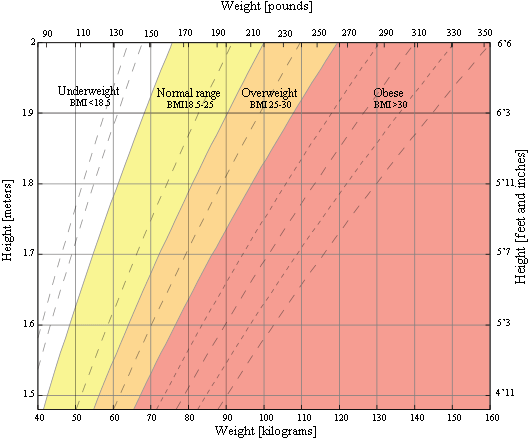
This is the World Health Organization's (WHO) recommended body weight based on BMI values for adults. It is used for both men and women, age 20 or older.
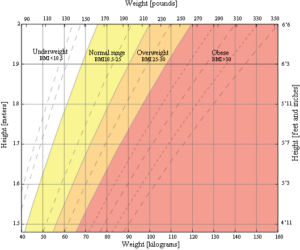
This is a graph of BMI categories based on the World Health Organization data. The dashed lines represent subdivisions within a major categorization.
The Centers for Disease Control and Prevention (CDC) recommends BMI categorization for children and teens between age 2 and 20.
The Centers for Disease Control and Prevention (CDC) BMI-for-age percentiles growth charts.

Risks associated with being overweight
Being overweight increases the risk of a number of serious diseases and health conditions. Below is a list of said risks, according to the Centers for Disease Control and Prevention (CDC):
- High blood pressure
- Higher levels of LDL cholesterol (bad cholesterol), lower levels of HDL cholesterol (good cholesterol), and high levels of triglycerides
- Type II diabetes
- Coronary heart disease
- Stroke
- Gallbladder disease
- Osteoarthritis, a type of joint disease caused by breakdown of joint cartilage
- Sleep apnea and breathing problems
- Certain cancers (endometrial, breast, colon, kidney, gallbladder, liver)
- Low quality of life
- Mental illnesses such as clinical depression, anxiety, and others
- Body pains and difficulty with certain physical functions
- Generally, an increased risk of mortality compared to those with a healthy BMI
As can be seen from the list above, there are numerous negative, in some cases fatal, outcomes that may result from being overweight. Generally, a person should try to maintain a BMI below 25 kg/m2, but ideally should consult their doctor to determine whether or not they need to make any changes to their lifestyle in order to be healthier.
Risks associated with being underweight
Being underweight has its own associated risks, listed below:
- Malnutrition, vitamin deficiencies, anemia (lowered ability to carry blood vessels)
- Osteoporosis, a disease that causes bone weakness, increasing the risk of breaking a bone
- A decrease in immune function
- Growth and development issues, particularly in children and teenagers
- Possible reproductive issues for women due to hormonal imbalances that can disrupt the menstrual cycle. Underweight women also have a higher chance of miscarriage in the first trimester
- Potential complications as a result of surgery
- Generally, an increased risk of mortality compared to those with a healthy BMI
In some cases, being underweight can be a sign of some underlying condition or disease such as anorexia nervosa, which has its own risks. Consult your doctor if you think you or someone you know is underweight, particularly if the reason for being underweight does not seem obvious.
Limitations of BMI
Although BMI is a widely used and useful indicator of healthy body weight, it does have its limitations. BMI is only an estimate that cannot take body composition into account. Due to a wide variety of body types as well as distribution of muscle, bone mass, and fat, BMI should be considered along with other measurements rather than being used as the sole method for determining a person's healthy body weight.
In adults:
BMI cannot be fully accurate because it is a measure of excess body weight, rather than excess body fat. BMI is further influenced by factors such as age, sex, ethnicity, muscle mass, body fat, and activity level, among others. For example, an older person who is considered a healthy weight, but is completely inactive in their daily life may have significant amounts of excess body fat even though they are not heavy. This would be considered unhealthy, while a younger person with higher muscle composition of the same BMI would be considered healthy. In athletes, particularly bodybuilders who would be considered overweight due to muscle being heavier than fat, it is entirely possible that they are actually at a healthy weight for their body composition. Generally, according to the CDC:
- Older adults tend to have more body fat than younger adults with the same BMI.
- Women tend to have more body fat than men for an equivalent BMI.
- Muscular individuals and highly trained athletes may have higher BMIs due to large muscle mass.
In children and adolescents:
The same factors that limit the efficacy of BMI for adults can also apply to children and adolescents. Additionally, height and level of sexual maturation can influence BMI and body fat among children. BMI is a better indicator of excess body fat for obese children than it is for overweight children, whose BMI could be a result of increased levels of either fat or fat-free mass (all body components except for fat, which includes water, organs, muscle, etc.). In thin children, the difference in BMI can also be due to fat-free mass.
That being said, BMI is fairly indicative of body fat for 90-95% of the population, and can effectively be used along with other measures to help determine an individual's healthy body weight.
BMI formula
USC Units:
BMI = 703 ×mass (lbs)
height2 (in)= 703 ×160
702= 23.0
SI, Metric Units:
BMI =mass (kg)
height2 (m)=72.57
1.7782= 23.0
BMI Prime
The BMI prime formula is:
BMI prime =blockcenterBMI25
Since BMI prime is a ratio of two BMI values, BMI prime is a dimensionless value. A person who has a BMI prime less than 0.74 is classified as underweight; from 0.74 to 1 is classified as normal; greater than 1 is classified as overweight; and greater than 1.2 is classified as obese. The table below shows a person's weight classification based on their BMI prime:
BMI prime allows us to make a quick assessment of how much a person's BMI differs from the upper limit of BMI that is considered normal. It also allows for comparisons between groups of people who have different upper BMI limits.
Ponderal Index
USC Units:
PI =height (in)
∛mass (lbs)=70
∛160= 12.9
SI, Metric Units:
PI =mass (kg)
height3 (m)=72.57
1.7783= 12.9
Result
- To maintain weight: Calories/day
- Mild weight loss: Calories/day
- Weight loss: Calories/day
- Extreme weight loss: Calories/day
In children and adolescents:
This Calorie Calculator is based on several equations, and the results of the calculator are based on an estimated average. The Harris-Benedict Equation was one of the earliest equations used to calculate basal metabolic rate (BMR), which is the amount of energy expended per day at rest. It was revised in 1984 to be more accurate and was used up until 1990, when the Mifflin-St Jeor Equation was introduced. The Mifflin-St Jeor Equation also calculates BMR, and has been shown to be more accurate than the revised Harris-Benedict Equation. The Katch-McArdle Formula is slightly different in that it calculates resting daily energy expenditure (RDEE), which takes lean body mass into account, something that neither the Mifflin-St Jeor nor the Harris-Benedict Equation do. Of these equations, the Mifflin-St Jeor Equation is considered the most accurate equation for calculating BMR with the exception that the Katch-McArdle Formula can be more accurate for people who are leaner and know their body fat percentage. The three equations used by the calculator are listed below:
- W is body weight in kg
- H is body height in cm
- A is age
- F is body fat in percentage
The value obtained from these equations is the estimated number of calories a person can consume in a day to maintain their body-weight, assuming they remain at rest. This value is multiplied by an activity factor (generally 1.2-1.95) dependent on a person's typical levels of exercise, which accounts for times during the day when a person is not at rest. 1 pound, or approximately 0.45 kg, equates to about 3,500 calories. As such, in order to lose 1 pound per week, it is recommended that 500 calories be shaved off the estimate of calories necessary for weight maintenance per day. For example, if a person has an estimated allotment of 2,500 calories per day to maintain body-weight, consuming 2,000 calories per day for one week would theoretically result in 3,500 calories (or 1 pound) lost during the period.
It is important to remember that proper diet and exercise is largely accepted as the best way to lose weight. It is inadvisable to lower calorie intake by more than 1,000 calories per day, as losing more than 2 pounds per week can be unhealthy, and can result in the opposite effect in the near future by reducing metabolism. Losing more than 2 pounds a week will likely involve muscle loss, which in turn lowers BMR, since more muscle mass results in higher BMR. Excessive weight loss can also be due to dehydration, which is unhealthy. Furthermore, particularly when exercising in conjunction with dieting, maintaining a good diet is important, since the body needs to be able to support its metabolic processes and replenish itself. Depriving the body of the nutrients it requires as part of heavily unhealthy diets can have serious detrimental effects, and weight lost in this manner has been shown in some studies to be unsustainable, since the weight is often regained in the form of fat (putting the participant in a worse state than when beginning the diet). As such, in addition to monitoring calorie intake, it is important to maintain levels of fiber intake as well as other nutritional necessities to balance the needs of the body.
Calorie Counting as a Means for Weight Loss
Calorie counting with the intent of losing weight, on its simplest levels, can be broken down into a few general steps:
- Determine your BMR using one of the provided equations. If you know your body fat percentage, the Katch-McArdle Formula might be a more accurate representation of your BMR. Remember that the values attained from these equations are approximations and subtracting exactly 500 calories from your BMR will not necessarily result in exactly 1 pound lost per week – it could be less, or it could be more!
- Determine your weight loss goals. Recall that 1 pound (~0.45 kg) equates to approximately 3500 calories, and reducing daily caloric intake relative to estimated BMR by 500 calories per day will theoretically result in a loss of 1 pound a week. It is generally not advisable to lose more than 2 pounds per week as it can have negative health effects, i.e. try to target a maximum daily calorie reduction of approximately 1000 calories per day. Consulting your doctor and/or a registered dietician nutritionist (RDN) is recommended in cases where you plan to lose more than 2 pounds per week.
- Choose a method to track your calories and progress towards your goals. If you have a smartphone, there are many easy-to-use applications that facilitate tracking calories, exercise, and progress, among other things. Many, if not all of these, have estimates for the calories in many brand-name foods or dishes at restaurants, and if not, they can estimate calories based on the amount of the individual components of the foods. It can be difficult to get a good grasp on food proportions and the calories they contain – which is why counting calories (as well as any other approach) is not for everyone – but if you meticulously measure and track the number of calories in some of your typical meals, it quickly becomes easier to accurately estimate calorie content without having to actually measure or weigh your food each time. There are also websites that can help to do the same, but if you prefer, manually maintaining an excel spreadsheet or even a pen and paper journal are certainly viable alternatives.
- Track your progress over time and make changes to better achieve your goals if necessary. Remember that weight loss alone is not the sole determinant of health and fitness, and you should take other factors such as fat vs. muscle loss/gain into account as well. Also, it is recommended that measurements are taken over longer periods of time such as a week (rather than daily) as significant variations in weight can occur simply based on water intake or time of day. It is also ideal to take measurements under consistent conditions, such as weighing yourself as soon as you wake up and before breakfast, rather than at different times throughout the day.
- Keep at it!
The above steps are an attempt at the most basic form of calorie counting. Calorie counting is not an exact science, and can be as complex as you want to make it. The above does not consider the proportions of macronutrients consumed. While there is no exactly known, ideal proportion of macronutrients (fats, proteins, carbohydrates), some balance is certainly advisable, and different foods have been found to have different effects on health, feelings of hunger, and number of calories burned. Generally, minimally processed plant and animal foods tend to be more conducive to healthy weight loss and maintenance.
There are many approaches to weight loss and there is no set ideal method that works for all people, which is why so many different diets and exercise regimens exist. While some methods are more effective for each individual person, not all weight loss methods are equivalent, and studies suggest that some approaches are healthier than others. That being said, one of the most commonly effective weight loss methods is counting calories. In its most basic form, calories consumed minus calories expended will result in weight gain if the result is positive, or weight loss if the result is negative. However, this is far from a comprehensive picture, and many other factors play a role in affecting healthy, sustainable weight loss. For example, there exist conflicting studies addressing whether or not the type of calories or foods consumed, or how they are consumed, affects weight loss. Studies have shown that foods that require a person to chew more and are more difficult to digest result in the body burning more calories, sometimes referred to as the thermic effect of food. While the increase in burned calories may be marginal, foods that are more difficult to digest such as vegetables generally tend to be healthier and provide more nutrients for fewer calories than many processed foods.
Consistent with the view that in regards to weight loss, only net calories are important and not their source, there exist cases such as the Twinkie diet, where a person that solely counted calories while eating a variety of cake snacks managed to lose 27 pounds over two months. As effective as this can be, it is certainly not suggested. While the participant did not seem to suffer any noticeable health detriments in this particular case, there are other less measurable factors that should be considered such as long-term effects of such a diet on potential for developing cancers, heart disease, and diabetes. However, ignoring efficiency and health, sustained, significant reduction of caloric intake or increase of physical activity should result in weight loss, and counting calories can be an effective way to achieve this sole result.
Aside from being one viable method for facilitating weight loss, calorie counting has other somewhat less quantifiable advantages including helping to increase nutritional awareness. Many people are completely unaware of, or grossly underestimate their daily caloric intake. Counting calories can help raise awareness of different types of foods, the number of calories they contain, and how these calories have a different effect on a person's feelings of satiety. Once a person has a better understanding of how many calories are actually in that bag of chips that they can so easily inhale within minutes, how much of their daily caloric intake it consumes, and how little the chips do to satiate their hunger, portion control and avoidance of foods with empty calories tends to become easier.
Having actual caloric measurements can also assist in weight loss, since tangible calorie goals can be set, rather than simply trying to eat less. Also, although this is not necessarily directly related to calorie counting, studies have shown that portion control by simply eating from a smaller plate can help reduce calorie intake, since people tend to fill their plates and eat everything on their plates. Many people do not realize that they are overeating, since they have become accustomed to restaurant-sized portions being the norm, when said portions can be up to three or more times larger than necessary for a typical meal.
Tracking calories also puts exercise in a quantifiable perspective, increasing a person's awareness regarding how much exercise is really required to counteract a 220-calorie bag of M&M's. Once a link is made between the amount of exercise that some snack equates to, many people find abstaining from that bag of chips to be the preferred option rather than performing an equivalent amount of exercise – which can lead to healthier eating habits.
In the end, however, what's important is picking a strategy that works for you. Calorie counting is only one method used to achieve weight loss amongst many, and even within this method, there are many possible approaches a person can take. Finding an approach that fits within your lifestyle that you think you would be able to adhere to is likely going to provide the most sustainable option and desirable result.
Zigzag Calorie Cycling
Zigzag calorie cycling is a weight loss approach that aims to counteract the human body's natural adaptive tendencies. Counting and restricting calories, as described above, is a viable method to lose weight, but over a period of time, it is possible for the body to adapt to the lower number of calories consumed. In cases where this happens, a plateau in weight loss that can be difficult to surmount can result. This is where zigzag calorie cycling can help, by not allowing the body to adapt to the lower calorie environment.
There is no concrete rule or study that dictates the most effective way to alternate or spread out calorie consumption. How to vary calorie intake is largely up to personal discretion. Depending on a person's activity, it is generally recommended that the high-calorie and low-calorie days vary by approximately 200-300 calories, where the high-calorie day is often the number of calories a person needs to consume to maintain their current weight. For a person with a higher activity level, the calorie difference should be larger. The calculator presents two zigzag diet schedules. The first schedule has two higher calorie days and five lower calorie days. The second schedule increases and reduces calories gradually. In either case, the total weekly calorie consumption is the same.
In the end, regardless of what method you choose to use when approaching weight loss, what's important is picking a strategy that works for you. Calorie counting and zigzag calorie cycling are only two methods (that are fairly interrelated) used to achieve weight loss among many, and even within these methods, there are many possible approaches a person can take. Finding an approach that fits within your lifestyle that you think you would be able to adhere to is likely going to provide the most sustainable and desirable result.
How Many Calories Do You Need?
Many people seek to lose weight, and often the easiest way to do this is to consume fewer calories each day. But how many calories does the body actually need in order to be healthy? This largely depends on the amount of physical activity a person performs each day, and regardless of this, is different for all people – there are many different factors involved, not all of which are well-understood or known.
Some factors that influence the number of calories a person needs to remain healthy include age, weight, height, sex, levels of physical activity, and overall general health. For example, a physically active 25-year-old male that is 6 feet in height requires considerably higher calorie intake than a 5-foot-tall, sedentary 70-year-old woman. Though it differs depending on age and activity level, adult males generally require 2,000-3000 calories per day to maintain weight while adult females need around 1,600-2,400 according to the U.S Department of Health.
The body does not require many calories to simply survive. However, consuming too few calories results in the body functioning poorly, since it will only use calories for functions essential to survival, and ignore those necessary for general health and well-being. Harvard Health Publications suggests women get at least 1,200 calories and men get at least 1,500 calories a day unless supervised by doctors. As such, it is highly recommended that a person attempting to lose weight monitors their body's caloric necessities and adjusts them as necessary to maintain its nutritional needs.
Calories: Different Kinds and Their Effects
Generally, foods that take more effort to chew – fruit, vegetables, lean meats, whole grains, etc. – require the body to burn more calories since more calories are required to digest them. It also results in the feeling of satiety for longer periods of time. Furthermore, certain foods like coffee, tea, chilies, cinnamon, and ginger have been found to increase the rate of calories burned, due to the ingredients they contain.
Calories in Common Foods
* 1 cup = ~250 milliliters, 1 table spoon = 14.2 gram
2000, 1500, and 1200 Calorie Sample Meal Plans
Calories Burned from Common Exercises:
Energy from Common Food Components
Result
Body Fat (U.S. Navy): %
Body Fat Category:
Body Fat Mass:
Lean Body Mass:
Ideal Body Fat (Jackson & Pollock): %
Body Fat to Lose:
Body Fat to Gain:
Body Fat (BMI Method): %
The American Council on Exercise Body Fat Categorization
Jackson & Pollock Ideal Body Fat Percentages
Body Fat, Overweight, and Obesity
Body fat includes essential body fat and storage body fat. Essential body fat is a base level of fat that is found in most parts of the body. It is necessary fat that maintains life and reproductive functions. The amount of essential fat differs between men and women, and is typically around 2-5% in men, and 10-13% in women. The healthy range of body fat for men is typically defined as 8-19%, while the healthy range for women is 21-33%. While having excess body fat can have many detrimental effects on a person's health, insufficient body fat can have negative health effects of its own, and maintaining a body fat percentage below, or even at the essential body fat percentage range is a topic that should be discussed with a medical professional.
Storage fat is fat that accumulates in adipose tissue, be it subcutaneous fat (deep under the dermis and wrapped around vital organs) or visceral fat (fat located inside the abdominal cavity, between organs), and references to body fat typically refer to this type of fat. While some storage fat is ideal, excess amounts of storage fat can have serious negative health implications.
Excess body fat leads to the condition of being overweight and eventually to obesity given that insufficient measures are taken to curb increasing body fat. Note that being overweight does not necessarily indicate an excess of body fat. A person's body weight is comprised of multiple factors including (but not limited to) body fat, muscle, bone density, and water content. Thus, highly muscular people are often classified as overweight.
The rate at which body fat accumulates is different from person to person and is dependent on many factors including genetic factors as well as behavioral factors such as lack of exercise and excessive food intake. Due to varying factors, it can be more difficult for certain people to reduce body fat stored in the abdominal region. However, managing diet and exercise has been shown to reduce stored fat. Note that both women and men store body fat differently and that this can change over time. After the age of 40 (or after menopause in some cases for women), reduced sexual hormones can lead to excess body fat around the stomach in men, or around the buttocks and thighs of women.
Potential Complications of Excess Body Fat
The World Health Organization (WHO) classifies obesity as one of the leading preventable causes of death worldwide that is estimated to claim 111,909 to 365,000 deaths per year in the U.S. This has been a growing cause for concern because 36.5% of U.S. adults are defined as obese according to the Centers for Disease Control and Prevention.
Obesity is associated with a reduction in quality of life, poorer mental health outcomes, obstructive sleep apnea, as well as multiple leading causes of death worldwide such as cardiovascular disease, stroke, certain cancers and diabetes. All of these potential complications have the ability to reduce a person's life expectancy, and as such, obesity is a medical condition that is studied by many researchers.
Measuring Body Fat Percentage
There are many specific techniques used for measuring body fat. The calculator above uses a method involving equations developed at the Naval Health Research Center by Hodgdon and Beckett in 1984. The method for measuring the relevant body parts as well as the specific equations used are provided below:
- Measure the circumference of the subject's waist at a horizontal level around the navel for men, and at the level with the smallest width for women. Ensure that the subject does not pull their stomach inwards to obtain accurate measurements.
- Measure the circumference of the subject's neck starting below the larynx, with the tape sloping downward to the front. The subject should avoid flaring their neck outwards.
- For women only: Measure the circumference of the subject's hips at the largest horizontal measure.
Once these measurements are obtained, use the following formulas to calculate an estimate of body fat. Two equations are provided, one using the U.S. customary system (USC), which uses inches, and the other using the International System of Units, specifically the unit of centimeters:
Body fat percentage (BFP) formula for males:
BFP = 86.010 × log10(abdomen - neck) − 70.041 × log10(height) + 36.76
Body fat percentage (BFP) formula for females:
BFP = 163.205 × log10(waist + hip − neck) − 97.684 × log10(height) − 78.387
Note that the results of these calculations are only an estimate since they are based on many different assumptions to make them as applicable to as many people as possible. For more accurate measurements of body fat, the use of instruments such as bioelectric impedance analysis or hydrostatic density testing is necessary.
Fat mass (FM) formula:
FM = BF × Weight
Lean Mass (LM) formula:
LM = Weight - FM
BMI Method:
Another method for calculating an estimate of body fat percentage uses BMI. Refer to the BMI Calculator to obtain an estimate of BMI for use with the BMI method, as well as further detail on how BMI is calculated, its implications, and its limitations. Briefly, the estimation of BMI involves the use of formulas that require the measurement of a person's height and weight. Given BMI, the following formulas can be used to estimate a person's body fat percentage.
Body fat percentage (BFP) formula for adult males:
BFP = 1.20 × BMI + 0.23 × Age - 16.2
Body fat percentage (BFP) formula for adult females:
BFP = 1.20 × BMI + 0.23 × Age - 5.4
Body fat percentage (BFP) formula for boys:
BFP = 1.51 × BMI - 0.70 × Age - 2.2
Body fat percentage (BFP) formula for girls:
BFP = 1.51 × BMI - 0.70 × Age + 1.4
The basal metabolic rate (BMR) is the amount of energy needed while resting in a temperate environment when the digestive system is inactive. It is the equivalent of figuring out how much gas an idle car consumes while parked. In such a state, energy will be used only to maintain vital organs, which include the heart, brain, kidneys, nervous system, intestines, liver, lungs, sex organs, muscles, and skin. For most people, upwards of ~70% of total energy (calories) burned each day is due to upkeep. Physical activity makes up ~20% of expenditure and ~10% is used for the digestion of food, also known as thermogenesis.
The BMR is measured under very restrictive circumstances while awake. An accurate BMR measurement requires that a person's sympathetic nervous system is inactive, which means the person must be completely rested. Basal metabolism is usually the largest component of a person's total caloric needs. The daily caloric need is the BMR value multiplied by a factor with a value between 1.2 and 1.9, depending on activity level.
In most situations, the BMR is estimated with equations summarized from statistical data. The Harris-Benedict Equation was one of the earliest equations introduced. It was revised in 1984 to be more accurate and was used up until 1990, when the Mifflin-St Jeor Equation was introduced. The Mifflin-St Jeor Equation has been shown to be more accurate than the revised Harris-Benedict Equation. The Katch-McArdle Formula is slightly different in that it calculates resting daily energy expenditure (RDEE), which takes lean body mass into account, something that neither the Mifflin-St Jeor nor the Harris-Benedict Equation does. Of these equations, the Mifflin-St Jeor Equation is considered the most accurate equation for calculating BMR with the exception that the Katch-McArdle Formula can be more accurate for people who are leaner and know their body fat percentage. You can pick the equation to be used in the calculation by expanding the settings.
The three equations used by the calculator are listed below:
Body Fat, Overweight, and Obesity Mifflin-St Jeor Equation:
For men: BMR = 10W + 6.25H - 5A + 5
For women: BMR = 10W + 6.25H - 5A - 161
Revised Harris-Benedict Equation:
For men: BMR = 13.397W + 4.799H - 5.677A + 88.362
For women: BMR = 9.247W + 3.098H - 4.330A + 447.593
Katch-McArdle Formula:
BMR = 370 + 21.6(1 - F)W
BMR Variables
Muscle Mass – Aerobic exercises, such as running or cycling, have no effect on BMR. However, anaerobic exercises, such as weight-lifting, indirectly lead to a higher BMR because they build muscle mass, increasing resting energy consumption. The more muscle mass in the physical composition of an individual, the higher the BMR required to sustain their body at a certain level.
Age – The more elderly and limber an individual, the lower their BMR, or the lower the minimum caloric intake required to sustain the functioning of their organs at a certain level.
Genetics – Hereditary traits passed down from ancestors influence BMR.
Weather – Cold environments raise BMR because of the energy required to create a homeostatic body temperature. Likewise, too much external heat can raise BMR as the body expends energy to cool off internal organs. BMR increases approximately 7% for every increase of 1.36 degrees Fahrenheit in the body's internal temperature.
Diet – Small, routinely dispersed meals increase BMR. On the other hand, starvation can reduce BMR by as much as 30%. Similar to a phone that goes into power-saving mode during the last 5% of its battery, a human body will make sacrifices such as energy levels, moods, upkeep of bodily physique, and brain functions in order to more efficiently utilize what little caloric energy is being used to sustain it.
Pregnancy – Ensuring the livelihood of a separate fetus internally increases BMR. This is why pregnant women tend to eat more than usual. Also, menopause can increase or decrease BMR depending on hormonal changes.
Supplements – Certain supplements or drugs raise BMR, mostly to fuel weight loss. Caffeine is a common one.
BMR Tests
Online BMR tests with rigid formulas are not the most accurate method of determining an individual's BMR. It is better to consult a certified specialist or measure BMR through a calorimetry device. These handheld devices are available in many health and fitness clubs, doctor offices, and weight-loss clinics.
Resting Metabolic Rate
While the two are used interchangeably, there is a key difference in their definitions. Resting metabolic rate, or RMR for short, is the rate at which the body burns energy in a relaxed, but not fully inactive state. It is also sometimes defined as resting energy expenditure, or REE. BMR measurements must meet total physiological equilibrium while RMR conditions of measurement can be altered and defined by contextual limitations.
Modern Wisdom
A 2005 meta-analysis study on BMR* showed that when controlling all factors of metabolic rate, there is still a 26% unknown variance between people. Essentially, an average person eating an average diet will likely have expected BMR values, but there are factors that are still not understood that determines BMR precisely.
Therefore, all BMR calculations, even using the most precise methods through specialists, will not be perfectly accurate in their measurements. Not all human bodily functions are well understood just yet, so calculating total daily energy expenditure (TDEE) derived from BMR estimates are just that, estimates. When working towards any sort of health or fitness goal, BMR can aid in laying down the foundations, but from there on, it has little else to offer. A calculated BMR and thus TDEE may result in unsatisfactory results because of their rough estimates, but maintaining a daily journal of exercise, food consumption, etc., can help track the factors that lead to any given results and help determine what works, as well as what needs to be improved upon. Tracking progress in said journal and making adjustments over time as needed is generally the best indication of progress towards reaching personal goals.
Reference
* Johnstone AM, Murison SD, Duncan JS, Rance KA, Speakman JR, Factors influencing variation in basal metabolic rate include fat-free mass, fat mass, age, and circulating thyroxine but not sex, circulating leptin, or triiodothyronine1. Am J Clin Nutr 2005; 82: 941-948.
Use the following calculators to estimate the number of calories burned during certain activities based on either activity duration or distance (only for walking, running, or cycling). To estimate the calories consumed each day, use our Calorie Calculator.
Calorie Burned by Distance Calculator
Use this calculator to estimate the calories to be burned by walking, running, or bicycling for a distance.
For more information on the number of calories a person should consume each day for weight maintenance, weight loss, or weight gain, refer to the Calorie calculator. Generally, the number of calories consumed, less calories burned through activities and basal metabolic rate (calories consumed - calories burned - BMR) will determine whether a person maintains, loses, or gains weight; theoretically, if the number is 0, the person will maintain their weight; if the number is negative, they will lose weight; if the number is positive, they will gain weight. For more information about basal metabolic rate, refer to our BMR calculator.
Factors affecting calories burned
The number of calories a person burns by performing a given activity is dependent on many different factors. Most estimates (including the ones provided by our calculator) involve the use of three key factors: body mass, duration of the activity, and the metabolic equivalent of a task (MET). The MET of various tasks have been widely studied, and our calculator estimates calories burned based on data made available through these studies.
Body mass and duration
A person's body mass affects how many calories they burn, even at rest. A person who is larger due to more muscle, fat, or height burns more calories. This is also true during exercise since the body has to do more work to provide energy to a larger person than it would to a smaller person. Thus, a person who weighs 200 pounds will burn significantly more calories running 1 mile than someone who weighs 100 pounds, given that other conditions remain the same.
Duration of exercise is another factor that affects calories burned. The longer a person performs an exercise, the more calories they will burn. However, the relationship is not as simple as it is with body mass because the intensity of the exercise matters. For example, a person who walks 1 mile in 1 hour will burn significantly fewer calories than someone who walks 5 miles in that hour.
Exercise intensity
Exercise intensity is another key factor that affects the number of calories burned. The more intense the exercise, the greater the number of calories burned. Exercise intensity is measured in a number of different ways, some of which are more precise than others.
Exercise intensity may be measured using heart rate. Heart rate provides an indication of how difficult it is for a person to complete an exercise. Generally, the higher a person's heart rate while performing an exercise, the more intense the exercise. However, people have variable resting heart rates as well as maximum heart rates, so heart rate is not a precise measure of intensity. This is because a person who is more fit will have a lower heart rate than someone who is less fit when performing the same exercise, assuming that neither have any underlying conditions that would affect their heart rates.
A more precise measure of intensity involves the measurement of a person's oxygen consumption during exercise. Oxygen consumption and the intensity of exercise have a linear relationship; as exercise intensity increases, oxygen consumption increases. Thus, oxygen consumption during exercise, as compared to oxygen consumption at rest, provides us with a good representation of the metabolic requirements of a given exercise. Furthermore, unlike heart rate, which varies significantly depending on a variety of factors, the amount of oxygen a person needs to consume is closely related to their body mass, which makes it possible to create a standard for oxygen consumption for specific exercises based on body mass.
Oxygen consumption is measured in MET (metabolic equivalent of a task). There are a few different definitions of MET. The original definition, and the one used by this calculator, is based on oxygen utilization and body mass.
Exercises are commonly categorized as being light intensity, moderate intensity, or vigorous intensity exercises. Higher intensity exercises have a higher MET. For example, walking slowly is a light intensity exercise with a 2.0 MET; playing doubles in tennis is a moderate intensity exercise with a 5.0 MET; jumping rope at a rate of 100 jumps per minute is a vigorous intensity exercise with an 11.0 MET.
For those interested in burning fat, it is worth noting that exercise intensity affects the type of fuel (carbohydrates, fats, protein) that the body uses. Thus, it is possible to regulate exercise intensity to influence the type of energy that the body uses. Generally, lower intensity exercises burn more fat, so if a person's goal is to burn fat, they should perform low intensity exercises for longer durations. As a person's exercise intensity increases, the body shifts from using fats to provide energy to using carbohydrates instead. While the body may also use proteins to provide the body with energy, this occurs much less frequently than the use of carbohydrates or fats, so it should not really be considered in most cases.
Other factors
Although the above factors are the key factors used in the estimation of calories burned, there are other factors as well.
Age—this affects a person's resting energy expenditure. As a person ages, they tend to lose lean body mass, which tends to decrease metabolic activity. Thus, the older a person is, the fewer calories they burn overall. Therefore, given that the only difference between two people is that one is much older than the other, the older person will burn fewer calories.
Body composition—muscle requires more energy than fat. Thus, a person who is the same height and weight as another will burn more calories if they have more muscle.
Temperature—people burn more calories in warmer environments. This is because a higher temperature increases body temperature, allowing the body to direct energy towards calorie burn rather than warming the body.
Fitness level—this affects exercise intensity on an individual level. A person who is in better shape will burn fewer calories when performing the same exercise as someone who is at a lower level of fitness. This is because the body of the person who is in better shape is more efficient, so it uses less energy to perform the same task.
Diet—a person's diet affects their metabolism; the lower a person's metabolism the fewer calories they burn, so a person who wants to burn more calories should consume a diet that increases their metabolism.
Sleep—this can affect the number of calories burned in a few ways. A person who does not get enough sleep will be more fatigued, and may therefore exercise less than they otherwise would. Also, if a person does not get enough sleep, their metabolism can decrease, reducing the total number of calories burned.
Calculating calories burned
This calculator estimates calories burned using the following equation.
Where time is in the unit of minutes and body weight is in the unit of kilograms. Many studies have been conducted to determine the number of calories expended while conducting certain activities. Our calculator uses data from these studies to determine the MET for certain activities, along with the equation above, to estimate calories burned given the duration an activity is performed and body mass.
Accuracy of the calculation
The accuracy of this calculation is significantly affected by MET. By convention, 1 MET is roughly equivalent to expending 1 Calorie per kilogram of body weight per hour or consuming 3.5 mL of oxygen per kilogram of body mass per minute. This convention was derived based on a single specific subject: a healthy 40-year-old male who weighed 70 kilograms. A person's resting metabolic rate (RMR) is highly dependent on a number of factors (described above) such as lean body mass (total body weight - body fat weight), age, health status, and more. Thus, calculations for an individual whose RMR varies significantly from that of the subject used as a reference will be less accurate; some studies have shown that the conventional 1 MET value overestimates oxygen consumption at rest by up to 20-30% on average.
The estimate is also affected by the fact that MET values were derived under the assumption that the activity is performed at a constant rate. For example, playing tennis for 1 hour can involve taking breaks between games, resting, chatting, etc., meaning that the activity is only truly performed for a shorter duration. If the duration is not represented accurately, this will affect the accuracy of the calculation, and in general, will result in an overestimate of calories burned.
The only way to get a highly accurate number is for an individual to go to a lab that measures all of the necessary factors such as their maximum oxygen capacity, maximum heart rate, and more in order to serve as their own reference. Because this is often not feasible or likely not worthwhile for most people, estimates based on the MET are used instead, with the understanding that the MET is more effectively used as an index of intensity (MET values can give a person a good idea of the relative intensity of a given exercise as compared to sitting quietly) rather than for estimating calories burned for a specific individual; unless a person happens to share very similar characteristics to the individual whose RMR is used as a comparison, the number of calories burned may not be very accurate.

THIS PRODUCT IS INTENDED AS A RESEARCH CHEMICAL ONLY. This designation allows the use of research chemicals strictly for in vitro testing and laboratory experimentation only. All product information available on this website is for educational purposes only. Bodily introduction of any kind into humans or animals is strictly forbidden by law. This product should only be handled by licensed, qualified professionals. This product is not a drug, food, or cosmetic and may not be misbranded, misused or mislabled as a drug, food or cosmetic.