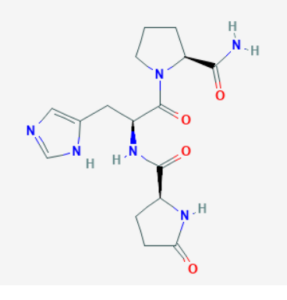
Thyrotropin
TRH, often known as Protirelin, is a compact peptide hormone that originates in the hypothalamus. Its primary functions include triggering the release of thyroid-stimulating hormone and prolactin from the anterior pituitary gland. In clinical practice, TRH is utilized to assess the functioning of the anterior pituitary gland when investigating thyroid-related disorders. Scientific research suggests that TRH possesses antidepressant and anti-suicidal properties. Furthermore, it is likely involved in regulating various physiological processes such as aging, arousal, feeding behavior, autonomic regulation, and combating the damage caused by free radicals.
PEPTIDES LIST
- Adipotide (FTPP)
- AICAR
- AOD9604
- ARA-290
- B7-33
- BPC-157
- Bronchogen
- Cagrisema
- Cagrilintides
- Cardiogen
- Cartalax
- Cerebrolysin (215mg/ml, 10ml)
- Chonluten
- CJC-1295 DAC
- Cortagen
- DSIP
- Epithalon (Epitalon)
- Follistatin-315
- Follistatin-344
- FOXO4-DRI
- GHK-Cu (Copper Peptide)
- GHK Basic
- GHRP-2
- GHRP-6
- GHRH (GH-Releasing Hormone)
- Glutathione
- Gonadorelin (GnRH)
- GLP2 & GLP3
- hGH Fragment 176-191
- Hexarelin
- Humanin
- Ipamorelin
- Kisspeptin-10
- KPV (ACTH (11-13) alpha-MSH)
- Liraglutide (GLP-1 Analogue)
- Livagen
- LL-37 (CAP-18)
- Melanotan 2 (Melanotan II)
- Mezdutide
- MGF (C-terminal)
- ModGRF 1-29 (CJC-1295 No DAC)
- MK-677 (Ibutamoren)
- MOTS-c
- N-Acetyl Epithalon Amidate
- N-Acetyl Selank Amidate
- N-Acetyl Semax Amidate
- NAD+
- Ovagen
- Oxytocin+
- Pancragen
- PE-22-28
- PEG-MGF (Pegylated MGF)
- Pinealon
- PNC-27
- Prostamax
- PT-141 (Bremelanotide)
- P21 (P021)
- Retatrutide
- Snap8
- Tesa_Ipa_Blend
- Triblend
- Selank
- Semaglutide (GLP-1 Analogue)
- Semax
- Sermorelin
- SS-31
- Survodutide
- TB-500
- Tesamorelin
- Testagen
- Thymagen
- Thyrotropin-TRH
- Tirzepatide
- Triptorelin
- Vesugenas
- Vesilute
- Vilon
- VIP (Vasoactive Intestinal Peptide)
- GLP2
- GLP3
- Klow
- Klow8
- SLU-PP-332
- BAM-15
- Orforglipron
- Noopept
- 9-Me-BC
- Methylene Blue
- Lemon Bottle

TRH, often known as Protirelin, is a compact peptide hormone that originates in the hypothalamus. Its primary functions include triggering the release of thyroid-stimulating hormone and prolactin from the anterior pituitary gland. In clinical practice, TRH is utilized to assess the functioning of the anterior pituitary gland when investigating thyroid-related disorders. Scientific research suggests that TRH possesses antidepressant and anti-suicidal properties. Furthermore, it is likely involved in regulating various physiological processes such as aging, arousal, feeding behavior, autonomic regulation, and combating the damage caused by free radicals.
*COMING SOON - THIS SECTION IS CURRENTLY UNDER CONSTRUCTION* This protocol outlines a standard, gradual dosing approach designed to parallel preclinical study practices while ensuring practical daily administration.
Dosing Schedule (3.0 mL → ~3.33 mg/mL):
Route & Frequency: Administer once daily via the subcutaneous route, reflecting the cadence commonly used in preclinical models. Technique recommendations follow established immunization best-practice guidance.
Precision Tip: For smaller injections ≤ 0.10 mL (≤ 10 units, e.g., 200–300 mcg), use 30- or 50-unit insulin syringes for better visibility and measurement accuracy.
| Week | Daily Dose (mcg) | Injection Volume (mL / Units) |
|---|---|---|
| Weeks 1–2 | 200 mcg (0.200 mg) | 0.06 mL (6 units) |
| Weeks 3–4 | 300 mcg (0.300 mg) | 0.09 mL (9 units) |
| Weeks 5–6 | 400 mcg (0.400 mg) | 0.12 mL (12 units) |
| Weeks 7–12 | 500 mcg (0.500 mg) | 0.15 mL (15 units) |
Reconstitution Instructions:
• Draw 3.0 mL of bacteriostatic water using a sterile syringe.
• Inject slowly along the vial wall to minimize foaming.
• Gently swirl or roll until fully dissolved (do not shake).
• Label and store refrigerated at 2–8 °C, protected from light.
• Avoid repeated freeze-thaw cycles; aliquot if long-term storage is required.
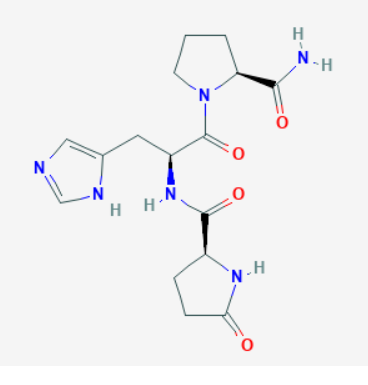
Sequence: Pyr-His-Pro
Molecular Formula: C16H22N6O4
Molecular Weight: 362.39 g/mol
PubChem CID: 638678
CAS Number: 24305-27-9
TRH and Depression: Thyrotropin-releasing hormone (TRH) has garnered attention for its potential antidepressant effects. Research on TRH’s antidepressant properties dates back to at least the 1970s. In early studies, TRH was administered directly into the spines of patients with severe depression. Results showed that five out of eight patients responded favorably, experiencing a 50% or greater reduction in depressive symptoms and a significant decrease in suicidal thoughts. However, the short half-life of TRH limited the duration of these positive effects.
Further research extended these findings to depressed women, where TRH was again effective, particularly in those with a specific type of depression devoid of anxiety symptoms. The specific effects of TRH on depression appeared to be influenced by a patient’s emotional state. To make TRH more practical for depression treatment, studies explored intravenous (IV) administration. TRH was found to cross the blood-brain barrier, making IV administration just as effective as intrathecal administration (spinal injection). However, IV administration is not a convenient option for most people, prompting research into developing an intranasal TRH-based nasal spray to treat depression more conveniently.
Interestingly, research on bipolar patients revealed that TRH had more profound effects on depression when administered at night. Nocturnal administration aligned better with the natural circadian rhythm of TRH, resulting in antidepressant effects that lasted up to 48 hours, a significant extension compared to other studies. Prolonged action via nocturnal administration could make TRH a practical and injectable treatment option for depression.
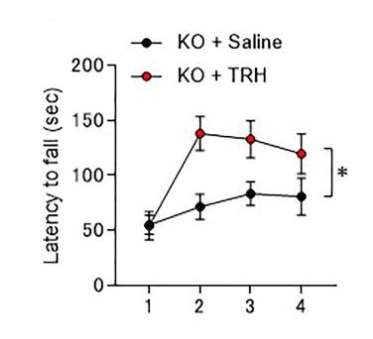
TRH Research and Motor Memory: Motor memory, also known as muscle memory, pertains to the development of procedural memory through repetitive motor tasks, such as typing, riding a bicycle, or playing a musical instrument. It differs from rote memory, which involves memorizing facts, and is primarily encoded in the cerebellum, a region of the hindbrain responsible for motor control, coordination, equilibrium, and posture.
Studies in mice lacking the TRH gene have shown that they exhibit slower learning of specific motor tasks. However, the administration of exogenous TRH can enhance the speed of motor learning. These findings support the idea that TRH plays a role in facilitating motor learning and suggest that it is active in the cerebellum, where it contributes to the development of motor memory.
Article Author :
The above literature was researched, edited and organized by Dr. Logan, M.D. Dr. Logan holds a doctorate degree from https://case.edu/medicine/Case Western Reserve University School of Medicine and a B.S. in molecular biology.
Case Western Reserve University School of Medicine
ALL ARTICLES AND PRODUCT INFORMATION PROVIDED ON THIS WEBSITE ARE FOR INFORMATIONAL AND EDUCATIONAL PURPOSES ONLY.
The product information featured on this website pertains exclusively to in-vitro studies. In-vitro studies, also known as ‘in glass’ studies, are conducted outside of living organisms. It’s important to emphasize that these products do not constitute medicines or drugs and have not received FDA approval for the prevention, treatment, or cure of any medical conditions, ailments, or diseases. It is crucial to note that the introduction of these products into the bodies of humans or animals is strictly prohibited by law.
THIS PRODUCT IS INTENDED AS A RESEARCH CHEMICAL ONLY. This designation allows the use of research chemicals strictly for in vitro testing and laboratory experimentation only. All product information available on this website is for educational purposes only. Bodily introduction of any kind into humans or animals is strictly forbidden by law. This product should only be handled by licensed, qualified professionals. This product is not a drug, food, or cosmetic and may not be misbranded, misused or mislabled as a drug, food or cosmetic.